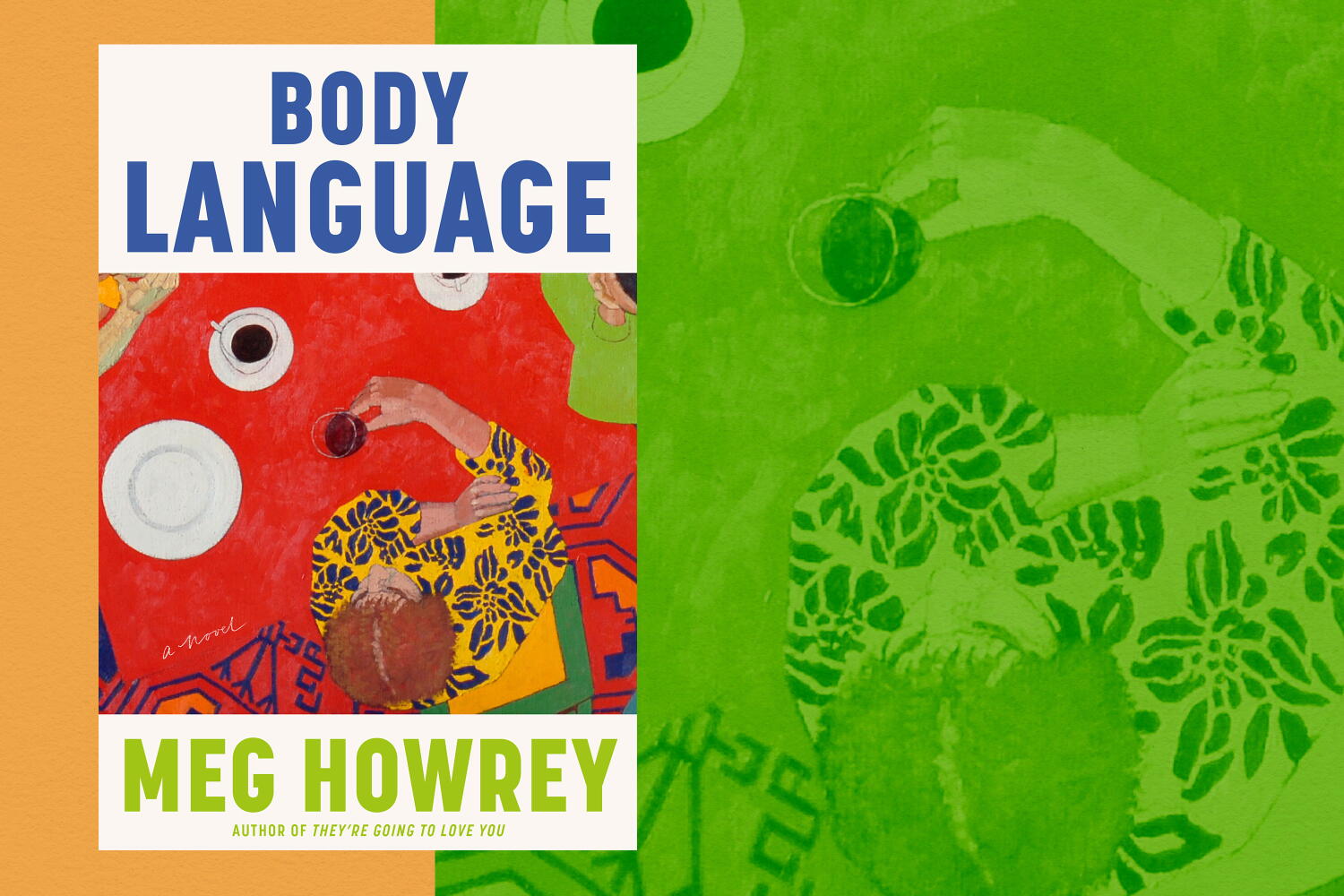
There is a specific kind of quiet that fills a room when a book finally stops trying to impress you and simply decides to tell the truth.
Most stories want your admiration. They construct elaborate glass towers of clever plotting, polish every sentence until it gleams with intellectual detachment, and keep the reader at a safe, sterile distance. You look at the craftsmanship. You nod at the neatness of the joints. You close the cover and your pulse has not risen by a single beat.
Meg Howrey writes from the opposite impulse. She builds rooms without doors, forcing you inside with characters whose messy, contradictory griefs and frantic, desperate humor mirror the chaotic private monologues we all run in our heads at three in the morning. When you open one of her novels, you are not stepping into a neat observation deck. You are stepping onto a moving train with no brakes, wondering how long you can keep your balance before the momentum forces you to feel something you spent the entire week avoiding.
Consider the sheer audacity required to write about heavy, systemic fractures—the kind of social issues that usually spawn dry academic papers or preachy, righteous lectures—and wrap them in laughter so sharp it leaves a bruise.
We live in an era obsessed with the tidy takeaway. Every cultural product must come pre-packaged with an ideological lesson, stripped of ambiguity so it can be safely consumed and discarded on social media feeds. Howrey rejects this entirely. In her hands, big social issues do not arrive as manifestos. They arrive as broken relationships, quiet compromises, the sting of institutional failure, and the sudden, irrational urge to bake a complicated cake while your personal life dissolves into ash.
Think about the way fiction usually handles trauma. It loves a neat narrative arc. Character suffers, character learns, character heals, roll credits. Real life refuses to cooperate with this lazy geometry. Real life circles back on itself. Real life features people who say the wrong thing to the right person, who laugh at funerals, who carry invisible griefs like heavy overcoats worn in the middle of July because they forgot how to take them off.
Howrey understands this friction. She looks at modern anxieties—the structural pressures of how we live, how we care for aging bodies, how we navigate institutional neglect—and grounds them in the nervous system of an individual trying to figure out what to do with tomorrow.
Take a hypothetical reader, let us call her Sarah, sitting on a crowded commuter train at twilight. She has spent ten hours managing a corporate job that demands constant emotional optimization, followed by twenty minutes staring at her phone wondering why the world feels simultaneously hyper-connected and entirely hollow. She opens Howrey’s work not for escapism, but for recognition. She wants to see someone else stumble through the dark and occasionally find a light switch, even if the bulb is burned out.
When a writer handles complex social dynamics through the lens of genuine human vulnerability, something shifts. The abstract becomes intimate. Statistics about healthcare gaps or societal isolation stop being numbers on a screen and transform into the frantic text message sent between siblings trying to decide who will take care of a failing parent.
This is where the laughter matters.
Humor in the face of devastation is not a coping mechanism; it is an act of rebellion. It is the human spirit refusing to wear sackcloth just because the world is burning. Howrey masters this dual register. She delivers the punchline right before the sob, or wraps the heartbreak in a sentence so dry and witty that you catch yourself smiling through the salt on your cheeks.
We are often told that art should comfort the disturbed and disturb the comfortable. Howrey manages a rarer trick: she makes the disturbance feel like a homecoming. She looks at the uncomfortable truths we spend fortunes avoiding—our loneliness, our institutional failures, our desperate need to be seen by someone who isn't looking at a screen—and hands them back to us polished by empathy.
You finish the final page and look up at your own room. The light is the same. The furniture has not moved. But the air feels different. Thicker. Charged with the realization that you are not the only one walking around with a heart full of complicated, contradictory noise.
That is why the work endures. Not because it offers easy answers, but because it asks the right questions with a cracked, beautiful smile.