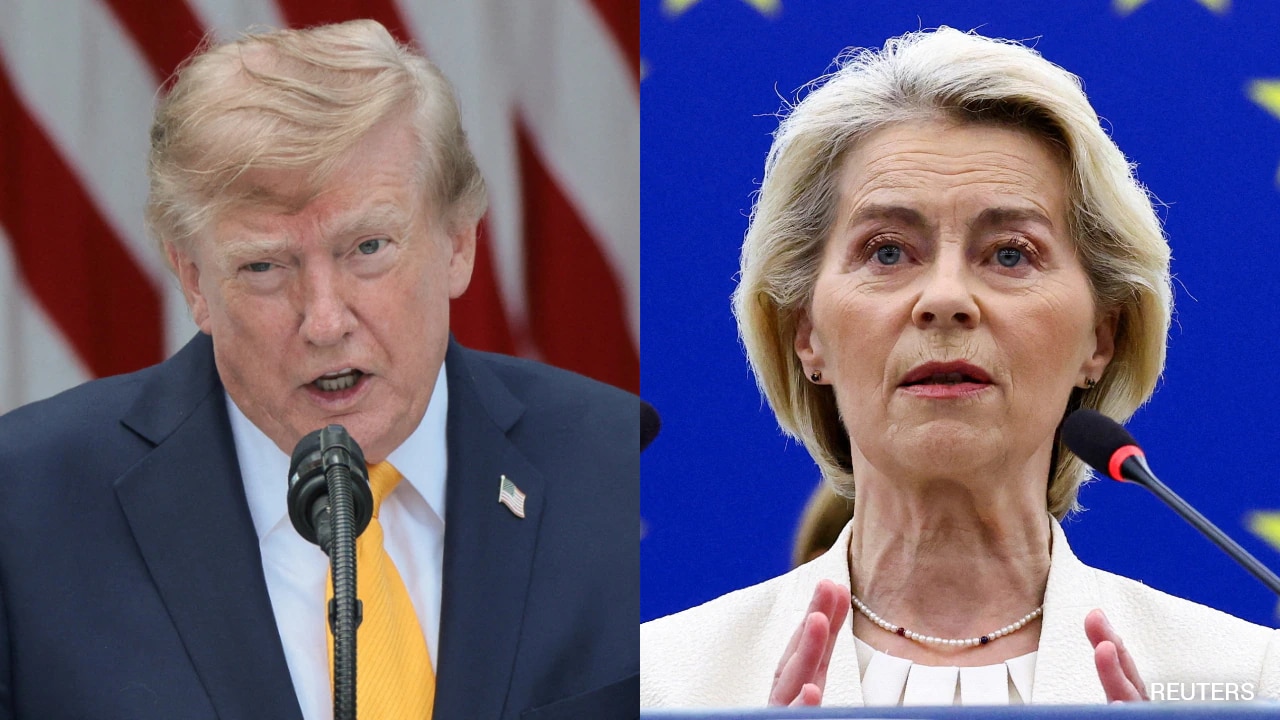
Modern trade diplomacy operates on a simple calculus of interdependence, where mutual vulnerability restrains protectionist escalation. When the executive branch of the United States issues a threat to sever trade ties with Canadians and the European Union over an administrative membership proposal, the underlying institutional architecture of the post-war global order experiences structural stress. This friction is not an isolated rhetorical outburst; it represents a fundamental collision between bilateral coercion and multilateral middle-power hedging. To understand the mechanics of this crisis, one must deconstruct the financial exposure, the strategic motivations driving Ottawa and Brussels, and the predictable game-theoretic responses of an aggrieved hegemon.
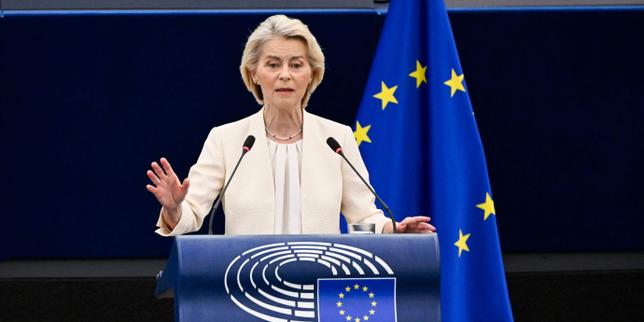
The genesis of the current dispute lies in a structural shift within Canadian foreign and economic policy. Facing persistent tariff pressure, regulatory hostility, and annexation rhetoric from Washington, the Canadian administration under Prime Minister Mark Carney pursued a deliberate diversification strategy. Concurrently, European Commission President Ursula von der Leyen articulated a vision for a deeper strategic partnership, floating an unprecedented "associate member" status for Canada during an address in Strasbourg. This proposal transcends traditional tariff-reduction agreements. It envisions a synchronized regulatory zone covering intelligent manufacturing, joint technological development, defense industrial base integration, and Arctic governance.
From a strategic perspective, Washington views this institutional convergence through a zero-sum lens. The traditional North American economic bloc, codified decades ago and modified through successive trade renegotiations, assumes regional commercial subordination. When a contiguous neighbor seeks structural integration with a competing economic superpower, the incumbent hegemon perceives an institutional threat to its regional sphere of influence. Labeling the initiative a hostile act establishes a legal and political pretext for punitive economic measures, ranging from broad-based tariffs to targeted embargoes on European exports.
To quantify the risk, one must examine the baseline exposure of the transatlantic trade corridor. The European Union remains one of the largest trading partners for North America, with bilateral goods and services flows reaching hundreds of billions of dollars annually. Conversely, Canada-EU trade, totaling nearly two hundred billion dollars in recent years, represents a vital secondary artery for Canadian commercial survival. When Washington threatens to cut off trade with Europe over its engagement with Ottawa, it attempts to weaponize the sheer mass of the US market against European export-driven economies, particularly Germany and France.
However, the efficacy of this economic weapon depends entirely on the elasticity of demand and the availability of alternative markets. European policymakers calculate that absolute dependence on a volatile American trade policy carries a higher systemic risk than the short-term friction of US retaliation. The European Union's pivot toward middle powers stems from a recognized vulnerability: reliance on a single security and commercial partner creates an unacceptable single point of failure in a fragmented global order. By extending an invitation for close structural alignment, Brussels secures access to Canadian critical minerals, advanced battery supply chains, and strategic Arctic real estate, while Canada secures a counterweight to southern economic strangulation.
The internal mechanics within the European Union reveal significant institutional friction regarding this expansion. Several member states expressed immediate reservations about creating an ambiguous "associate member" tier, fearing it complicates the already arduous accession pathways for Eastern European and Balkan aspirants. Bureaucratic inertia in Brussels frequently clashes with executive ambition. Senior European officials admitted that the terminology of associate membership was contentious, leading to diplomatic adjustments in joint drafts to emphasize strategic partnership rather than formal institutional enlargement. Yet, despite internal hesitation, the geopolitical imperative of securing non-US supply chains overrode procedural caution.
The retaliatory toolkit available to the White House relies on executive authority over tariff schedules and emergency economic powers. Under domestic trade statutes, the administration can impose sweeping tariffs under national security pretexts, bypassing traditional legislative consensus. Yet, the cost function of such measures cuts both ways. American manufacturers heavily rely on integrated supply chains with European industrial machinery, specialized chemicals, and precision instruments. A complete trade cutoff would induce severe domestic inflation, supply chain bottlenecks, and severe contraction in key industrial sectors across the United States.
Furthermore, European leaders have demonstrated an increasing willingness to assert strategic autonomy. When French and European representatives state that Washington holds no veto over European geopolitical choices, they articulate a rejection of extraterritorial jurisdiction in foreign policy formation. This posture reflects a broader historical transition: middle powers and secondary economic blocs are establishing independent diplomatic channels to insure against systemic volatility in Washington. Canada's simultaneous pursuit of non-US markets, including trade frameworks with Middle Eastern and Asian partners, reinforces this distributed network of economic resilience.
Capital allocation decisions across the North Atlantic are undergoing a profound re-evaluation as chief executive officers factor geopolitical volatility into long-term depreciation schedules. When trade corridors are subjected to unilateral tariff threats, the historical assumption of frictionless border clearance vanishes. Firms must now maintain redundant inventory buffers, increasing working capital requirements and eroding operating margins. This structural inflation is the direct tax imposed by mercantilist trade policies upon global enterprises.
The strategic trajectory of this dispute follows a predictable escalation ladder. Initial verbal threats from the executive branch create immediate uncertainty in financial markets, driving currency fluctuations for the Canadian dollar and the euro. Corporations with cross-border exposure must execute contingency planning, reallocating capital expenditure away from vulnerable trade lanes toward localized production hubs. If the European Union formalizes its strategic agreement with Canada without softening the institutional language, the probability of targeted sector-specific tariffs increases sharply.
The ultimate resolution will not emerge from diplomatic appeasement, but from a hard-nosed assessment of structural limits. Washington must weigh the diplomatic cost of driving its closest allies into permanent institutional coalitions against the domestic political utility of aggressive trade posture. Simultaneously, Ottawa and Brussels must maintain sufficient ambiguity in their framework agreements to avoid triggering catastrophic trade blockades while achieving their core objective: insulated supply chains for critical technologies, energy, and defense production.
For corporate strategists and policy analysts, the lesson is clear. The era of predictable, rules-based globalization governed by multilateral consensus has been superseded by transactional bilateralism and regional fragmentation. Risk management models must now account for sudden weaponization of trade architecture, where geographical proximity and historical alliances offer no immunity against the whims of shifting political regimes. Organizations operating within the transatlantic corridor must build structural redundancy, diversify supplier networks, and treat geopolitical alignment as a variable cost rather than a fixed asset.
The underlying economic friction points highlight a broader transformation in global trade governance. As bilateral trade agreements increasingly double as geopolitical security pacts, traditional commercial law takes a secondary role to executive prerogative. Companies caught in the crossfire must evaluate their supply chain exposure through a geopolitical lens, recognizing that state-backed industrial policy now dictates market access far more than comparative advantage.
Trump trade threats over Canada plan
This video from RTÉ News is relevant because it reports directly on Donald Trump's threats to cut trade with the European Union over Canada's proposed associate membership plan.