History rarely knocks politely on the door. More often, it slips through a side entrance, wearing the quiet tailored suit of a diplomat who knows the security cameras are rolling.
Consider the geography of high-stakes diplomacy. A room in a hotel suite. The hum of an overly aggressive air conditioning unit masking the heavy silence between men who have spent lifetimes wishing the other out of existence. On one side, representatives of the United States administration, bearing blueprints, economic projections, and the heavy burden of American political capital. On the other, figures carrying the ideological weight of Hamas, an organization born from decades of blockades, shattered buildings, and unhealed grief.
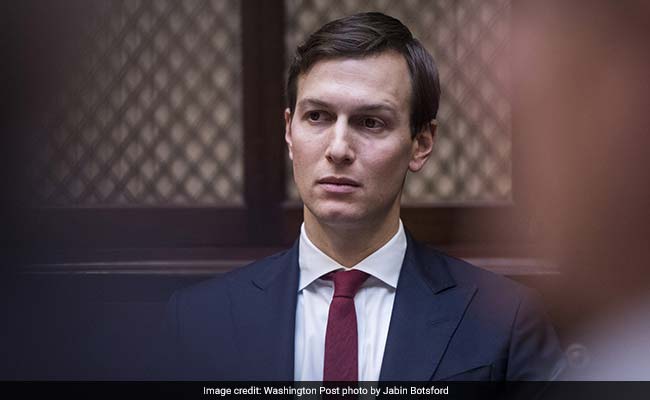
When Jared Kushner stepped into these complex diplomatic orbits, the headlines reduced it to a transaction. A peace plan. A negotiation. A checklist of concessions, borders, and billions of dollars in infrastructure investments designed to rewrite the Middle East. But numbers on a spreadsheet cannot capture the weight of a mother holding a photograph in Gaza, nor can they measure the relentless anxiety of a family waiting for the next siren in an Israeli town bordering the Strip.
We talk about peace as if it were a software patch. We assume that if you rewrite the code of a region—inject enough capital, redraw enough lines, promise enough jobs—the underlying trauma will simply format itself away. But human beings are not hard drives. They remember every stone thrown, every funeral attended, every concrete wall erected to separate neighbor from neighbor.
Walk down any street in Gaza during a summer heatwave, and you can smell the dust of history. It is a scent composed of pulverized concrete, salt air from the Mediterranean, and the acrid smoke of generators straining against endless power cuts. In this environment, the abstract concept of a peace envoy arriving with a multi-billion-dollar economic package feels less like a solution and more like a distant fiction. How do you talk about tech hubs and luxury resorts to a generation whose primary currency has been survival?
Yet, diplomacy requires entering rooms where agreement seems mathematically impossible.
The strategy behind these backchannel talks relies on a cold, transactional logic. The premise is simple: alter the material conditions of daily life so radically that the cost of conflict becomes too high to bear. Ports, industrial zones, hospitals, desalination plants—these are not mere humanitarian gestures; they are meant to be anchors of an alternative future. The bet is that a young person with a job, a passport, and a functioning electrical grid is less likely to strap explosives to their chest or join armed militias.
Critics call it bribery disguised as statecraft. Supporters call it pragmatism born of desperation. Both are right.
The flaw in the blueprint lies in the asymmetry of power and memory. When you sit across a table from someone whose organization is sworn to your destruction, or when you sit across from someone whose military has turned your neighborhood into rubble, words lose their descriptive power. Every promise of prosperity sounds like a trap. Every demand for security sounds like subjugation.
This is the invisible architecture of every modern peace initiative. It is built entirely on mistrust.
We look at old archival photographs of handshakes on White House lawns and wonder why the magic faded so quickly. We blame the politicians, the extremists, the spoilers on both sides who would rather burn the house down than share the keys. But the truth is more mundane and more terrifying: peace fails because it asks people to betray their own identities. To accept peace is to admit that the sacrifices of the dead were spent in vain. It requires forgiving the unforgivable and trusting the untrustworthy.
When envoys meet behind closed doors, away from the microphones, they are not just negotiating land or commerce. They are testing the elasticity of human endurance. They are probing for the exact millimeter where reality finally fractures enough to let a sliver of light through.
Most of the time, the door stays shut. The negotiators pack their briefcases, shake hands for the cameras with tight, practiced smiles, and fly home to face domestic political fallout. The blockade remains. The walls stay tall. The rhetoric grows sharper to soothe the bruised egos of leaders who gave too much away.
And yet, they keep going back.
They return because the alternative is an endless descent into the dark, a compounding interest of grief that generations yet unborn will be forced to pay. Even when the meetings fail, even when the plans are rejected before the ink is dry, the act of sitting in that impossible room acknowledges a singular, stubborn truth.
No matter how deep the trenches, no matter how loud the sirens, the day after the final shell falls, the living will still have to look each other in the eye and figure out how to share the same narrow strip of earth. Until that day arrives, the diplomats will keep knocking on doors that refuse to open, searching for the one key that doesn't exist yet.