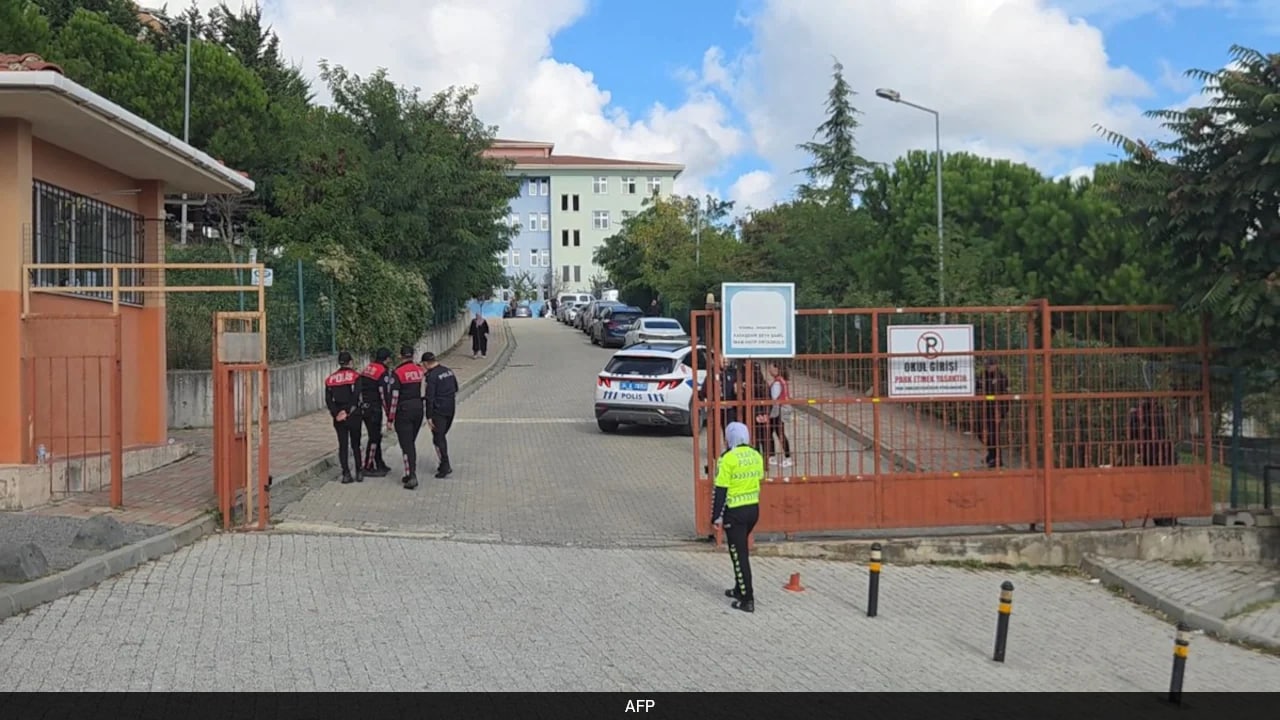
The escalation of targeted violence within educational environments requires moving beyond reactive emotional discourse toward a structural deconstruction of institutional vulnerability. When a perimeter breach occurs, such as the October 2026 incident in the Başakşehir district of Istanbul where a non-enrolled individual infiltrated a middle school facility, the failure is rarely isolated to an individual security guard or a single administrative oversight. Rather, it exposes a systemic breakdown in access control architecture, threat detection protocols, and institutional behavioral tracking.
The Perimeter Control Paradox
Educational institutions operate under a fundamental design conflict. They are built as civic spaces meant to foster community access, yet modern security demands hardened perimeters akin to restricted facilities. This creates the perimeter control paradox: optimizing an institution for open educational delivery inherently degrades its defensive posture against targeted intrusion.
In the Başakşehir incident, the utilization of a mismatched uniform to bypass visual identity checks highlights a critical vulnerability in human-dependent verification systems.
- Single-Factor Authentication Failure: Relying purely on visual signifiers like standard-issue student attire without cryptographic badges, digital scanning, or secondary verification creates an open vector for bad actors.
- Throughput vs. Security Trade-off: Schools prioritize morning arrival speed to prevent congestion at entry points, systematically sacrificing verification rigor to maintain operational flow.
- The Insider-Outsider Boundary: Campuses designed with multiple porous entry points to accommodate community traffic lose the ability to establish a defensible security perimeter during operational hours.
Behavioral Anomaly Detection Deficits
Physical security layers are only as effective as the intelligence apparatus feeding them. Targeted violence inside schools rarely manifests without a preceding behavioral runway. Whether analyzing the Başakşehir infiltration or earlier incidents involving internal students flagged for behavioral volatility, institutional response frameworks consistently suffer from a visibility lag.
Organizations typically lack a formalized triage mechanism to evaluate erratic behavioral markers. When warning signs are observed by faculty, they enter an informal administrative loop rather than a standardized threat assessment protocol.
- Information Silos: Observations noted by educators are rarely cross-referenced with attendance anomalies, disciplinary records, or digital footprint indicators.
- The Escalation Gradient: Without a quantitative scoring matrix for behavioral risk, institutions treat acute volatility as isolated disciplinary infractions rather than precursors to targeted aggression.
- Intervention Friction: Bureaucratic hurdles often prevent timely psychological or security interventions, leaving vulnerable populations exposed while administrative reviews stall.
Systemic Remediation Frameworks
Addressing institutional vulnerability requires shifting from static security enhancements to dynamic risk mitigation models. Bolstering physical infrastructure alone—such as installing turnstiles or locking gates—fails if the administrative protocols governing access and behavioral observation remain porous.
Institutions must implement a multi-tiered operational model. First, access points must transition from passive visual checks to active electronic credentialing, eliminating the spoofing vulnerabilities of standard uniforms. Second, behavioral monitoring must be decoupled from subjective faculty impressions and integrated into a structured data pipeline that flags acute deviations in real-time. Finally, crisis communication channels must bypass traditional bureaucratic delays to ensure immediate lockdown execution when a perimeter breach is confirmed.
The recurrence of campus attacks across various regions underscores that security is an active economic and operational cost function. Under-investing in administrative triage and perimeter engineering guarantees systemic failure when edge-case threats materialize.