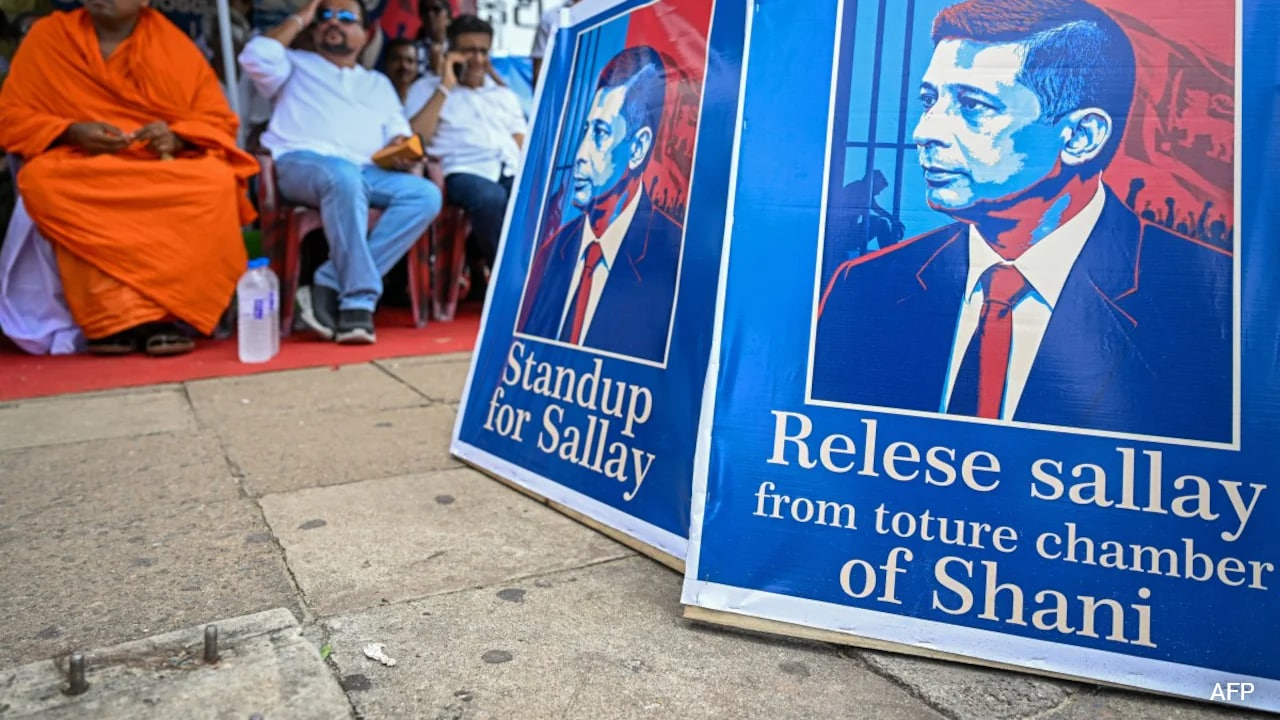
The traditional narrative of the 2019 Sri Lankan Easter Sunday bombings frames the tragedy as a catastrophic failure of intelligence sharing—a systemic breakdown where actionable data remained trapped within bureaucratic silos. However, the formal declaration by Public Security Minister Ananda Wijepala to the Sri Lankan parliament fundamentally alters this diagnostic framework. The state's explicit accusation that retired Major General Tuan Suresh Sallay, the former Director of Military Intelligence and head of the State Intelligence Service (SIS), "conspired with and strategically directed" the suicide bombers shifts the analytical paradigm from passive negligence to active, state-sponsored orchestration.
To evaluate the validity and strategic implications of this development, the case must be deconstructed through a rigorous framework of operational capability, political utility, and institutional mechanics. Analyzing this intelligence crisis requires separating the verified legal benchmarks from the structural hypotheses that define Sri Lanka's current judicial and political realignment.
The Tripartite Framework of Institutional Orchestration
The state's case against Sallay rests on an operational triad that connects high-level military intelligence assets to localized extremist execution cells. This structure invalidates the theory that the National Thowheeth Jama'ath (NTJ) operated as an isolated, self-directed entity.
+-----------------------------------------------------------------+
|                    STATE INTELLIGENCE CAPABILITY                |
|  - Operational Cover & Immunity via PTA                         |
|  - Tactical Information Arbitrage (withholding foreign alerts)  |
+-----------------------------------------------------------------+
                                |
                                v
+-----------------------------------------------------------------+
|                   TACTICAL TARGET SELECTION                     |
|  - Reconnaissance and Asset Meetings (3 weeks pre-attack)       |
|  - Directing Local Extremist Cells (NTJ) to Specific Sites      |
+-----------------------------------------------------------------+
                                |
                                v
+-----------------------------------------------------------------+
|                   POLITICAL UTILITY OBJECTIVE                   |
|  - Generation of Systematic Threat Environment                 |
|  - Validation of Radical National Security Realignment          |
+-----------------------------------------------------------------+
Tactical Target Selection and Reconnaissance
The first pillar of the state's judicial argument establishes direct physical proximity and tactical direction. According to the parliamentary disclosure, Sallay met with members of the extremist network exactly three weeks prior to the April 21, 2019 attacks. The objective of these meetings was not intelligence gathering, but tactical reconnaissance. The prosecution asserts that Sallay explicitly identified and selected at least one Catholic church target, extracting specific details regarding its layout, scheduling, and congregation density to maximize casualties.
Information Arbitrage and Asset Shielding
The second pillar concerns the deliberate manipulation of the intelligence lifecycle. In the weeks preceding the attacks, foreign intelligence agencies—most notably India's Research and Analysis Wing (RAW)—delivered highly specific, actionable warnings containing the names, targets, and methods of the NTJ cells.
The institutional framework missing from early analyses is the mechanism of selective suppression. By utilizing his position as a dominant node in the security apparatus, Sallay is hypothesized to have intercepted these inputs, preventing them from reaching frontline law enforcement or the Prime Minister's office. This created a calculated vacuum of awareness that ensured the operational success of the bombers.
Asset Cultivation and Financial Pipelines
Long before the 2019 bombings, Sri Lanka's military intelligence units maintained a network of informants within radical Islamist factions to monitor domestic threats. The structural breakdown occurs when these intelligence assets transition from being monitored subjects to protected state assets. Investigators are currently auditing the financial and operational immunity granted to NTJ elements prior to 2019, evaluating whether state funds earmarked for intelligence informants were used to subsidize the logistics of the suicide cells.
The Political Economy of Threat Generation
An objective analysis of the Easter Sunday bombings must evaluate the concept of political utility. In statecraft, a catastrophic security failure is rarely a random event; it alters the domestic political equilibrium.
The chronological correlation between the security breakdown and the subsequent political transition is precise. Two days after the coordinated explosions killed 279 people and crippled the tourism economy, Gotabaya Rajapaksa announced his candidacy for the presidency. His campaign was built entirely on a platform of hardline national security, centralized executive power, and the total eradication of Islamist extremism.
The systemic logic of this transition can be modeled as a closed-loop feedback system:
- The Generation of a Existential Threat Environment: The execution of highly coordinated terror attacks creates widespread civic panic and exposes the total impotence of a fractured, liberal-democratic coalition government.
- The Demand for Authoritarian Competence: The electorate shifts its preference from democratic governance to existential survival, demanding a hyper-militarized executive response.
- The Validation of the Security Apparatus: Upon ascending to the presidency in November 2019, Rajapaksa immediately elevated Sallay to the head of the State Intelligence Service, bypassing traditional seniority structures. This move effectively placed the principal architect of military intelligence in control of the entire domestic spying apparatus.
This model demonstrates how structural chaos can be leveraged to manufacture an electoral mandate for an authoritarian security state.
Chronology of Institutional Realignment
The current investigation represents an abrupt departure from years of state-sponsored delays. The trajectory of the probe is governed by changes within the executive branch, illustrating how judicial independence in Sri Lanka remains bound to political transitions.
- April 2019: Six near-simultaneous suicide attacks strike three luxury hotels and three churches. Initial investigations focus exclusively on local Islamist cells and localized lapses in communication.
- November 2019: Gotabaya Rajapaksa wins the presidency. Suresh Sallay is appointed Director of the State Intelligence Service. The focus of internal investigations shifts away from state complicity.
- September 2023: British broadcaster Channel 4 broadcasts a documentary featuring high-level whistleblowers, including a former government official who explicitly names Sallay as the coordinator of the plot designed to destabilize the Yahapalana government.
- September 2024: Anura Kumara Dissanayake is elected president on an anti-corruption and institutional reform platform, removing the political shields protecting the wartime military elite.
- February 2025: The Criminal Investigation Department (CID) arrests Suresh Sallay under the Prevention of Terrorism Act (PTA) on charges of conspiracy, aiding, and abetting.
- June 2026: Public Security Minister Ananda Wijepala delivers the first formal government declaration directly naming Sallay as the strategic director of the attacks, while courts issue border-control restrictions on former President Rajapaksa.
Operational Dependencies and Legal Obstacles
The state's capability to secure a conviction relies on its capacity to convert intelligence files into admissible forensic evidence. This process faces significant operational bottlenecks.
The primary systemic challenge is the 25-Accused, 23,000-Charge Bottleneck. The judicial system is currently processing an incredibly complex multi-defendant trial before a three-judge Supreme Court bench. Introducing a top-tier state-conspiracy angle into an ongoing trial risks paralyzing the prosecution’s logistics.
| Operational Challenge | Institutional Impact | Mitigation Requirement |
|---|---|---|
| Evidence Admissibility | Much of the data implicating Sallay stems from electronic tracking, intelligence logs, and foreign intercepts that face high bars for validation in a domestic court. | Enforcement of digital forensics standards and the formal declassification of internal SIS logs. |
| The PTA Double-Edged Sword | Sallay is detained under the Prevention of Terrorism Act—the same draconian framework he used to manage assets. Abuse of this act invites international human rights scrutiny. | Transitioning the case from administrative detention to a transparent, evidentiary criminal trial. |
| The Deep State Insurgency | Decades of militarized intelligence structures have left networks loyal to the old guard within the CID and police departments. | The establishment of an independent, external Special Prosecutor’s office, a core demand of civil society and the Catholic Church. |
The current defensive maneuvers by Sallay's legal team highlight these systemic points of friction. His initiation of a hunger strike in detention, followed by a court-ordered evaluation by a five-member panel of judicial medical experts to investigate allegations of physical abuse, demonstrates a clear strategy: shifting the narrative from state conspiracy to state-sponsored human rights violations. This tactical pivot leverages international legal norms to slow down domestic prosecution.
The Definitive Security Forecast
The formal implication of Suresh Sallay changes the political trajectory of Sri Lanka. The investigation can no longer be contained as a simple anti-terrorism operation; it is now a systematic dismantling of the post-war military-intelligence apparatus.
Expect the next phase of this crisis to involve the formal interrogation of former President Gotabaya Rajapaksa. The current international travel bans imposed on him by the courts indicate that investigators have uncovered overlapping financial or operational lines of authority between the civilian executive and Sallay's intelligence operations.
As the judicial expert panel delivers its medical findings on Sallay's detention conditions, the government will face intense international pressure to maintain absolute procedural transparency. The survival of the Dissanayake administration's domestic credibility depends entirely on its capacity to break through the internal resistance of the security establishment. They must establish a clear legal precedent that institutional immunity under the guise of national security cannot shield state actors from charges of treason and mass casualty orchestration.