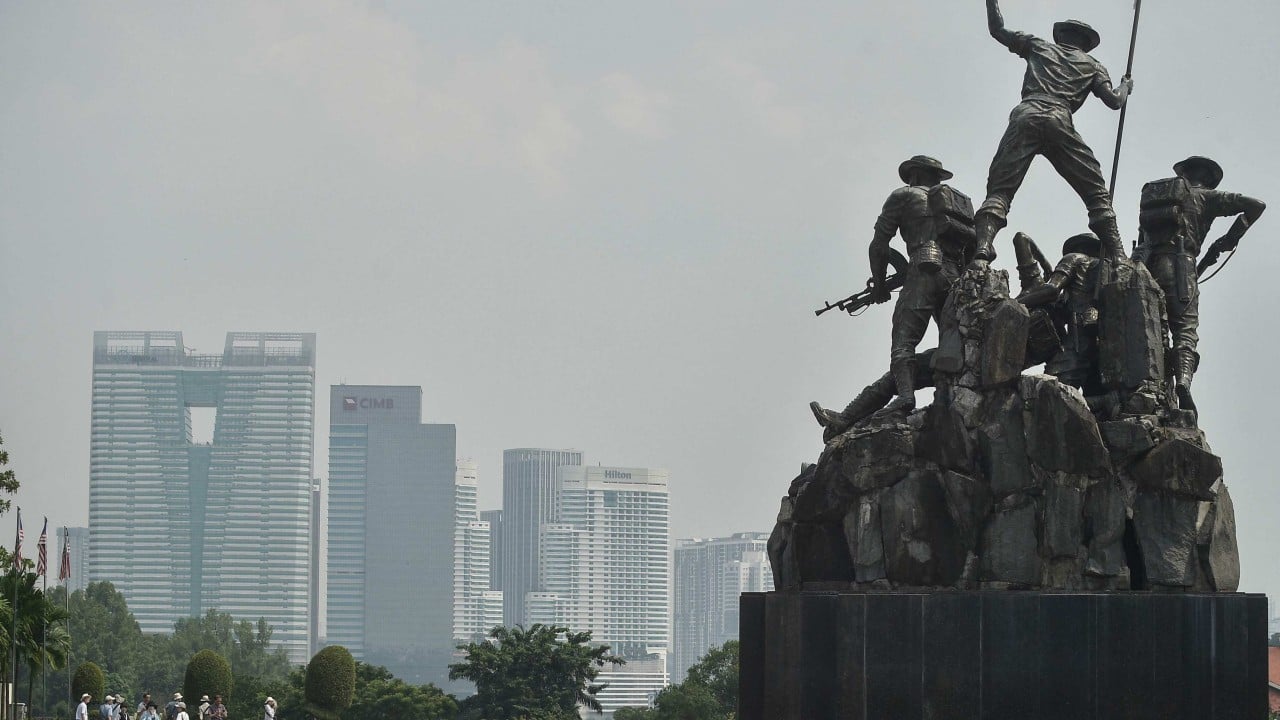
Urban air quality rankings fluctuate dynamically, driven by the convergence of meteorological transport vectors and transboundary particulate emissions. When metropolitan centers such as Kuala Lumpur and Singapore register elevated positions on global air quality indexes, the underlying driver is rarely localized vehicular or industrial output alone. Instead, these spikes represent systemic failures in regional land management, compounded by atmospheric inversion layers and shifting wind currents that transport biomass combustion byproducts across national borders.
Evaluating urban pollution spikes requires moving beyond raw index numbers to examine the mechanical drivers of air degradation. Three primary variables dictate the severity and geographic distribution of regional haze episodes: emission source density, atmospheric transport efficiency, and local topographical retention.
[Biomass Combustion Sources] ---> [Lower Tropospheric Wind Vectors] ---> [Urban Basin Trapping] ---> [Elevated AQI Metrics]
The Mechanics of Transboundary Particulate Transport
The primary catalyst for acute regional air pollution in maritime Southeast Asia is large-scale land clearing and agricultural burning. Peatland and forest fires, concentrated primarily in Sumatra and Kalimantan, release massive quantities of fine particulate matter, specifically PM2.5, into the lower troposphere.
These particles are exceptionally hazardous due to their aerodynamic diameter. Measuring less than 2.5 micrometers, PM2.5 bypasses the human respiratory system's natural filtration mechanisms, penetrating deep into pulmonary alveoli and entering the systemic bloodstream. During prolonged dry seasons, southwesterly or monsoonal wind patterns act as conveyor belts, sweeping these dense smoke plumes across the Malacca Strait and the Johor-Singapore causeway.
The physical journey of these plumes is governed by atmospheric boundary layer dynamics. When high-pressure systems stabilize the regional atmosphere, vertical mixing is suppressed. This creates an effective thermal lid, trapping suspended particulates beneath a layer of warm air. Urban canyons in dense metropolitan areas further impede horizontal dispersion, causing cumulative pollutant loading over successive diurnal cycles.
Index Divergence and Monitoring Granularity
A frequent point of friction during haze events is the divergence between national air quality reporting systems and global aggregators like IQAir. National bodies, such as Malaysia's Department of Environment (DOE) utilizing the Air Pollutant Index (API) and Singapore's National Environment Agency (NEA) utilizing the Pollutant Standards Index (PSI), often calculate indices based on multi-pollutant aggregation algorithms and localized station averages over differing temporal windows.
Global real-time rankings frequently rely on raw, unadjusted PM2.5 hourly averages from specific automated stations. This structural difference explains why a localized monitoring station—such as Batu Muda in Kuala Lumpur—might record an acute localized spike due to micro-climatic pooling or minor local open burning, temporarily driving global algorithmic rankings upward while neighboring stations register moderate baseline conditions.
This variance highlights a core vulnerability in public communication: real-time raw data captures instantaneous anomalies, whereas regulatory indices often smooth data over 24-hour periods to prevent unwarranted public panic. Both methodologies possess intrinsic limitations. Raw feeds are susceptible to transient sensor errors or micro-meteorological anomalies, while lagging 24-hour averages fail to trigger immediate behavioral modifications during rapid environmental deteriorations.
Economic Externalities and Public Health Costs
The systemic cost of severe haze episodes extends far beyond temporary aesthetic degradation. The economic drag functions across multiple vectors:
- Direct productivity losses resulting from mandated outdoor labor restrictions and school closures.
- Exponential increases in acute healthcare utilization, specifically for chronic obstructive pulmonary disease (COPD), asthma exacerbations, and cardiovascular incidents.
- Secondary impacts on aviation and retail sectors due to reduced visibility and suppressed consumer foot traffic.
Because transboundary pollution operates as a negative externality, the emitters of the pollution—often commercial agricultural entities practicing slash-and-burn clearing—do not bear the direct financial cost of the resulting public health crisis in downwind urban centers. This structural misalignment of incentives renders traditional municipal mitigation strategies largely ineffective. Localized municipal bans on open burning within city limits cannot address the macro-scale influx of particulate matter originating hundreds of kilometers upwind.
Strategic Governance and Mitigation Frameworks
Mitigating episodic air quality crises requires shifting from reactive public health advisories to preemptive transnational enforcement mechanisms. Diplomatic frameworks must incorporate binding protocols for real-time concession mapping and data transparency.
Governments subjected to transboundary haze must deploy multi-tiered monitoring architectures combining satellite hotspot detection, drone-based emissions profiling, and high-density ground sensor networks to isolate local anthropogenic contributions from regional smoke plumes. Furthermore, establishing clear legal frameworks for corporate accountability—where parent companies registered in financial hubs can be held liable for ecological degradation caused by their regional subsidiaries—provides the only viable structural deterrent against recurrent agricultural burning.
Future urban resilience planning must integrate dynamic ventilation corridors into master zoning codes, ensuring that high-density architectural developments do not inadvertently create dead-air zones that trap particulate loads during low-wind atmospheric stagnation events.