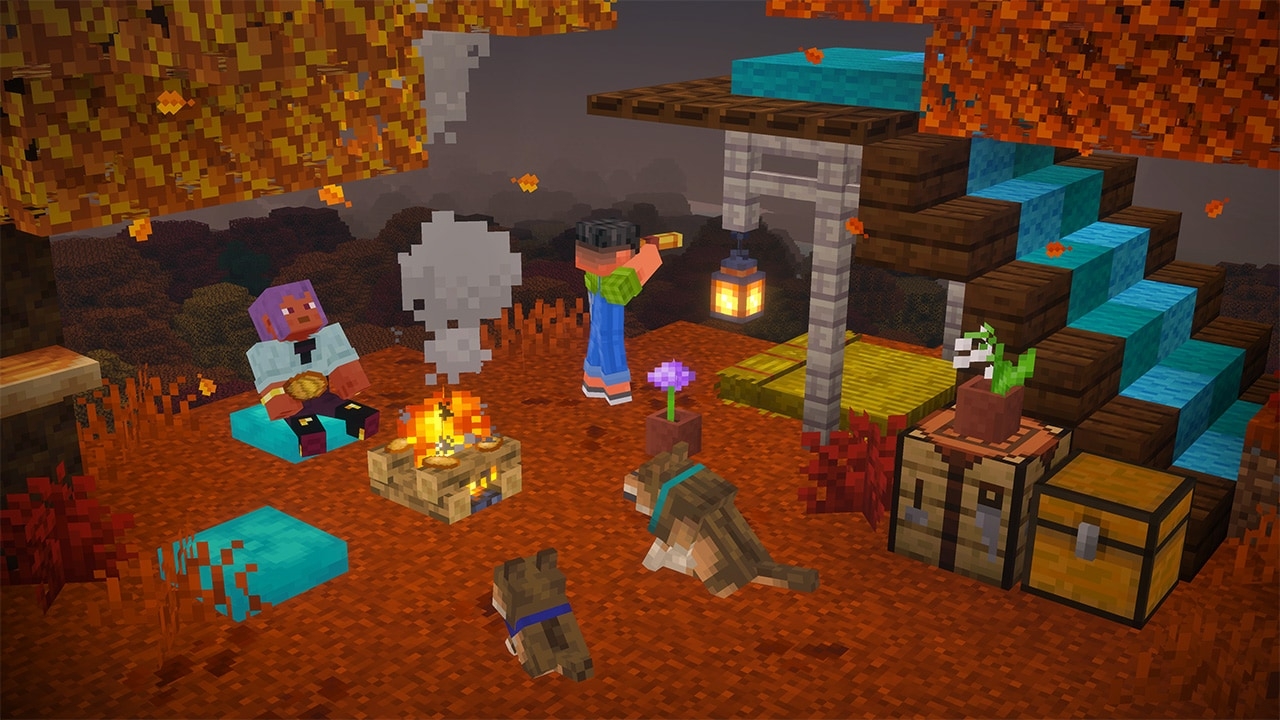
Minecraft updates routinely prompt surface-level coverage focusing on cosmetic additions, yet systemic patches alter core resource loops and survival mechanics. Mojang’s Wilderness Bound update introduces a camping-focused framework alongside an autumn aesthetic overhaul, shifting how players interact with mid-game wilderness survival. Evaluating this update requires moving past superficial descriptions of foliage colors to analyze how new environmental mechanics alter inventory management, shelter construction, and hazard mitigation.
Surface-level previews emphasize visual changes, but the mechanics underlying the camping additions introduce distinct systemic shifts. Survival loops in Minecraft rely on predictable access to shelter, food sources, and night-cycle management. By introducing specialized wilderness features, Mojang modifies the opportunity cost of moving away from established permanent bases. The update alters the calculus of long-range exploration by providing specialized tools designed for temporary habitation, thereby reducing the friction of nomadic playstyles.
The Mechanics of Temporary Habitation
Establishing a foothold in unmapped territory traditionally required duplicating permanent infrastructure on a smaller scale: placing chests, crafting tables, and beds exposed to ambient hazards. Wilderness Bound addresses this operational bottleneck by introducing localized camp structures and specialized gear designed for rapid deployment and retrieval.
The core utility of these new features rests on three distinct operational advantages:
- Reduced inventory weight for foundational shelter components through modular crafting options.
- Thermal and environmental management systems that alter how external weather states affect player metrics.
- Streamlined resource processing loops that function independently of stationary crafting stations.
When players deploy these modular camp components, the time-to-shelter metric drops significantly during hostile night cycles. Instead of carving into terrain or constructing monolithic wooden huts, operators can establish functional perimeters using lightweight deployables. This reduction in setup friction alters the efficiency curve of early-to-mid-game resource gathering, making extended excursions into distant biomes mathematically viable earlier in a world's progression.
Environmental Integration and The Autumn Aesthetic
While visual updates are frequently dismissed as mere window dressing, the autumn aesthetic overhaul in Wilderness Bound carries functional implications for stealth, visibility, and resource identification. Biome updates historically alter the color palettes of foliage, but this specific seasonal integration modifies the contrast ratio between player avatars, mob silhouettes, and natural backgrounds.
Visibility and Hazard Identification
In dense forest biomes, the shift toward rust, amber, and deep brown color schemes alters optical tracking. Hostile mobs blend more effectively into natural terrain, forcing players to rely on audio cues rather than visual line-of-sight identification. This increases the cognitive load of nocturnal navigation.
- Contrast Shifts: Foliage saturation decreases, rendering subtle movement variations harder to detect at medium distance.
- Canopy Density: Overhead leaf structures alter light diffusion, expanding the spatial boundaries where hostile entities can spawn during daylight hours beneath dense timber.
- Resource Contrast: Collectible ground items, such as fallen timber or localized flora, share color profiles with the altered terrain, requiring closer inspection thresholds for gathering loops.
These environmental modifications create a higher-risk operating theater. Players can no longer rely on casual visual sweeps while moving across the map; they must implement systematic scanning protocols to avoid ambushes from standard hostile mobs that now blend seamlessly with the seasonal ground cover.
Resource Loops and Inventory Economy
The introduction of camping-focused mechanics directly impacts the inventory economy. Survival games are fundamentally inventory management puzzles constrained by slot limits and weight or stack maximums. Wilderness Bound introduces items specifically engineered to optimize cargo space during transit phases.
Portable storage units and specialized cooking apparatuses allow players to process gathered materials on-site rather than hauling raw, heavy components back to a central hub. This decentralized processing model reduces the frequency of mandatory base returns.
The Cost Function of Nomadic Play
The efficiency of any survival strategy is governed by a strict resource equation:
$$\text{Net Yield} = \text{Resource Acquisition Rate} - (\text{Transit Cost} + \text{Maintenance Overhead})$$
Under standard game mechanics, transit cost increases exponentially as players venture further from their primary base, driven by food consumption, item durability loss, and the risk of inventory loss upon death. Wilderness Bound minimizes the maintenance overhead component of this equation. By introducing camp gear that mitigates environmental exposure and streamlines food conversion, the game lowers the slope of the transit cost curve.
Consequently, the viable operating radius of a player increases. Long-distance expeditions become net-positive ventures sooner, shifting the optimal strategy from hyper-localized industrialization to mobile, decentralized resource harvesting.
Architectural Shifts in Base Design
The availability of specialized wilderness gear influences permanent architecture as well. When temporary shelters become robust enough to handle multi-day operations, the necessity for sprawling, fortified mega-bases diminishes during the development phase. Players can construct minimalist staging posts that serve as functional nodes in a broader regional network.
This structural decentralization changes how players manage automated farms and storage arrays. Instead of centralizing every mechanical process in a single rendered chunk, the update encourages regional specialization. One camp manages timber and food processing via the new camping mechanics, while another handles mineral extraction.
The primary vulnerability of this distributed approach is logistics. Without automated transport systems like minecart rails or heavily optimized Nether portal networks, managing multiple regional camps introduces human error and tracking fatigue. The player must remember the precise coordinates of localized resource caches, increasing the mental overhead required to maintain world state awareness.
Strategic Playbook for the Wilderness Update
To maximize efficiency under the new system parameters, players must abandon legacy habits tied to stationary base building and adopt a mobile operational framework.
Prioritize the immediate acquisition of lightweight camp deployables upon entering a new world seed. Do not spend initial hours gathering stone and iron for a permanent homestead; instead, secure the mobile infrastructure required to maintain operations while exploring diverse biomes for rare resources.
Integrate seasonal visibility shifts into tactical movement routines. When navigating autumn-themed biomes, reduce movement speed during twilight transitions to compensate for the decreased contrast between mob models and organic background textures. Utilize audio telemetry—such as specific mob idle sounds and footstep frequencies—to map out invisible threats before they enter visual range.
Deploy decentralized supply caches rather than expanding a single central headquarters. Use the new camping mechanics to establish staging points every thousand blocks along major cardinal axes. This creates a redundant survival network that minimizes resource loss upon death and accelerates transit velocity across uncharted territory.