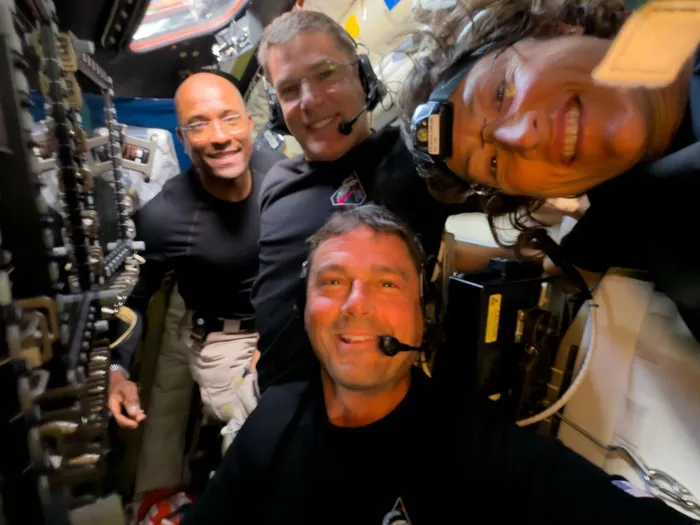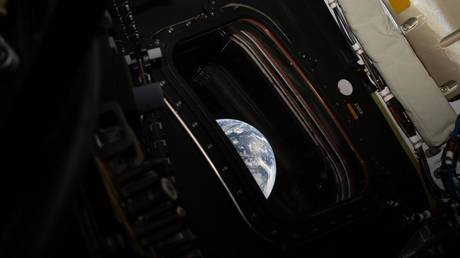
The Pacific Ocean just became the most important parking lot in the solar system. After ten days of high-stakes maneuvering around the Moon, the Artemis II Orion capsule has officially splashed down. This isn't just another splashy NASA photo op. It’s the definitive proof that we can send four humans into the deep void and bring them back without breaking the hardware or the crew.
While the headlines focus on the "return to the Moon" narrative, the real story lies in the precision of the recovery. Orion hit the atmosphere at 25,000 miles per hour. That’s roughly 32 times the speed of sound. At those speeds, the heat shield faces temperatures of 5,000 degrees Fahrenheit. If the skip-entry maneuver hadn't worked perfectly, the crew wouldn't just be off-course—they’d be gone. But the parachutes deployed, the Navy recovery teams moved in, and the mission transitioned from a lunar odyssey to a logistical masterclass. For a more detailed analysis into similar topics, we suggest: this related article.
Why the Artemis II Splashdown Changes Everything
For years, critics argued that the Space Launch System (SLS) and Orion were relics of an older era. They called it "Apollo on steroids." Artemis II just silenced a lot of that noise. This mission was the first time since 1972 that humans actually felt the tug of lunar gravity. Reid Wiseman, Victor Glover, Christina Koch, and Jeremy Hansen weren't just passengers. They were test pilots for a highly complex environmental control system that had to keep them breathing, warm, and sane in a space roughly the size of a professional kitchen.
The mission validated the life support systems in a way that ground testing never could. In deep space, radiation isn't a theoretical threat—it’s a constant barrage. By successfully navigating the Van Allen belts twice and orbiting the far side of the Moon, the crew proved that Orion’s shielding and emergency protocols aren't just good on paper. They work in the vacuum. For additional details on the matter, detailed reporting is available on Ars Technica.
The Technical Reality of Ten Days in the Void
NASA didn't just aim for the Moon and hope for the best. The flight path was a carefully choreographed dance called a hybrid free-return trajectory. Basically, they used the Earth’s gravity to slingshot out, then let the Moon’s gravity whip them back toward home.
During the ten-day trek, the crew performed "proximity operations." This is the nerdy way of saying they practiced flying the ship by hand. They tested how Orion handles when a human is at the stick rather than a computer. It matters because, on future missions to the lunar surface, the automated systems might fail. You want a pilot who knows exactly how the thrusters respond in a vacuum.
Christina Koch and the team also spent their time monitoring the Orion’s power consumption. In the dark of the lunar far side, solar panels don't do much. You’re relying on batteries and fuel cells. The data coming back from this splashdown shows that Orion outperformed its power estimates. That’s a massive win for Artemis III, which will require even more juice for a lunar landing.
Forget the Apollo Comparisons
People love to compare this to the 1960s. Stop doing that. Apollo was a sprint driven by Cold War panic. Artemis is a marathon designed for staying power.
The Artemis II capsule is a beast compared to the old Apollo Command Modules. It’s got more internal volume, better computers, and a heat shield made of Avcoat that’s been refined for decades. More importantly, this mission included an international partner. Jeremy Hansen represents the Canadian Space Agency, marking the first time a non-American has left Earth's orbit. This isn't just a NASA win. It’s a global infrastructure project.
The splashdown in the Pacific wasn't just the end of a flight. It was the start of the data crunching phase. Every sensor on that heat shield and every blood sample from the crew tells us how the human body reacts to the deep space environment. We’re learning about bone density loss and fluid shifts in real-time.
The Logistics of Recovery at Sea
When Orion hits the water, the mission isn't over. The U.S. Navy and NASA’s Exploration Ground Systems team have to fish a multi-ton spacecraft out of the swells. This involves the USS San Diego, specialized divers, and a literal floating city of tech.
They use a "well deck" ship, which allows the capsule to be floated into the back of the vessel. It’s a delicate process. If the water is too rough, the capsule can slam against the ship’s sides. If the uprighting bags don't inflate, Orion could float upside down, which is a nightmare for the crew's inner ears and the electronics. This time, everything went by the book. The crew walked out under their own power, which is a huge indicator of their physical health after ten days in microgravity.
What This Means for Your Tax Dollars
Space exploration is expensive. There’s no getting around it. But the tech developed for Artemis II has immediate ripples. The communication systems used to beam 4K video from the Moon are the ancestors of the next generation of global internet hardware. The medical research done on the crew helps us understand aging and radiation treatment here on Earth.
But the real value is the shift in our species' status. We are no longer limited to Low Earth Orbit. The "International Space Station era" was great for science, but it was essentially a lab in our backyard. Artemis II just put us back on the highway.
The Hard Truth About Artemis III
We can't get cocky. Artemis II was a success, but it didn't involve a lunar landing. Landing on the Moon is an order of magnitude harder than flying around it. For Artemis III, NASA needs the Starship Human Landing System from SpaceX to be ready. They need the Axiom suits to be perfect.
The splashdown proves the "bus" works. Now we need to make sure the "destination" is ready. If you’re looking for the next step, watch the testing of the docking adapters. The connection between Orion and the landing craft is the next big hurdle.
The Artemis II crew is now headed back to Houston for months of debriefing. They’ll be poked, prodded, and questioned until every second of those ten days is accounted for. While they recover, the engineers are already looking at the heat shield wear and tear. If the ablation was within the predicted margins, we’re on track for a landing attempt within the next two years.
Go check the NASA live feeds for the post-splashdown press conferences. Look at the faces of the flight controllers. That’s what relief looks like when you realize you didn't just build a rocket—you built a bridge to the future. The Moon is no longer a distant light. It’s a workplace.