You can't make this stuff up. A rusty metal cylinder washes up on a remote beach in the South Pacific, and suddenly two governments are arguing over whether it's an unexploded weapon of war or a fancy container for booze.
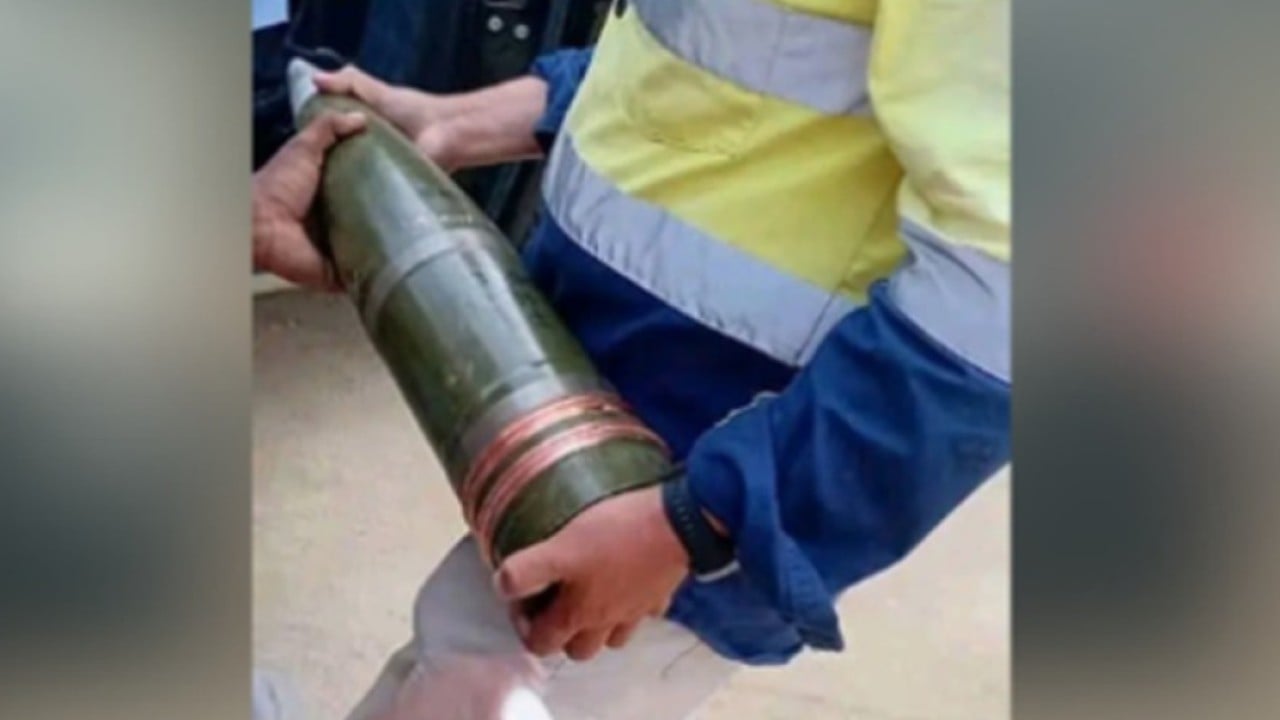
That exact scenario played out in Papua New Guinea, turning a routine beach discovery into a diplomatic head-scratcher. When locals on a coastal village shoreline found a heavy, cylindrical metal object, bomb disposal experts took one look at the corroded casing and declared it a military artillery shell. Beijing took a look at the same object and insisted it was actually a novelty Chinese wine bottle.
Honestly, both sides had good reasons for their guesses, even if the contrast sounds completely ridiculous on paper.
How a Wine Bottle Looks Like High Explosives
If you've ever spent time around unexploded ordnance—or even just watched enough historical documentaries—you know what World War II leftovers look like after eighty years in saltwater. Papua New Guinea is practically littered with them. During the Pacific Campaign, Allied and Japanese forces dumped millions of tons of munitions across the islands, jungles, and surrounding reefs.
When a steel shell sits in warm, salty ocean water for decades, marine growth and rust completely obscure any painted markings or serial numbers. What's left is a tapered, heavy-walled cylinder with a narrowed neck where a fuse would normally screw in.
Now picture a novelty liquor bottle made in China.
Chinese distilleries, particularly makers of baijiu (a potent, clear grain spirit), are famous for wild packaging. Walk into any high-end liquor shop in Beijing or Shanghai and you'll see baijiu sold inside ceramic tanks, gold-plated dragons, miniature cannons, and yes, realistic-looking artillery shells. Some of these novelty bottles are even cast from heavy metal or thick, metallic-glazed stoneware to give them a hefty, prestigious feel when you hand them over as a business gift.
Toss one of those novelty bottles off a passing cargo ship or fishing trawler, let it bob around in the Pacific currents for a couple of years, and let barnacles crust over the label. By the time the tide pushes it onto the sand in PNG, it looks identical to something fired out of a howitzer in 1943.
Why Papua New Guinea Took Zero Chances
Local authorities in PNG didn't jump to the "bomb" conclusion out of paranoia. They did it because guessing wrong gets people killed.
Across Papua New Guinea, Solomon Islands, and Vanuatu, unexploded ordnance (UXO) remains a daily, lethal hazard. Farmers hit buried mortar rounds while clearing gardens. Fishermen accidentally haul up corroded torpedoes in their nets. According to clearance organizations like The HALO Trust and local defense force bomb squads, live WWII munitions are still recovered across the Pacific islands every single week.
When villagers spot a suspicious metal cylinder on the beach, the standard protocol is simple:
- Clear the immediate area and keep kids away.
- Notify local police or the Papua New Guinea Defence Force (PNGDF) Explosive Ordnance Disposal unit.
- Treat the object as live high-explosive until proven otherwise.
You don't walk up to a rusted cylinder on a PNG beach and tap it with a wrench to see if it rings like ceramic or steel. You cordon off the sand, call the specialists, and prepare for a controlled detonation. Even if there's only a ten percent chance it's packed with TNT, nobody wants to be the person who treated a live shell like a souvenir.
The Geopolitical Backdrop Behind the Confusion
If this had happened twenty years ago, it probably would've stayed a funny local police blotter story. Today, nothing involving China and Papua New Guinea stays small.
The Pacific Islands have become the central chessboard for geopolitical influence between Washington, Canberra, and Beijing. Papua New Guinea sits right at the strategic heart of that tug-of-war. Every infrastructure loan, police training agreement, or diplomatic visit gets scrutinized by international media and intelligence analysts.
So when reports surfaced about a mysterious object with Chinese markings washing ashore—and initial assessments labeled it military hardware—people immediately started asking uncomfortable questions. Was it from a Chinese naval vessel? Was it linked to illegal fishing fleets operating in PNG's Exclusive Economic Zone?
China's diplomatic response pushing back on the artillery claim wasn't just about correcting a funny mistake. Beijing works hard to project an image of peaceful trade and infrastructure development in the Pacific. Having international headlines link Chinese markings to "military artillery shells" on a partner nation's coastline was a public relations headache they wanted shut down immediately.
The Marine Debris Problem Nobody Talks About
Strip away the diplomatic tension and the military history, and you're left with a much more mundane reality: the Pacific Ocean is drowning in trash from commercial shipping.
Papua New Guinea's northern coast sits directly alongside major international shipping lanes connecting East Asia to Australia and the Americas. Thousands of container ships, bulk carriers, and deep-sea fishing vessels pass through these waters every year.
Despite international maritime laws (specifically MARPOL Annex V) that strictly prohibit dumping plastics, glass, and manufactured goods overboard, illegal dumping happens constantly. Crew members toss garbage bags off the stern at night. Rough seas wash unsecured deck cargo into the water. Currents like the South Equatorial Current act like giant conveyor belts, funneling floating debris straight onto the beaches of PNG's outer islands.
If you walk a remote shoreline in New Ireland or Manus Province, you won't just find coconuts and driftwood. You'll find:
- Plastic water bottles with labels from half a dozen Asian countries.
- Tangled commercial fishing nets and broken buoys.
- Discarded boots, hard hats, and industrial chemical drums.
- Novelty liquor bottles tossed overboard by bored sailors.
A heavy ceramic or metal baijiu bottle, tightly capped after being emptied, traps air inside. That buoyancy allows it to float for thousands of miles before eventually losing its seal or washing ashore during a storm surge.
How Bomb Squads Tell the Difference
When explosive ordnance technicians actually get close enough to inspect a mystery cylinder, they look for very specific engineering markers that novelty manufacturers rarely replicate accurately.
Real artillery shells are precision-machined pieces of metallurgy. They feature a driving band (also called a rotating band) near the base—usually made of soft copper or gilding metal—designed to engage the rifling grooves inside a cannon barrel. Even after decades underwater, that copper band corrodes differently than the steel body, leaving a distinct ridge or chemical stain.
Real shells also have precision threading inside the nose cone for the fuse, specific wall thicknesses engineered to withstand massive chamber pressures, and stamped lot numbers punched deep into the metal near the base.
Novelty bottles, by contrast, cut corners. The seams are cast rather than machined. The "fuse" area is usually a simple threaded cap or cork stopper meant to hold liquid, not withstand 30,000 PSI of propellant gas. Once a technician scrapes away the marine crust with a non-sparking brass tool, the difference between a cast novelty container and a machined steel projectile becomes obvious pretty fast.
What to Do If You Ever Find Suspicious Metal on a Beach
Whether you're traveling through the South Pacific, hiking old military training grounds in the US, or walking a coastline in Europe, running across unidentifiable metal cylinders happens more often than you'd think.
If you ever spot something that looks remotely like a shell, grenade, or corroded canister, follow the exact rulebook used by clearance teams:
- Don't touch it, kick it, or pick it up. Movement, friction, or even a sudden change in temperature from sitting in the sun after being pulled out of wet sand can destabilize degraded explosives.
- Leave a visual marker nearby. Drop a bright piece of clothing, a stick, or a pile of stones a safe distance away so authorities can actually find the spot again when the tide shifts.
- Take a photo from a distance using your zoom. Don't walk right up to it for a close-up shot. Snap a picture from at least twenty or thirty paces back, along with a wider shot showing landmarks on the beach.
- Drop a pin on your phone's GPS. Even without cell service, your phone's GPS chip works offline and can give local police or coast guard teams exact coordinates.
It might turn out to be a discarded novelty wine bottle from a passing cargo ship, a rusted hydraulic cylinder from a fishing boat, or an old scuba tank. Let the people wearing blast suits be the ones to figure that out.