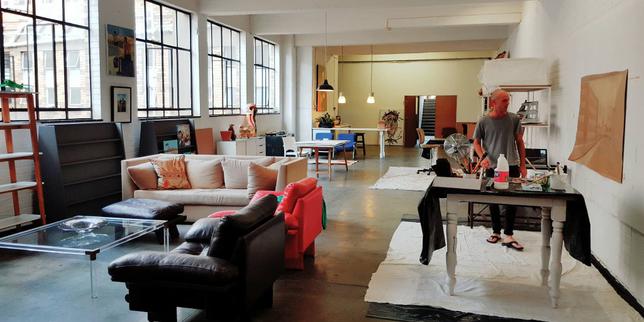
Walk past a boarded-up garment factory in Johannesburg's inner city and you'll probably hear angle grinders before you see a gallery sign. Artists aren't waiting for municipal budgets to fix downtown Jozi. They're moving into raw brick shells, converting old industrial corridors into working studios, and turning neglected streets into open-air galleries.
If you've only heard about Johannesburg through headlines about urban decay or corporate flight to Sandton, that's half the picture. Yes, decades of white flight after apartheid hollowed out large stretches of the central business district. Buildings emptied out. Foot traffic dropped. Yet low rents, generous ceiling heights, and gritty street life created something rare for South African creatives: room to experiment without suburban polish. Read more on a related topic: this related article.
How a Hollowed Core Became a Creative Magnet
Johannesburg didn't become an art hub by accident. After the end of apartheid in the 1990s, big banks and corporate headquarters packed up and moved north toward Rosebank and Sandton. Left behind were Art Deco office blocks, warehouses, and industrial yards sitting at the geographic heart of the city.
For years, those empty spaces looked like liabilities. Then came a wave of independent artists, curators, and small-scale developers who saw cheap square footage and raw character instead of ruin. Precincts like Maboneng, Newtown, and Braamfontein became testing grounds where murals, independent galleries, print workshops, and performance venues overlapped. Further reporting by AFAR highlights related views on this issue.
Look at how different pockets of the inner city play distinct roles right now:
- Maboneng: Known for converted industrial blocks, street art density, and mixed-use creative spaces that pull in both locals and visitors.
- Newtown: Anchored by heritage culture, music venues, public art walls, and long-standing cultural institutions like Museum Africa and the Market Theatre precinct.
- Braamfontein: Energized by student life near the University of the Witwatersrand, street murals, independent galleries, and small creative studios.
- Fordsburg and Selby: Home to gritty working studios and artist collectives operating inside older commercial and Victorian-era structures.
Honestly, this isn't a neat "gentrification success story" with ribbons and smooth sidewalks. Power outages, water interruptions, safety concerns, and uneven municipal maintenance are real daily headaches in downtown Joburg. Anyone pretending otherwise hasn't spent an afternoon navigating inner-city blocks.
Still, artists keep showing up because the alternative—expensive, sterile spaces far from the city's cultural friction—feels detached from the real South Africa they want to document and challenge.
Inside the Working Studios Shaping Joburg Art
The most interesting work in downtown Johannesburg isn't sitting behind velvet ropes. It's happening in shared studios where painters, sculptors, photographers, and textile artists work side by side.
Take spaces like the Bag Factory and nearby Lilian Road Studios in Fordsburg, which have long given working artists affordable studio rooms and community rather than white-cube pretension. Further south and across pockets like Selby, artists have built studio hubs inside repurposed commercial buildings. Media coverage of inner-city studio collectives has highlighted artists working with unconventional surfaces—from blankets and woven reed mats to bold mixed-media portraits—rooting their work in ancestry, migration, and urban survival.
What makes these studios different from traditional galleries? You can actually see the process. Paint splatters on concrete floors, half-finished canvases leaning against brick walls, and conversations about materials and rent happening in real time.
Practical reality check: Visiting a working studio is nothing like browsing a mall gallery. Hours can shift around exhibitions or studio work, and street conditions vary block by block, so local context matters.
Public institutions still matter too. The Johannesburg Art Gallery in Joubert Park and cultural initiatives tracked by the World Cities Culture Forum show how heritage collections, libraries, and public spaces remain part of the inner city's cultural backbone, even when infrastructure needs constant upkeep.
Why Street Murals Matter More Than Decoration
Street art in Johannesburg isn't just colorful wallpaper for tourist photos. On walls across Maboneng, Newtown, and Braamfontein, large-scale murals tackle identity, memory, politics, and everyday city life.
Events and projects over the years—including the City of Gold Urban Art Festival and street mural commissions across downtown precincts—brought local South African street artists together with international muralists. Overpasses, brick facades, and alleyways became public notebooks where anyone walking past could read the mood of the city.
At the same time, street art in a changing city is temporary by nature. Buildings get renovated, painted over, or torn down. That impermanence kinda mirrors Johannesburg itself: restless, layered, and always mid-shift.
The Tension Between Creative Energy and Urban Reality
If you ask ten people who know Johannesburg's art scene about the inner city, you'll hear both enthusiasm and caution. That tension is healthy. It keeps the conversation honest.
On one side, culture-led activity brings foot traffic, supports independent makers, and gives young creatives visibility without waiting for gatekeepers in wealthy suburbs. Initiatives and studio networks have shown that small-scale creative clusters can spark real energy even when big municipal projects move slowly.
On the other side, there are real limits to what art alone can fix. A vibrant mural on a corner doesn't solve broken streetlights, unreliable city services, or structural inequality. Critics and urban researchers also point out that creative districts can sometimes feel bubble-like if they aren't genuinely connected to surrounding residents and workers.
Some artists also push back against the idea that "the inner city" is the only place where vital art happens in Joburg. Township spaces and outer neighborhoods have their own thriving music, visual, and performance scenes that deserve just as much attention.
How to Experience Johannesburg's Inner-City Art Scene Smartly
If you're planning to explore the inner city for art, don't wing it like you're strolling through a quiet European old town. A little planning makes the experience way richer and safer.
- Book a local guided art or street-art walk. Local guides who know the specific blocks—such as guided routes through Maboneng, Newtown, and Braamfontein—help you read the murals and studios with context while avoiding sketchy turns.
- Go during daytime hours. Plan gallery visits, print workshops, and mural walks in daylight, and arrange reliable transport ahead of time rather than hailing random rides late at night.
- Check studio and gallery hours before you go. Independent spaces and working studios often keep tighter or shifting schedules than major museums.
- Buy directly or support local spaces. If a piece or zine speaks to you, ask about buying straight from the artist or studio space so more of that money stays in the local creative ecosystem.
Johannesburg's central streets don't offer easy answers. They offer rawness, grit, and artists stubborn enough to build something real out of whatever space they can claim.