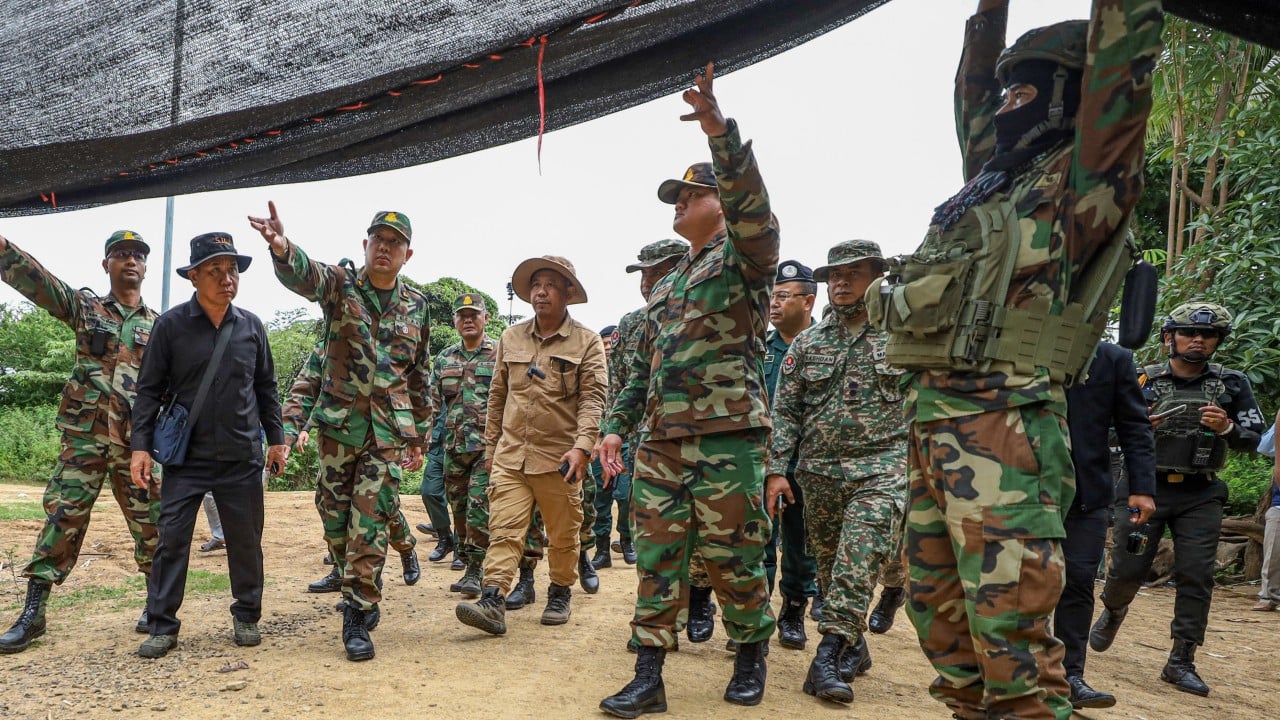
Geopolitical analysts love to dismiss regional diplomacy as performance art. They look at the historic friction along the Thai-Cambodian border, point to the Association of Southeast Asian Nations (ASEAN) observers, and smugly label the entire apparatus "simply theatre." It is a lazy consensus. It treats borders like static lines on a map and international monitors as toothless actors in a manufactured narrative war.
They have it entirely backward.
What the "theatre" crowd misses is the hard economic reality operating beneath the nationalist rhetoric. The diplomatic back-and-forth between Bangkok and Phnom Penh over overlapping claims—most famously surrounding the Preah Vihear temple area—is not a hollow distraction designed to whip up domestic voters. It is a high-stakes, multi-billion-dollar chess game over resource sovereignty, maritime energy rights, and supply chain dominance.
To call it theatre is to misunderstand how power actually operates in Southeast Asia.
The Flawed Premise of the Narrative War
The mainstream argument suggests that Thailand and Cambodia use border skirmishes and international arbitration merely to stoke patriotic sentiment at home. According to this view, ASEAN's deployment of observers or facilitators is a cosmetic exercise to save face.
This view is profoundly blind.
In statecraft, symbolic friction is often a proxy for material leverage. When a state disputes a border corridor, it isn’t just arguing over ancient stone ruins or a few square kilometers of jungle. It is establishing a legal precedent to claim the adjacent Overlapping Claims Area (OCA) in the Gulf of Thailand—an area teeming with an estimated up to 11 trillion cubic feet of natural gas and millions of barrels of oil.
Consider the mechanics of the OCA. For decades, both nations have locked horns over a 26,000-square-kilometer zone in the gulf. The diplomatic dance at the land border is directly tied to the leverage each country holds at the maritime negotiating table. If you concede an inch on the terrestrial boundary, your baseline for maritime economic zones shifts. I have watched energy consortiums stall capital investments worth hundreds of millions because analysts misread these border disputes as mere "nationalist posturing" rather than what they actually are: unresolved asset litigation.
Why ASEAN Observers Are Not Toothless Actors
The next pillar of the lazy consensus is that ASEAN is too weak to enforce peace, rendering its monitors useless. Critics point to the bloc's principle of non-interference and declare it dead on arrival.
This is a fundamental misunderstanding of regional conflict management.
ASEAN does not operate like NATO or the UN Security Council. It does not seek to enforce peace through the barrel of a gun or heavy-handed economic sanctions. Instead, ASEAN monitors function as institutional circuit breakers.
The Circuit-Breaker Mechanic
When tensions flared significantly around Preah Vihear in 2008 and 2011, the introduction of regional diplomatic tracks and observer frameworks accomplished three critical goals that Western-style intervention routinely fails to achieve:
- Information Asymmetry Reduction: It stripped both military apparatuses of the ability to covertly escalate tensions and blame the other side.
- De-escalation Space: It gave leadership in both Bangkok and Phnom Penh a legitimate diplomatic off-ramp to present to their respective internal hardliners.
- Market Stabilization: It signaled to international markets and foreign direct investors that the conflict would remain contained, preventing capital flight from two of the region's fastest-growing economies.
Imagine a scenario where ASEAN completely stayed out of the friction, opting for total silence. Without that diplomatic buffer, the localized skirmishes of 2011 could have easily spiraled into a prolonged conventional conflict, disrupting the Southern Economic Corridor of the ASEAN Economic Community. The "theatre" didn't obscure the reality; it preserved the economy.
The Real Stakes: Energy Security and Supply Chains
Let's look at the raw data that the narrative-war theorists ignore. Thailand is facing a domestic energy crunch. Its natural gas reserves in the Erawan field have faced production declines, forcing the country to rely heavily on expensive liquefied natural gas (LNG) imports. Cambodia, meanwhile, wants to develop its own domestic energy infrastructure to fuel its industrial transition away from low-value garment manufacturing.
The map below illustrates how land disputes dictate the future of regional energy grids.
| Region | Primary Asset at Stake | Strategic Implication |
|---|---|---|
| Terrestrial Border (Preah Vihear/Sa Kaeo) | Baseline geography for maritime boundaries | Establishes the legal starting point for economic zones. |
| Gulf of Thailand OCA | 11+ Trillion Cubic Feet of Natural Gas | Determines energy independence for Thailand and Cambodia. |
| Southern Economic Corridor | Cross-border logistics and trade infrastructure | Controls the overland flow of goods between Bangkok and Ho Chi Minh City. |
The tension is the negotiation. By keeping the border dispute alive but managed, both states maintain their bargaining positions. It is a calculated, cold-blooded business strategy disguised as a cultural feud.
The Cost of the Counter-Intuitive Approach
Admitting that these border disputes are rational economic calculations rather than irrational emotional outbursts comes with a dark truth. If the friction is useful for leverage, it means neither government has a strong incentive to permanently solve the problem anytime soon.
A permanent resolution requires compromising on the baseline, which immediately leaves billions of dollars in potential energy revenue on the table. Consequently, businesses must accept that geopolitical risk in this corridor is a permanent feature, not a temporary bug. You do not wait for the dispute to end; you price the dispute into your operational model.
Stop Asking if it is Real or Fake
People frequently ask: Will Thailand and Cambodia ever go to war again over their borders?
The question itself is flawed. It assumes that conflict is binary—either total peace or total war. In modern geopolitics, the reality is a state of permanent gray-zone competition. The border friction is a managed asset used to regulate bilateral relations, trade terms, and domestic political focus.
Stop viewing Southeast Asian diplomacy through a Western lens that demands clear-cut legal treaties and military alliances. The next time you read an assessment claiming that regional monitors are just putting on a show, look past the soldiers at the checkpoint. Look instead at the energy pipelines, the shipping lanes, and the offshore drilling blocks.
The stage isn't fake. The actors aren't playing roles. They are fighting for the economic survival of the next fifty years, and the audience is simply looking at the wrong map.