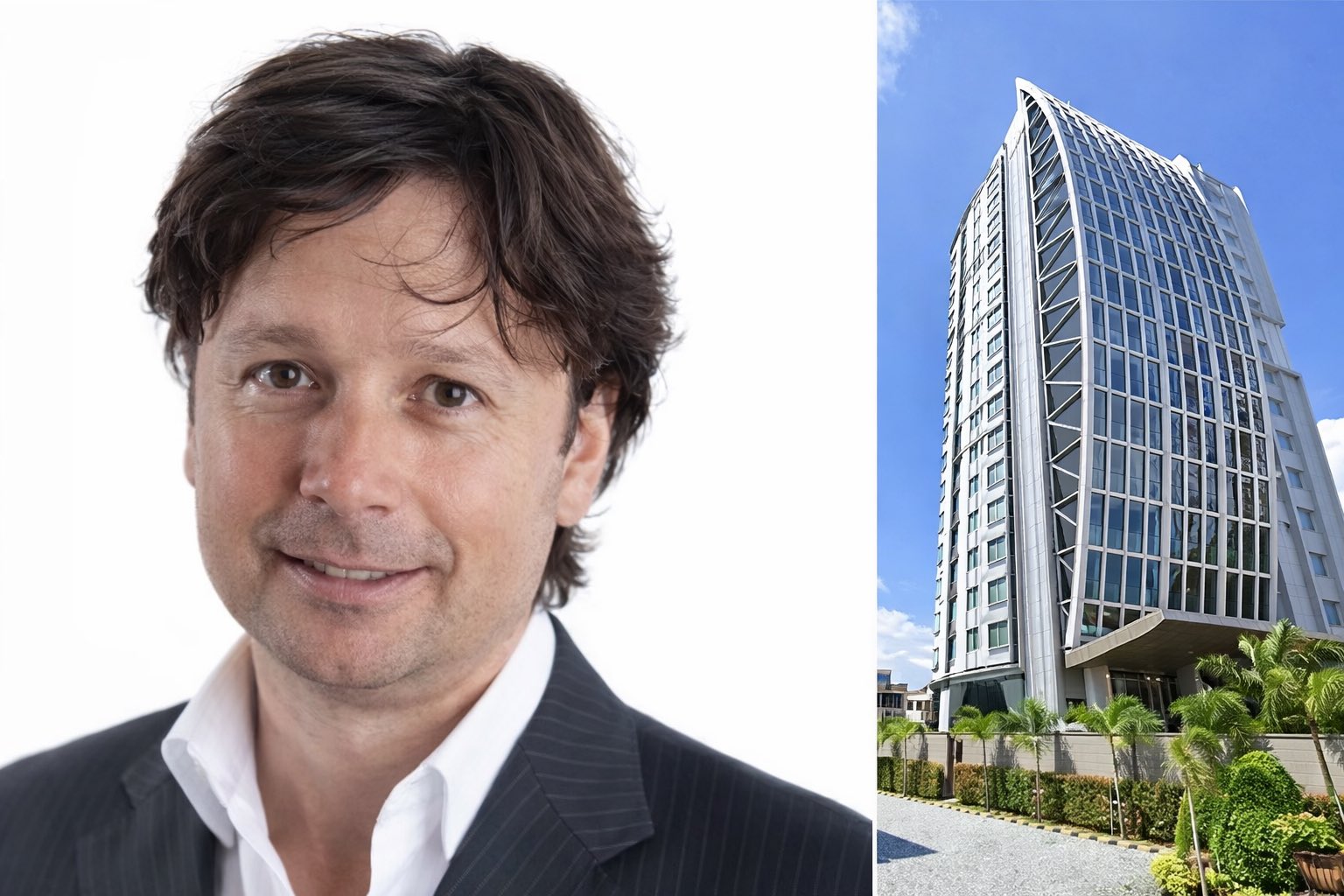
The death of Quentin Griffiths in Bangkok, Thailand, represents more than a tragic human event; it serves as a critical case study in the lifecycle of digital-first retail giants and the long-term decoupling of a brand from its original architects. While Griffiths had transitioned away from the day-to-day operations of ASOS years prior, his role in establishing the "As Seen On Screen" (ASOS) fundamental value proposition remains the bedrock of the company’s current multi-billion-dollar valuation. Analyzing this event requires a forensic look at the transition from entrepreneurial risk-taking to institutionalized corporate governance and the specific mechanics of international asset management and personal legacy in the post-founder era.
The Architectural Foundation of Digital Fast Fashion
Griffiths, alongside Nick Robertson, identified a specific market inefficiency in the late 1990s: the lag between celebrity cultural influence and consumer accessibility. This friction point—the time and cost required for a consumer to replicate a look seen in media—was the "pain point" that ASOS solved through a high-velocity supply chain.
The Griffiths-Robertson model rested on three structural pillars:
- Velocity of Replication: Reducing the lead time from media exposure to product availability to near-zero.
- Aggregated Curation: Moving beyond a single brand identity to become a platform that hosted thousands of third-party SKUs, effectively de-risking the inventory holding by diversifying trend exposure.
- Democratized Aspiration: Utilizing the "As Seen On Screen" hook to bridge the gap between high-fashion editorial content and high-street price points.
By the time Griffiths departed the business in 2005, these pillars were sufficiently hardened into the corporate infrastructure. His exit marked the shift from the Founder-Led Phase (characterized by agile pivot-based decision making) to the Institutional Scaling Phase (characterized by systematic optimization and global logistics expansion).
Quantifying Founder Departure and Brand Continuity
In the field of strategic management, the "Founder Effect" typically dissipates over a 10-to-15-year horizon following a complete exit from the board and shareholding. Griffiths’ trajectory post-ASOS—which included the founding of ACHICA, a members-only luxury lifestyle store—demonstrates the serial entrepreneur’s tendency to seek out "blue ocean" markets where high barriers to entry (in this case, exclusive memberships) provide a protective moat.
The impact of a co-founder's death on a mature, publicly traded entity like ASOS is largely symbolic rather than operational. This is due to the Decoupling Coefficient: the degree to which a company's internal processes, software stacks, and cultural norms can function independently of the original visionary’s input. For ASOS, this coefficient is near 1.0.
However, for the broader investment community, the event triggers a retrospective on the "Succession Quality Index." This index measures how effectively a company preserves the core DNA of its founders while purging the inefficiencies associated with early-stage, personality-driven leadership.
The Thailand Incident and Jurisdictional Complexity
The circumstances surrounding Griffiths’ fall from the 17th floor of a Bangkok condominium introduce significant forensic and jurisdictional variables. From a risk management perspective, the incident highlights the complexities of "High-Net-Worth Mobility"—the tendency for former executives to reside in jurisdictions with varying levels of transparency and legal infrastructure.
In such cases, the investigative process follows a standardized protocol:
- Environmental Forensics: Analyzing the structural integrity of the site and the presence of safety protocols.
- Digital Footprint Mapping: Reviewing recent communications and financial transactions to identify potential stressors or external threats.
- Toxicological Analysis: Determining if biochemical factors influenced decision-making or physical coordination.
The Royal Thai Police reported no initial signs of a struggle, which moves the analytical focus toward either accidental failure of safety barriers or intentional self-harm. In the context of executive health and legacy, these incidents often bring "Key Person Life Insurance" and "Estate Contingency Planning" to the forefront of business discussions. Even when a founder is no longer "Key" to the operations, the optics of their demise can affect the brand's perceived stability in the short-term luxury and lifestyle markets.
The ACHICA Model and Post-ASOS Strategic Diversification
Griffiths’ subsequent venture, ACHICA, represented a pivot from the high-volume, low-margin world of fast fashion to a high-margin, scarcity-driven model. This transition reflects a sophisticated understanding of the "Value-Time Continuum." While ASOS focused on the immediacy of trends, ACHICA focused on the exclusivity of the acquisition.
The success of ACHICA, which was eventually sold to Dunelm in 2017, validated Griffiths' ability to build "Flash-Sale" architectures. This business model relies on:
- Artificial Scarcity: Limiting access to goods to create a psychological "buy now" trigger.
- Inventory Liquidation Arbitrage: Helping luxury brands clear excess stock without devaluing the primary brand through public discounting.
- Data-Rich User Bases: Building a highly targeted list of affluent consumers whose data becomes the primary asset during an acquisition.
Legacy Management and the Founder's Tax
The death of a founder often leads to a re-evaluation of the "Founder’s Tax"—the lingering influence, both positive and negative, that an original creator exerts over a firm. For ASOS, the tax has been largely positive, providing a narrative of "British tech success" that has helped the company weather the volatility of the e-commerce sector.
Yet, the divergence between the founder’s personal life and the company’s public face creates a "Brand-Individual Gap." When the individual is involved in a high-profile incident, the brand must manage the association carefully to avoid "Contagion Risk." This is particularly true in the age of ESG (Environmental, Social, and Governance) investing, where the personal conduct of associated figures—past or present—can influence fund manager sentiment.
Strategic Realignment in Global E-commerce
Looking at the trajectory Griffiths helped set, the current e-commerce environment is facing a "Compression Phase." The original ASOS model of high-speed replication is being challenged by ultra-fast fashion entities like Shein and Temu. These newer players have optimized the "Supply Chain Feedback Loop" even further, using AI to predict trends before they even hit the "Screen" that Griffiths originally targeted.
To survive the post-founder era and this new competitive pressure, the institutionalized ASOS must focus on:
- Hyper-Personalization Algorithms: Moving beyond the "As Seen On Screen" generic celebrity model to "As Seen On Your Feed" individualized curation.
- Logistical Sovereignty: Owning more of the distribution network to reduce reliance on third-party shippers, thereby protecting margins.
- Circular Economy Integration: Transitioning from a "Disposable Fashion" identity to a "Resale and Repair" hub to meet changing consumer ethical demands.
The loss of Quentin Griffiths is a milestone in the history of the UK's digital economy. It marks the definitive end of the "Pioneer Era" for one of the country's most successful startups. For the company he left behind, the path forward involves the ruthless optimization of the very systems he helped sketch out on a napkin in 1999. The transition from the volatility of human genius to the stability of algorithmic execution is the ultimate goal of any founder-led enterprise.
Organizations should immediately audit their "Founder Association Risk" and ensure that their crisis communication protocols account for historical figures who no longer hold operational roles but still carry significant "Brand Equity Weight." This involves a proactive mapping of the personal and geographical risks associated with all founders, ensuring that the brand’s narrative is decoupled from individual outcomes before such events occur. The objective is not to erase history, but to institutionalize the legacy so that the brand’s "Structural Integrity" remains independent of personal tragedy.