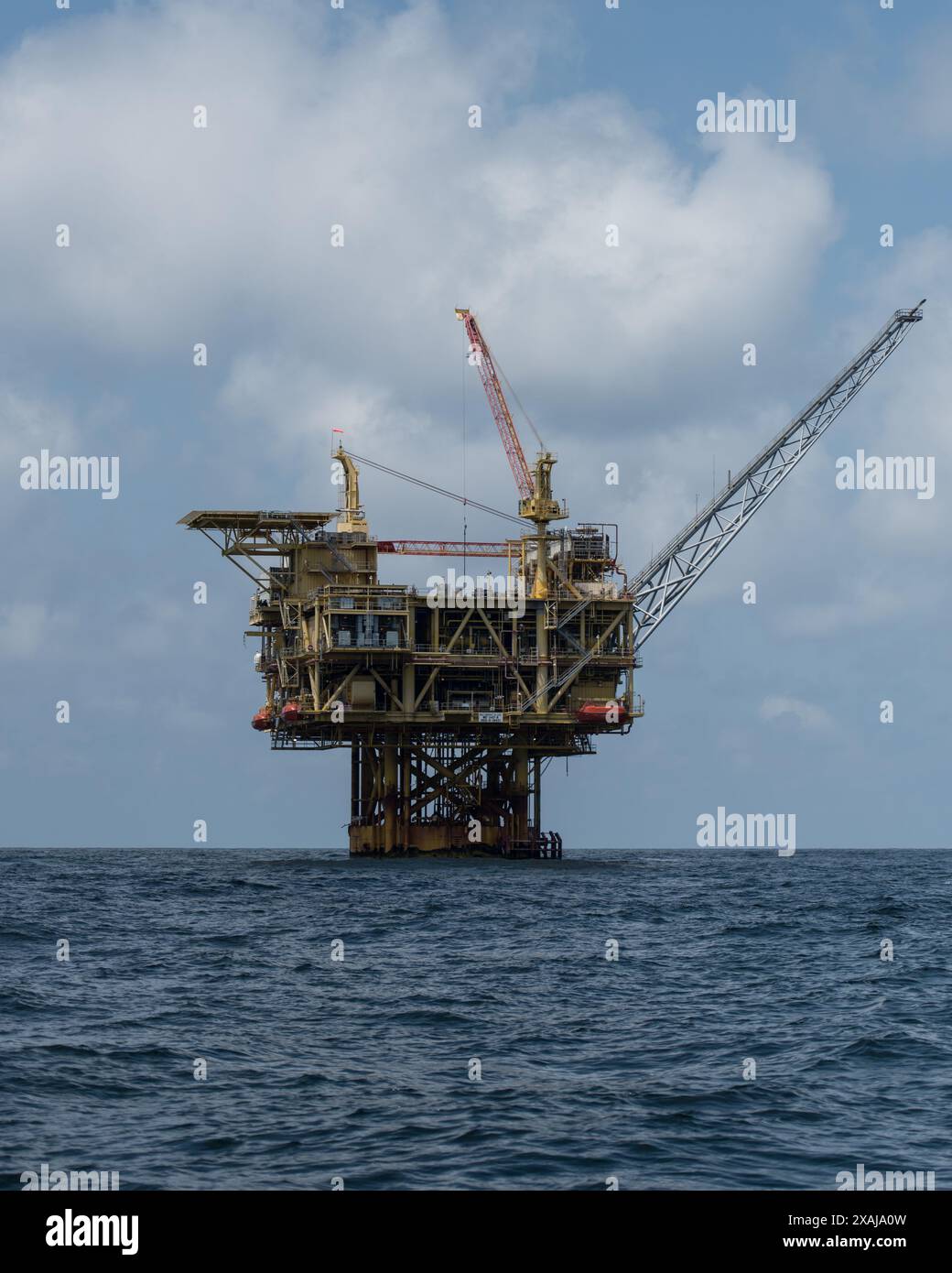
The interception of ballistic missiles over Riyadh following drone strikes on Saudi pipeline infrastructure demonstrates a structural shift in modern asymmetric warfare where low-cost unmanned aerial vehicles (UAVs) and long-range ballistic munitions are deployed to impose disproportionate financial and operational costs on centralized energy networks. When a non-state or state-sponsored actor targets midstream hydrocarbon transport—specifically the East-West Pipeline (Petroline)—and subsequently launches ballistic projectiles toward a capital city, the tactical objective is rarely total physical destruction. Instead, the operation functions as a calculated stress test against two distinct systems: the redundancy of global energy supply chains and the unit economics of integrated air and missile defense (IAMD).
Standard geopolitical reporting treats these events as isolated kinetic exchanges—an attack occurs, air defenses engage, and regional tensions rise. That framing misses the underlying operational mechanics. To evaluate the true impact of a dual-vector strike combining pipeline sabotage with urban ballistic threats, analysts must separate the immediate tactical intercept from the broader strategic attrition.
The Dual-Vector Operational Architecture
Modern standoff attacks against energy-exporting states rely on synchronized, multi-domain pressure rather than single-point failures. By pairing a strike on remote midstream infrastructure with high-altitude ballistic trajectories aimed at Riyadh, the attacking force executes a classic dilemma strategy designed to stretch defensive sensor networks and force suboptimal resource allocation.
Vector One: Midstream Chokepoint Attrition
The East-West Pipeline runs approximately 1,200 kilometers across the Arabian Peninsula, transporting crude oil from the Eastern Province processing facilities to Red Sea export terminals at Yanbu. Strategically, this conduit exists specifically to bypass the Strait of Hormuz, acting as a critical pressure-relief valve for global crude markets.
Attacking pump stations along this corridor targets the hydraulic continuity of the network without requiring the munitions payload necessary to breach hardened coastal refineries.
- Low-Signature Ingress: Unmanned aerial vehicles flying at low altitudes exploit terrain masking and radar horizon limitations across vast desert expanses, making continuous perimeter defense prohibitively expensive.
- Component Bottlenecks: High-capacity pumping stations rely on specialized industrial turbines, control systems, and high-pressure valves. Even localized fire damage forces operators to depressurize segments of the line, halting throughput while safety inspections and component replacements occur.
- Psychological Risk Premium: The physical volume of crude delayed by a temporary shutdown is often recoverable through reserve storage drawdowns. The immediate market impact stems from the demonstration that inland bypass routes are no longer immune to standoff interdiction.
Vector Two: Urban Ballistic Saturation
Following an infrastructure strike with ballistic missile launches toward Riyadh shifts the defensive burden from remote asset protection to population center defense. Ballistic trajectories require entirely different radar tracking parameters, engagement timelines, and interceptor kinematics than slow-moving, low-altitude drones.
- Sensor Reallocation: Long-range early warning radars must prioritize high-apogee ballistic tracks, potentially creating coverage gaps at lower altitudes if multiple threat axes are active simultaneously.
- Terminal Engagement Constraints: Intercepting a ballistic missile over a densely populated metropolitan area introduces debris mitigation risks. Even a successful kinetic hit-to-kill interception—where the interceptor destroys the incoming warhead via sheer kinetic energy rather than a proximity blast—scatters metallic fragments across urban districts.
- Political Signaling: Threatening a capital city forces the defending government to maintain maximum alert postures, draining operational readiness and imposing psychological strain on domestic and expatriate commercial sectors.
The Asymmetric Cost Function of Air Defense
The core economic vulnerability exposed by missile engagements over Riyadh lies in the stark asymmetry between offensive munition production costs and defensive interceptor expenditure. In traditional state-on-state conflict, attrition is measured in industrial capacity and troop reserves. In asymmetric missile warfare, attrition is measured in cost-exchange ratios.
An offensive ballistic missile assembled from modular, commercially dual-use components or transferred through covert supply networks costs a fraction of a modern surface-to-air interceptor. Advanced terminal defense batteries—such as the Patriot PAC-3 or THAAD systems deployed to protect Riyadh—utilize interceptors costing several million dollars per unit. Standard military doctrine frequently dictates firing two interceptors per incoming ballistic target to ensure a high single-shot probability of kill ($P_k$).
This creates a structural economic drain:
- Offensive Expenditure: Low-to-moderate capital outlay utilizing decentralized assembly workshops and readily available propulsion materials.
- Defensive Expenditure: Multi-million-dollar precision-guided interceptors requiring complex supply chains, specialized propellant manufacturing, and years-long procurement lead times.
- Inventory Depletion: Manufacturing bottlenecks mean a defending state can expend months of interceptor production in a single night of high-intensity engagements.
Relying exclusively on kinetic interceptors to defeat persistent, low-cost aerial threats is mathematically unsustainable over a multi-year conflict horizon. Every successful interception over Riyadh achieves a tactical victory by preventing ground casualties, yet simultaneously advances the attacker's strategic goal of depleting high-end defensive stockpiles.
Hydraulic Redundancy and Energy Market Transmission Mechanisms
When Houthi forces target Saudi pipeline infrastructure, the immediate question for global commodity markets is whether physical supply will tighten. Answering this requires separating nominal capacity losses from actual export disruptions.
Saudi Aramco maintains substantial operational slack precisely to absorb geopolitical shocks. This buffer operates through three sequential mechanisms:
- Line-Pack and Storage Drawdowns: Crude oil export terminals maintain massive tank farms holding millions of barrels of inventory. If an inland pipeline is temporarily halted, tankers at coastal ports continue loading from terminal storage while repairs proceed inland.
- Rerouting Through Spare Capacity: The global oil market tracks spare production capacity—wells and processing trains kept offline under normal conditions that can be brought online within days. When one transport corridor experiences friction, output can be shifted to alternative gathering centers and coastal loading buoys, provided maritime lanes remain open.
- Bypassing the Bypass: If the East-West Pipeline suffers degraded throughput, export volumes revert to Persian Gulf terminals, increasing reliance on the Strait of Hormuz. While this restores immediate export volume, it concentrates geopolitical risk back into a single maritime chokepoint.
Market pricing reacts to these attacks through the volatility surface rather than immediate spot shortages. Traders bid up out-of-the-money call options on crude futures to hedge against tail-risk scenarios—specifically, the possibility that a subsequent strike hits a non-redundant processing node, such as Abqaiq, where stabilization facilities cannot be easily bypassed.
Structural Limitations of Kinetic Deterrence
A critical analytical error in evaluating regional security is assuming that superior military hardware guarantees deterrence. Deterrence theory relies on the defender's ability to threaten unacceptable costs against assets the attacker values. When an asymmetric actor operates without centralized industrial infrastructure, traditional retaliatory strikes face diminishing returns.
Airstrikes against launch sites, storage depots, and training camps degrade operational tempo temporarily, yet they rarely eliminate the underlying capability. Launchers are mobile, easily camouflaged, and frequently dispersed within civilian infrastructure, raising the political and humanitarian cost of retaliatory targeting. Meanwhile, the technical blueprints and guidance components required to sustain missile and drone operations are lightweight and easily smuggled across porous maritime and land borders.
Consequently, defensive postures built entirely around kinetic interception and punitive air campaigns trap the state in a reactive loop. The defender must achieve a 100 percent success rate across thousands of kilometers of territory and infrastructure, while the attacker only needs a single munition to penetrate defenses to achieve strategic disruption and media amplification.
Hardening the Defensive Architecture
Breaking the asymmetric cost trap requires restructuring both physical infrastructure protection and air defense doctrine. Continuing to expend multi-million-dollar interceptors against every inbound aerial threat will eventually exhaust munitions reserves regardless of defense budget size.
1. Layered Non-Kinetic and Low-Cost Interception
Air defense architectures must transition from pure kinetic hit-to-kill reliance toward tiered engagement protocols matched to threat velocity and cost:
- Directed Energy and High-Power Microwaves: Deploying laser systems and microwave emitters around fixed infrastructure nodes—such as pipeline pump stations—reduces the cost per engagement to the price of electrical generation, neutralizing drone swarms without depleting missile magazines.
- Electronic Warfare Perimeters: Continuous GPS spoofing, command-link jamming, and acoustic sensor arrays around midstream energy corridors force low-cost UAVs off course before they enter terminal visual guidance phases.
- Interceptor Conservation: Reserve high-tier ballistic interceptors strictly for confirmed high-velocity trajectories threatening dense urban centers or non-redundant processing hubs, allowing lower-cost gun systems or electronic countermeasures to handle subsonic threats.
2. Decentralized Infrastructure Modularity
Protecting a 1,200-kilometer pipeline against aerial surveillance is physically impossible. Resilience must be engineered into the mechanical design of the network itself:
- Pre-Positioned Spare Inventory: Maintain hardened, subterranean storage bunkers adjacent to major pumping stations containing pre-fabricated replacement turbines, transformers, and manifold assemblies to cut repair timelines from weeks to days.
- Automated Isolation Valves: Upgrade supervisory control and data acquisition (SCADA) networks with rapid-acting isolation valves that compartmentalize pressure drops instantly upon impact, minimizing crude spillage and localized fire propagation.
- Physical Blast Shielding: Erect modular concrete blast walls and overhead steel mesh cages around critical control rooms and above-ground valve manifolds to defeat small shaped-charge warheads carried by commercial-grade drones.
3. Supply Chain Interdiction Over Terminal Defense
Stopping a ballistic missile on its terminal descent over Riyadh is the least efficient point of engagement. Strategic investment must shift upstream toward maritime and financial interdiction networks targeting the specific chokepoints in the attacker's supply chain: commercial inertial measurement units, micro-turbines, specialized fuel precursors, and external technical advisors. Disrupting the procurement of guidance electronics degrades missile accuracy far more economically than attempting to shoot down assembled projectiles over populated cities.