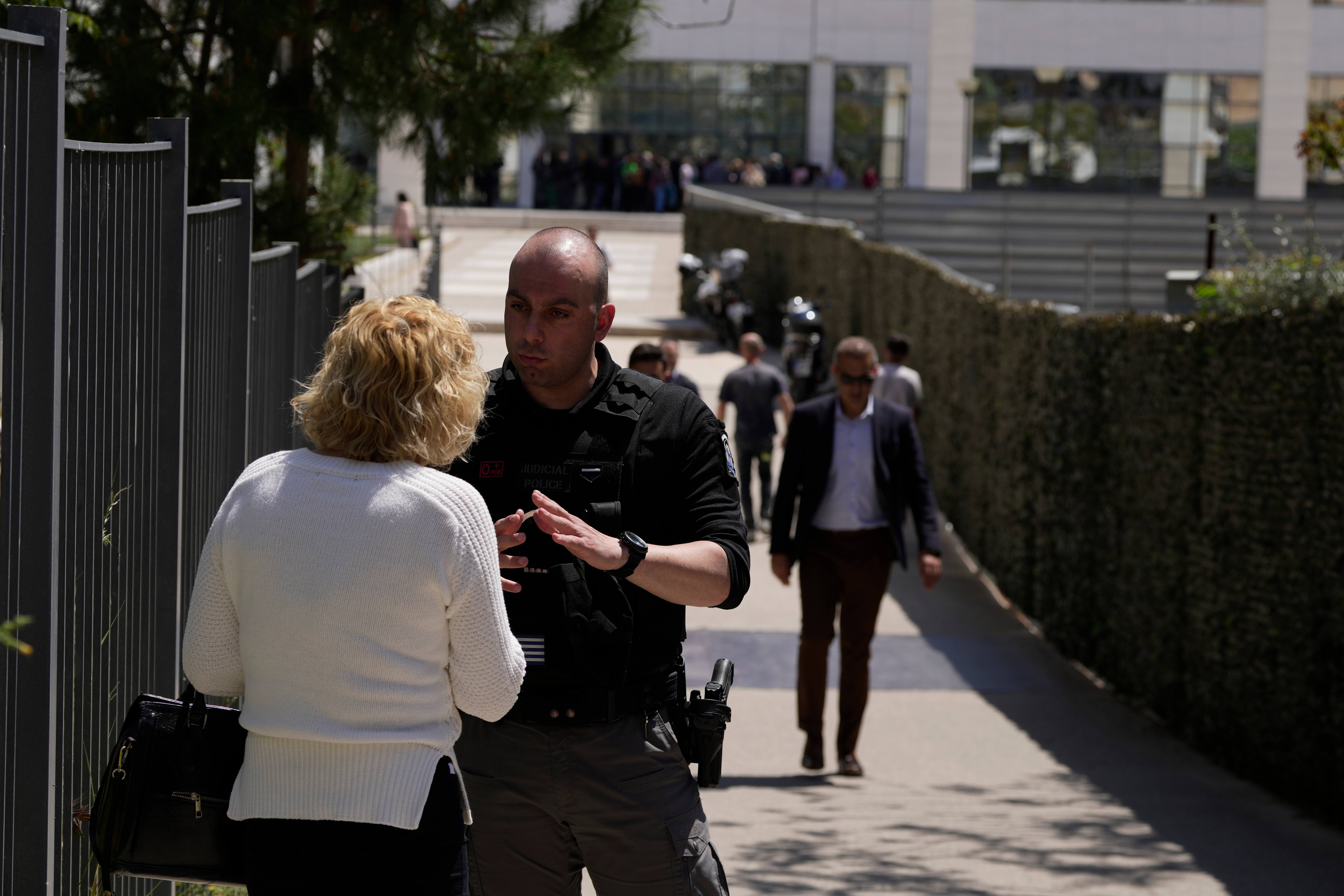
The headlines are predictable. "Gunman arrested." "Chaos in the streets." "Security tightened." Standard media outlets are currently feasting on the adrenaline of a double-shooting in the Greek capital, painting a picture of a random act of violence met by a swift, heroic police response. They want you to feel a sense of closure because an arrest was made.
They are selling you a lie.
The obsession with the "event" of a shooting is a distraction from the structural decay that makes these events inevitable. We treat these incidents like lightning strikes—unpredictable, tragic, and isolated. In reality, they are more like a slow-moving flood caused by a crumbling dam that everyone ignored for decades. If you think a quick arrest solves the problem, you aren't paying attention to the mechanics of urban security or the shifting reality of Mediterranean instability.
The Myth of the Swift Response
Mainstream reports focus on the arrest. They highlight the speed of the Hellenic Police as if efficiency in the aftermath is a substitute for prevention. It isn't. When a gunman manages to open fire at two distinct locations in a major European capital, the security apparatus has already failed.
The "swift response" narrative is a PR band-aid.
I have spent years analyzing urban risk profiles. High-density cities like Athens are increasingly porous. The Mediterranean "security blanket" is riddled with holes caused by underfunded social services, a black market for small arms that has exploded since the destabilization of nearby regions, and a police force that is structurally reactive rather than proactive.
When you see a headline about an arrest, don't cheer. Ask how a person with a firearm moved through the heart of the city to a second location without being intercepted. That gap in time is where the real story lives. The competitor articles won't mention the "response lag" because it doesn't fit the hero-cop trope.
Stop Asking if Athens is Safe
The most common question following these incidents is: "Is it still safe to travel to Athens?"
This is the wrong question. It’s a binary trap. Safety isn't a toggle switch that is either "on" or "off." Safety is a commodity, and right now, the price is skyrocketing while the quality is dropping.
Athens, like Paris or Brussels, is dealing with the fallout of a "pressure cooker" environment. You have:
- Massive economic disparity.
- A surge in untreated mental health crises.
- An influx of illicit hardware.
The "safety" you feel as a tourist or a resident is often just the absence of being in the wrong place at the wrong time. It isn't a result of a bulletproof social contract. To pretend that this shooting was a freak occurrence is to ignore the boiling point the city has reached. True security isn't found in more police on the corner; it’s found in a city where the incentives for violence are removed. We are moving in the opposite direction.
The Illegal Arms Fallacy
We need to talk about the "lone wolf" narrative. This is the favorite tool of lazy journalists. It frames the perpetrator as a ghost who appeared from nowhere.
There are no ghosts.
Every firearm used in an urban shooting has a pedigree. It came through a port, crossed a border, or was stolen from an official cache. In the Balkans and the Mediterranean, the "grey market" for weapons is not a secret; it’s an industry.
When a gunman opens fire, the media looks at his finger on the trigger. We should be looking at the supply chain. Greece sits at a geopolitical crossroads. The failure to secure these transit points means that "arresting the gunman" is like catching a single drop of rain during a hurricane. Until we address the sheer volume of untracked hardware flowing through the region, these "isolated incidents" will become a weekly rhythm.
The Professional’s Reality Check
I’ve watched security budgets in major hubs get diverted toward "visibility" rather than "intelligence."
If you want to know why these shootings keep happening, look at the allocation of funds. Governments love spending on riot gear and armored SUVs. It looks good on the news. It makes the public feel like the "cavalry" is here.
But visibility is not the same as effectiveness.
Effective security is quiet. It’s boring. It’s based on signals intelligence, community intervention, and border integrity. But those things don't produce a "Gunman Arrested" headline that generates clicks. We are being sold a theater of security while the actual foundations are rotting.
The Nuance of the Motive
The competitor’s piece likely speculates on motive. Was it terror? Was it personal?
It doesn't matter.
The obsession with "why" he did it allows us to avoid the "how." How did he feel empowered to do it? How did he acquire the means? When we focus on the psychological profile of one broken individual, we ignore the cultural and systemic factors that allowed him to act.
Imagine a scenario where we treated shootings like a public health crisis rather than a criminal drama. We would stop focusing on the "villain" and start looking at the "pathogen." The pathogen in Athens—and many other European cities—is a lethal mix of social alienation and accessible weaponry.
The Actionable Truth
You cannot rely on the state to guarantee your absolute safety in an era of urban fragmentation. That is a hard truth that most "experts" won't tell you because it sounds alarmist. It isn't alarmist; it's tactical.
If you are living in or visiting a major metropolitan hub, you need to abandon the "it won't happen here" mindset.
- Observe the Exit: In any high-traffic urban area, your first job is to know your egress.
- Ignore the Theater: Don't be comforted by the presence of a few officers with submachine guns at a tourist site. They are there for optics.
- Monitor the Vibe: Violence in cities like Athens often has a "pre-heat" phase. Protests, strikes, and increased police friction are data points. Use them.
The media wants you to be a spectator in a morality play where the bad guy gets caught and the world returns to normal. I’m telling you that "normal" was the problem in the first place. The shooting wasn't a break in the system; it was the system working exactly as it is currently designed.
Stop waiting for the authorities to "fix" the security landscape. They are busy managing the PR fallout of their own incompetence. The arrest in Athens isn't the end of the story; it's a reminder that the next one is already in the chamber.