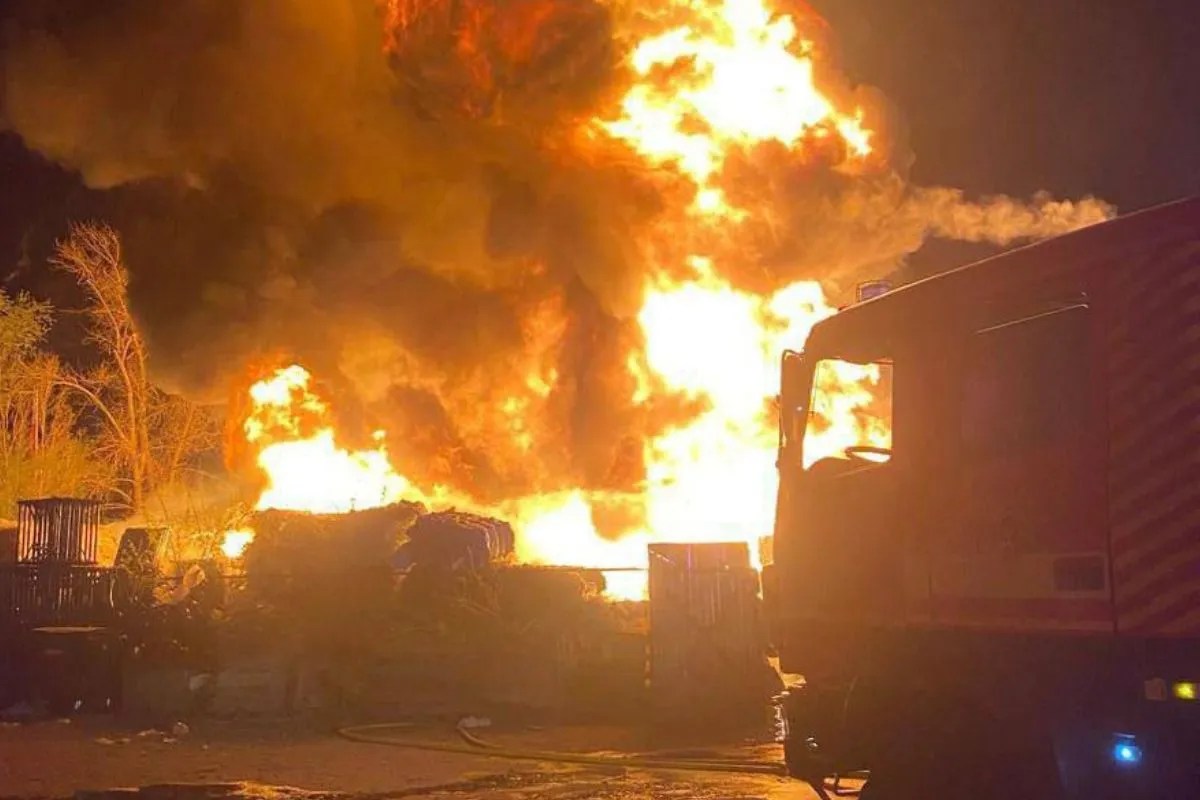
The recent escalation in long-range precision strikes across Ukraine represents a shift from tactical suppression to a deliberate campaign of systemic exhaustion. While media reports focus on the immediate casualty counts—16 dead and over 100 wounded—the strategic objective lies in the degradation of the target’s operational recovery capacity. To understand this phase of the conflict, one must move beyond the emotional weight of the strikes and analyze the kinetic interaction between Russian delivery systems and Ukrainian defensive envelopes.
The Mechanics of Saturation and Penetration
Modern aerial bombardment relies on a specific cost-asymmetry function. The Russian Federation utilizes a layered strike profile designed to overwhelm Integrated Air Defense Systems (IADS). This is not a random dispersal of munitions but a calculated sequence of arrival: For an alternative view, see: this related article.
- Ordnance Decoys and Low-Cost Shifting: The use of Geran-2 (Shahed-series) loitering munitions serves to force the activation of radar systems and the expenditure of high-cost interceptors.
- Kinetic Overload: Once the defensive fire-control systems are saturated, high-velocity cruise missiles (Kalibr or Kh-101) and quasi-ballistic systems (Iskander-M) are launched into the established gaps.
- Terminal Phase Variability: By programming missiles to arrive at a single target from multiple vectors simultaneously, the attacker ensures that even a 90% interception rate allows enough "leakage" to achieve the intended destruction of the primary objective.
The 100+ injuries reported are a direct result of this "leakage" into high-density urban environments. When an intercept occurs at low altitude over a city, the resulting debris field creates a secondary strike zone. The kinetic energy of a destroyed missile, combined with unspent fuel and the interceptor's own fragmentary warhead, transforms a defensive success into a localized mass-casualty event.
Logistics of the Defensive Envelope
Ukraine’s defensive strategy is currently constrained by the Interceptor Depletion Rate. Every successful shoot-down of a $20,000 drone using a $2,000,000 Patriot or IRIS-T missile creates a net deficit in long-term sustainability. This creates a bottleneck in three specific areas: Related coverage on this trend has been shared by USA Today.
- Geographic Coverage Gaps: Protecting critical infrastructure (energy grids) vs. protecting civilian population centers. Choosing one necessitates leaving the other vulnerable to the "saturation logic" mentioned above.
- Reload Latency: The physical time required to rearm sophisticated batteries after a mass-wave attack. Russian strike planners timing waves 12–24 hours apart exploit this window.
- Electronic Warfare (EW) Displacement: The reliance on GPS-guided Western munitions is countered by high-powered Russian jamming clusters (such as the Pole-21 or Zhitel systems), forcing Ukrainian defenses to rely on less precise optical or thermal tracking.
The Infrastructure Attrition Model
The targeting of residential areas, while often viewed through the lens of psychological warfare, serves a cold industrial purpose: the redirection of state resources. When a strike hits a civilian apartment complex, the state must divert energy, heavy machinery, medical supplies, and personnel away from the front lines to manage the recovery. This "Resource Siphon" effect is a force multiplier for the attacker, as it degrades the rear-area stability required to support active combat operations.
This can be quantified through the Recovery Time Objective (RTO). If the rate of destruction of a city’s power or housing stock exceeds the state’s ability to repair it within a 30-day window, the city enters a state of "functional collapse." The goal of these recent strikes is to push major hubs like Kyiv, Kharkiv, and Odesa toward this threshold before the onset of seasonal shifts that increase energy demand.
Volumetric Analysis of Missile Inventories
A critical error in contemporary analysis is the assumption that Russia is "running out" of precision munitions. Data suggests instead a transition to a Sustainable Production Cadence. Based on current industrial intelligence, Russian defense enterprises have shifted to a three-shift work cycle, prioritizing the Kh-101 and Iskander production lines.
- Production vs. Expenditure: Current estimates put Russian cruise missile production at roughly 60–100 units per month. When strikes occur in massive waves of 80–120 munitions, they represent the accumulation of several weeks of industrial output.
- Sanction Circumvention: The continued presence of Western-origin microelectronics in downed missiles confirms that the supply chain for high-end guidance systems has been successfully rerouted through third-party intermediaries, negating the expected technological starvation of the Russian aerospace sector.
The Tactical Response Requirement
For the Ukrainian defense to stabilize, the strategy must pivot from reactive interception to Proactive Neutralization. This involves:
- Deep-Strike Interdiction: Utilizing long-range systems (ATACMS, Storm Shadow) to hit the "archers" rather than the "arrows." This means targeting the Tu-95MS airbases and Black Sea Fleet launch platforms before munitions are airborne.
- Distributed Defense: Moving away from centralized SAM batteries toward highly mobile, decentralized "fire-and-move" units that are harder to target via SEAD (Suppression of Enemy Air Defenses) missions.
- Passive Hardening: Investing in physical barriers and underground relocation of critical transformers. Kinetic energy cannot be stopped, but its impact can be localized through reinforced concrete shielding.
The current trajectory indicates that without a qualitative increase in the density of medium-range air defense and a relaxation of restrictions on striking launch sites within the Russian interior, the "saturation logic" will continue to yield high-fatality events. The conflict has moved beyond a battle of territory into a battle of industrial throughput and logistical resilience. The survival of the Ukrainian rear depends entirely on breaking the cost-asymmetry of the current missile-drone mix.
Strategic planners must now anticipate a winter campaign characterized by "Darkness as a Weapon," where strikes are timed specifically to coincide with peak load on the energy grid, maximizing the thermal and psychological stress on the population. The objective for the defense is no longer to achieve a 100% intercept rate, but to maintain a "Functioning Minimum" of the state's core systems under constant kinetic pressure.