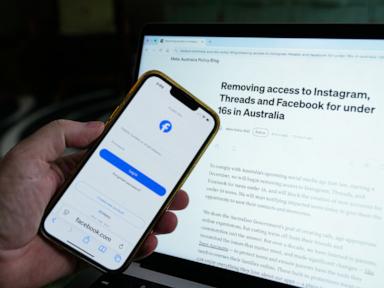
Six months ago, Australia did something no other country had the nerve to do. The government passed a world-first law banning kids under 16 from holding social media accounts. It was supposed to protect youth mental health, fix the systemic rot of algorithmic feeds, and give parents a breather.
Instead, kids are still scrolling, tech giants are playing dumb, and the government is visibly sweating.
The cracks in the armor are wide enough that Prime Minister Anthony Albanese just announced he is doubling the financial penalties for social media companies failing to block underage users. Systematic failures to enforce the ban will soon trigger a maximum fine of 99 million Australian dollars (roughly 68 million USD). That is up from the original A$49.5 million limit.
But let’s be entirely honest here. Fines only work if you can actually catch the culprit. Right now, Australia’s ambitious ban is turning into a game of regulatory whack-a-mole, and Big Tech is winning.
Big Tech is Taking the Mickey
That is not my phrase; it belongs to Communications Minister Anika Wells. She explicitly accused platforms of using weak compliance methods and running tricks straight out of the old corporate playbook to dodge the rules.
When the law took effect on December 10, 2025, it placed the legal burden entirely on 10 specific platforms—including Meta’s Facebook and Instagram, TikTok, Google’s YouTube, Snapchat, Reddit, and X. The kids themselves do not face penalties, nor do their parents. The apps were told to take "reasonable steps" to keep kids out.
The platforms claimed they complied. The government even points to the fact that over 5 million underage accounts have been wiped, deactivated, or restricted since December.
That sounds like a win until you look at how teenagers actually behave.
Recent research showed that three months after the ban went live, over 80% of under-16s in Australia were still actively using social media. They are using simple VPNs (Virtual Private Networks) to mask their location, creating dummy email addresses, or just lying about their birth year like generations of internet users before them. A report from the British Medical Journal even concluded there is zero hard evidence that the ban has substantially shifted teenage behavior.
The tech giants did the bare minimum required to satisfy the loose legal definition of "reasonable steps" while keeping their user numbers steady. They did not deploy effective age-checking tools, relying instead on self-declaration boxes or basic device settings.
Expanding the Powers of the eSafety Watchdog
Because the original law lacked real enforcement teeth, the newly proposed legislative package does more than just bump up the sticker price of a violation. It significantly expands the raw power of the country’s internet regulator, the eSafety Commissioner led by Julie Inman Grant.
The updated rules give the regulator the legal muscle to:
- Compel Internal Evidence: Social media companies will be forced to hand over internal data detailing the exact technical architecture they use to spot and block underage users.
- Subpoena Third Parties: The eSafety Commissioner can now bypass the social networks entirely and extract data from third-party app stores (like Apple and Google) and age-verification providers to cross-reference claims made by platforms.
- Target Systematic Loopholes: Investigators are currently probing five major players for active non-compliance: Instagram, Facebook, YouTube, Snapchat, and TikTok.
Will a A$99 million fine scare Mark Zuckerberg? Probably not on its own. For context, Meta pulled in over 130 billion USD in revenue in a single recent year. A $68 million penalty is a cost of doing business. However, the threat of continuous, public audits coupled with third-party data tracking makes the regulatory environment far more toxic for them.
The Age Verification Nightmarish Logic
The real reason this ban is stumbling is not just tech company greed. It is a fundamental flaw in how we verify who someone is online.
True age verification requires either biometric data (like facial scanning) or uploading government-issued identification. Privacy advocates are rightly terrified of this. If you force every adult in Australia to upload a driver's license or scan their face just to log into a message board like Reddit, you create a massive honeypot for hackers. Reddit is currently challenging the ban in Australia’s High Court on free speech grounds.
If the government relies on weak verification, kids bypass it in five seconds. If they insist on bulletproof verification, they compromise the privacy of every single adult in the country. It is a brutal trade-off, and the current legislation has not solved it.
Other nations are watching this mess play out with intense focus. The UK recently announced its own plans for digital restrictions, extending their scope to cover gaming and live-streaming apps alongside standard social networks. If Australia proves that a flat age ban cannot be enforced, the global momentum for these laws could completely stall.
What Brands and Organizations Must Do Immediately
If you manage digital marketing, run a brand page, or handle corporate compliance in Australia, you cannot just sit back and watch this play out. The regulatory landscape is shifting too fast.
First, stop targeting organic youth demographics in Australian ad campaigns entirely. Even if a platform claims its audience is strictly 18+, the data shows that millions of teens are hiding behind falsified adult profiles. If your brand is found to be actively engaging or targeting profiles that the eSafety Commissioner later proves belong to minors, you risk being dragged into a public relations nightmare alongside the host platform.
Second,审计 your own first-party data capture methods. Ensure your websites, newsletters, and promotional hubs have explicit, clear age-gating mechanisms that match or exceed the standard of "reasonable steps." Do not rely on a platform’s internal compliance to protect your brand from scrutiny.
The Australian government is scheduled to introduce this draft legislation into Parliament this week. Expect the bill to pass quickly given the bipartisan political panic surrounding teen screen time. The era of loose digital compliance is over; get your own data houses in order before the regulator comes knocking on your industry's door.

:max_bytes(150000):strip_icc()/parts-of-a-swamp-cooler-2718628-a477e6f0787b4f8bb62ddf2def31d495.png)