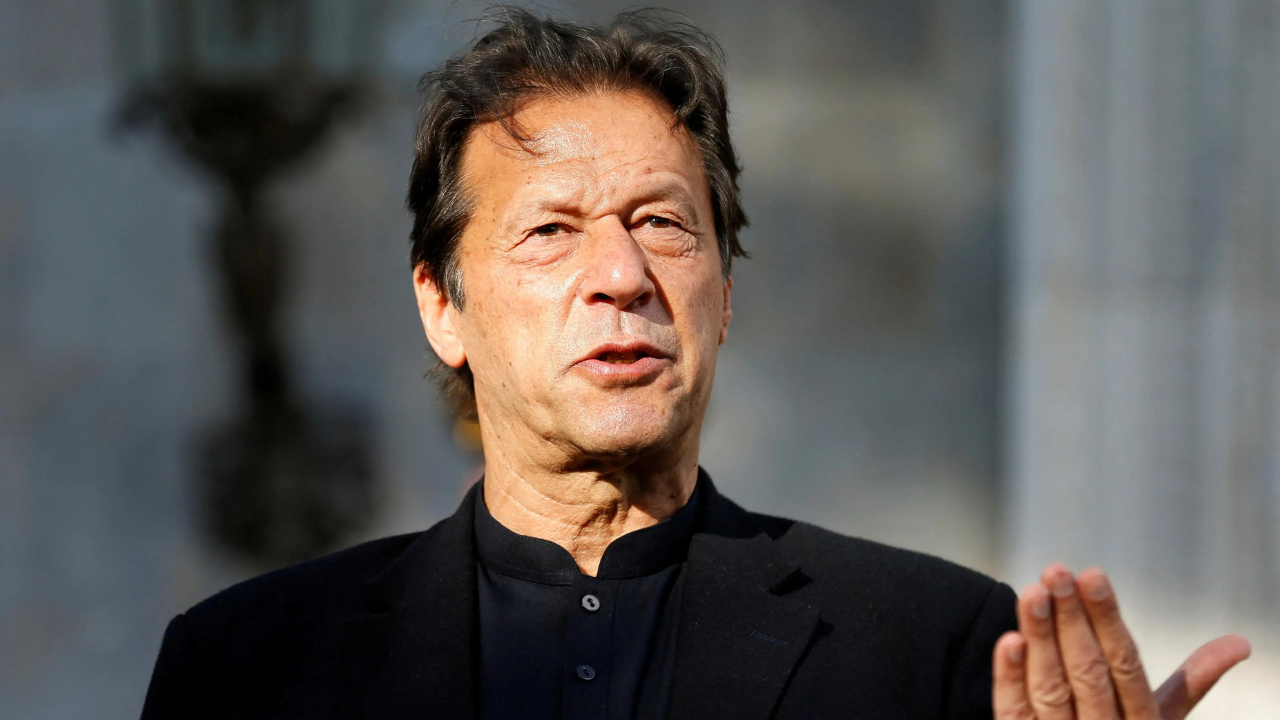
Two sisters of imprisoned former Pakistani Prime Minister Imran Khan, Aleema Khan and Uzma Khanum, were granted bail and released from jail following a court order in a high-profile case stemming from anti-government protests in Islamabad. While supporters of Khan's Pakistan Tehreek-e-Insaf party celebrated the development as a rare legal breakthrough, legal analysts and political observers point out that the release reflects routine judicial bail procedures rather than a broader shift in the state's posture toward Khan or his opposition movement.
The release comes amid ongoing friction between the Pakistani judiciary, the coalition government led by Prime Minister Shehbaz Sharif, and the country's powerful military establishment. To understand what this bail order actually means, you have to look past the immediate headlines and examine the legal mechanisms at play, the role of Khan's family in keeping his political movement alive, and the broader pattern of arrests and releases that has defined Pakistani politics since Khan's ouster in 2022. Also making waves lately: The Structural Mechanics of Midterm Electoral Sweeps and Post-Election Legislative Leverage.
The Arrests and the Legal Mechanism Behind the Release
Aleema Khan and Uzma Khanum were taken into custody during demonstrations in Islamabad organized by the Pakistan Tehreek-e-Insaf, widely known as PTI. Authorities charged them alongside dozens of party workers under statutes frequently invoked during political unrest, including provisions of the Anti-Terrorism Act and sections of the Pakistan Penal Code covering unlawful assembly, rioting, and obstructing public servants.
Defense counsel representing the sisters argued before the court that the charges were politically motivated and lacked substantive evidentiary backing linking the two women to acts of violence. In Pakistan's criminal justice system, securing post-arrest bail in cases involving anti-terrorism clauses requires demonstrating that the accusations require further inquiry and do not fall within the prohibitory clause of the Criminal Procedure Code. Additional information regarding the matter are detailed by Reuters.
The presiding judge accepted the defense's arguments regarding the lack of direct evidence of violent incitement, granting bail against surety bonds.
This distinction matters. Bail is not an acquittal. The underlying criminal cases remain active on the docket, meaning both women must continue appearing before the trial court and remain vulnerable to re-arrest if new charges are filed in separate jurisdictions—a tactic Pakistani human rights organizations have documented extensively across the political spectrum over decades.
Why Imran Khan's Sisters Have Become Central Political Figures
Before Imran Khan's incarceration in Adiala Jail in Rawalpindi, his immediate family largely stayed out of day-to-day party management. Khan built his political brand on opposing dynastic politics, routinely criticizing the Bhutto-Zardari family of the Pakistan Peoples Party and the Sharif family of the Pakistan Muslim League-Nawaz for treating political parties as family inheritances.
That dynamic shifted out of necessity. With Khan behind bars and facing dozens of legal cases ranging from corruption allegations to charges under the Official Secrets Act, and with much of PTI's second-tier leadership either jailed, in hiding, or having defected under pressure, his sisters stepped into a critical communications vacuum.
Aleema Khan, in particular, has emerged as an unofficial conduit between the imprisoned former premier and the outside world. Because family members are among the few individuals permitted regular court-mandated visitation rights at Adiala Jail, her statements to reporters outside the prison gates frequently serve as the most direct relay of Khan's strategic directives to PTI lawmakers and street organizers.
Government ministers have repeatedly accused Khan's sisters of using family visitation privileges to transmit political instructions and agitate against state institutions. PTI leaders reject that characterization, maintaining that the sisters are merely exercising their constitutional rights as citizens and family members to speak on behalf of an unlawfully detained relative.
The Revolving Door of Political Detentions in Pakistan
For anyone who has tracked Pakistani politics over the past several decades, the sequence of events—high-profile arrests during street protests, detention under stringent security laws, followed by judicial bail weeks later—follows a familiar institutional script.
Successive civilian governments and military-backed administrations have relied on preventative detention laws, such as the Maintenance of Public Order ordinance, alongside anti-terrorism courts to disrupt opposition mobilization. The immediate objective is rarely a swift criminal conviction, which can take years to wind through Pakistan's backlogged appellate courts. Instead, temporary incarceration serves to raise the personal cost of protest, disrupt organizational momentum, and force opposition leadership to expend financial and legal capital fighting bail applications across multiple districts.
When courts eventually step in to grant bail, the state has often already achieved its short-term goal of clearing the streets.
At the same time, the Pakistani judiciary occupies a complex, contested space. Judges in the Islamabad High Court and Lahore High Court have faced intense scrutiny from both sides of the political divide. PTI supporters frequently accuse the lower judiciary of bowing to executive pressure by delaying bail hearings, while government officials criticize higher courts for granting relief to opposition figures too readily, arguing it undermines law enforcement efforts during violent demonstrations.
Contrasting Narratives From Islamabad and PTI
The reaction to the release of Aleema Khan and Uzma Khanum highlights the deep polarization gripping Pakistan's political institutions.
Within PTI circles, the bail order was framed as vindication. Party spokespeople emphasized that the state had failed to substantiate its allegations in open court and argued that the detention of non-office-holding female relatives demonstrated the government's desperation to suppress dissent. For the party's grassroots base, seeing members of Khan's family walk free provided a morale boost during a period marked by internal factionalism and repeated crackdowns on public rallies.
Conversely, representatives of the ruling coalition downplayed the significance of the court's decision. Government officials maintained that the arrests were a standard law-and-order response to unauthorized protests that disrupted life in the federal capital and resulted in clashes with police personnel. From their perspective, the granting of bail simply proved that Pakistan's courts operate independently and that the administration respects due process, contradicting PTI's claims of authoritarian overreach.
Independent legal observers in Islamabad view both narratives as incomplete. While the bail order confirms that courts still enforce evidentiary standards when reviewing detention petitions, it does little to alter the structural reality facing PTI. Hundreds of lower-profile party workers arrested during the same protests lack the legal resources and public visibility afforded to the former prime minister's sisters, leaving many languishing in pre-trial detention for months.
What the Release Means for the Broader Standoff
Looking at the wider political equation, the release of Imran Khan's sisters does not signal an imminent thaw between PTI and the establishment.
Negotiations between the government and PTI representatives have repeatedly stalled over fundamental disagreements. PTI insists on the immediate release of Imran Khan, the dropping of what it terms politically fabricated cases, and a review of the February 2024 general election results, which the party alleges were manipulated to deny it a parliamentary majority. The ruling coalition and security establishment maintain that Khan must face the courts like any other citizen and have shown no willingness to revisit the electoral outcome.
Furthermore, constitutional amendments passed by parliament have reshaped the judicial appointment process and established specialized constitutional benches, a move critics argue was designed to curb judicial activism and limit the courts' ability to intervene in executive actions. Against that backdrop, a single bail order in a public-order case represents a tactical pause rather than a strategic shift.
Aleema Khan and Uzma Khanum walk out of jail into the exact same political environment they left, one where every press conference outside Adiala Jail carries the risk of fresh police reports, and where the core dispute over who governs Pakistan remains entirely unresolved.