Banning protests in a country that treats street mobilization as a national birthright is like putting duct tape over a pressure cooker. You might stop the hiss for an afternoon, yet the heat builds up somewhere else.
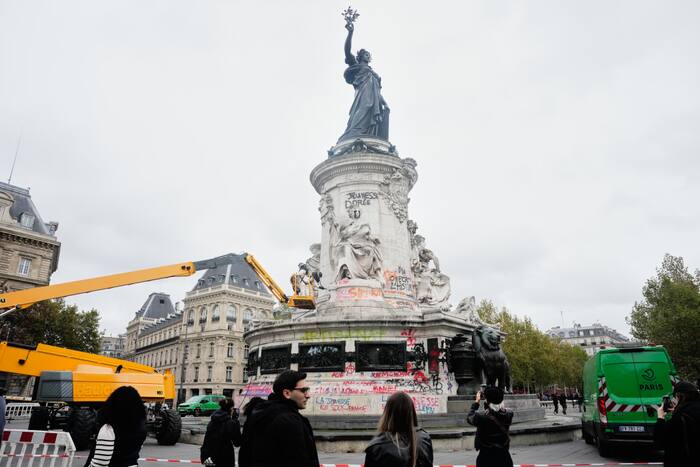
When French authorities moved to ban several student demonstrations following a weekend of clashes and looting in October 2026, the official reasoning sounded straightforward enough. Police prefectures in cities like Paris, Lyon, Lille, and Grenoble pointed to damaged storefronts, violent clashes, and safety risks. Night curfews popped up in parts of the capital and elsewhere. Around 450 businesses in Paris suffered damage during the October 17 unrest, with nearly half of those hit by looting. Nobody wants shopkeepers watching their livelihoods get trashed on a Saturday night. Meanwhile, you can explore similar events here: Strategic Calculus of US Iran Escalation and Deterrence Failure.
Still, slapping blanket bans on student marches rarely solves the underlying tension. Often, it does the opposite. It turns ordinary teenagers and university students into flashpoints, pushes crowds into unmonitored side streets, and hands opposition politicians a ready-made grievance right before a major political cycle.
How School Walkouts Turned Into a Wider Clash
To understand why French authorities reached for protest bans, you have to look at how quickly a local complaint snowballed. The student unrest didn't start as a coordinated national riot. In late September 2026, walkouts and blockades began flaring up around high schools—starting in places like Créteil southeast of Paris—over practical, everyday frustrations. Students and staff pointed to unfilled teaching posts, shortages of school nurses and assistants, crowded rooms, and strained resources. To see the complete picture, check out the excellent article by The New York Times.
Once those grievances collided with broader anger over living costs and economic strain, the stakes shifted fast. High school blockades spread to dozens of schools in the Paris region and beyond, mixing with wider worker dissatisfaction and street clashes. By mid-October, violence had spiked sharply, leaving hundreds of demonstrators, educators, and security officers injured across the waves of unrest.
When police forces are stretched thin trying to keep crowds away from government buildings, shopping districts, and transit hubs, authorities face a tough tactical dilemma. Do they let a permitted march move along a predictable route with heavy containment, or do they ban the gathering outright and risk scattered, unpredictable groups roaming the city?
The Looting Problem vs. Peaceful Marchers
One of the biggest misconceptions in coverage of French protests is assuming that everyone marching in the street came to smash windows. In reality, French street demonstrations often attract overlapping crowds with very different motives. There are high schoolers chanting about school staffing, union members or residents upset about inflation, and smaller, aggressive groups looking for confrontation or opportunistic theft.
When authorities ban a demonstration, law-abiding students and families often stay home or disperse early, while more confrontational actors or looters may still test police lines or slip into nearby commercial streets. Critics, including civil liberties groups like Amnesty International, have warned that sweeping bans risk sweeping peaceful expression into the same bucket as criminal vandalism. Meanwhile, government officials such as Interior Minister Laurent Nuñez and spokesperson Maud Bregeon have argued that prefects have a legal duty to ban gatherings that pose serious threats to public order and property.
Both sides have a point, honestly, and pretending it's simple misses why this keeps happening. A shop owner with shattered glass isn't debating constitutional theory; they want protection and accountability. At the same time, telling thousands of young people they can't gather in the street after weeks of school disruptions can inflame resentment rather than cool it down.
Why Legal Pushback and Street Reality Collide
Banning a march on paper is one thing. Enforcing it across a major metro area is another.
In October 2026, authorities banned scheduled demonstrations in multiple cities, including Paris, Lyon, Lille, and Grenoble. Even where bans were issued, crowds still showed up in places—like Lyon, where thousands marched despite restrictions, leading to tear gas, armored vehicles, and barricades. Later, in mid-November, Paris police issued restrictions barring unauthorized gatherings or marches within 100 meters of specific schools and universities on weekdays after prolonged blockades.
Legal challenges add another layer of friction. Courts in France have authority to review prefecture orders quickly, and emergency rulings have at times suspended specific bans when judges found the restriction wasn't sufficiently justified. That back-and-forth between police prefectures, administrative courts, protest organizers, and politicians creates confusion on the ground. Students aren't always sure what's allowed, police face shifting orders, and local officials end up defending every move in the press.
What Experienced Observers Notice on the Ground
Having watched French protest cycles up close over the years, a few patterns stand out that quick headlines usually gloss over:
- Bans rarely erase the crowd. When an official march is called off, people frequently gather informally near campuses, squares, or transit stops anyway.
- Side streets carry hidden risks. Heavy police focus on a main boulevard can leave adjacent commercial blocks vulnerable to smash-and-grab looting if perimeter planning falls short.
- Political framing accelerates fast. Local school complaints or economic frustration get pulled straight into national partisan battles, making compromise harder for everyone involved.
- Schools bear the daily cost. Repeated blockades and closures disrupt exams, routines, and learning for students who just want a normal school day.
What Actually Works Better Than Blanket Bans
If the goal is preventing violent clashes and looting without turning every student grievance into a constitutional crisis, authorities and communities have better tools than broad prohibitions. Targeted safety measures—like protecting specific vulnerable storefronts, keeping emergency lanes clear, and communicating clear, consistent rules—tend to hold up better than sweeping bans that breed defiance.
Equally important is addressing the sparks early. When students protest understaffed schools or strained classrooms, ignoring those complaints until weekend riots break out is a recipe for escalation. Faster, tangible responses on school staffing and clear separation between peaceful assembly and criminal looting do far more to restore calm than a decree alone.
If you're following the situation in France—or traveling through affected cities—check official prefecture notices before heading out, build extra time into transit plans around metro closures or school zones, and verify claims through primary reporting rather than viral clips taken out of context.