Bass is supposed to rattle your ribs. You pay sixty pounds for a ticket, stand shoulder-to-shoulder in the dark, and let the subwoofers rearrange your heartbeat while Don Toliver’s hypnotic, autotuned cadence washes over twelve thousand strangers. You expect sweat. You expect ringing ears. You expect the glorious, communal amnesia that only live music can manufacture on a Tuesday night in northern England.
You do not expect the air to turn into broken glass.
Silence.
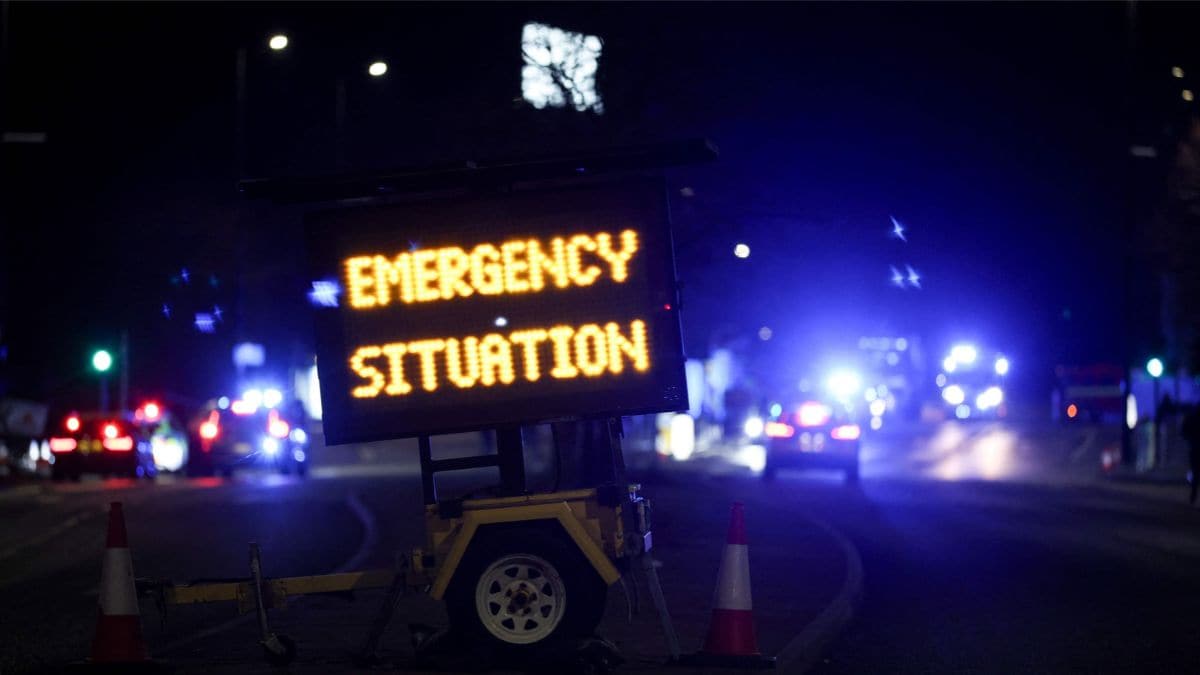
Then a cough. Not the dry, polite clearing of a throat between tracks, but a wet, tearing spasm that doubles a teenager over near the floor barrier. Another follows. Within seconds, a chemical sting slices through the warm, beer-scented haze of the AO Arena, turning twelve thousand euphoric concertgoers into a panicked, weeping herd. Eyes swell shut. Throats burn raw. On the concrete concourses outside, young people spit blood onto the pavement under the harsh sodium glare of emergency lights, gasping for oxygen that no longer feels safe to breathe.
For anyone living in Manchester, an evacuation at this specific building is never just a logistical hiccup. Nine years have passed since May 22, 2017—nine years since twenty-two innocent people walked into this exact complex for a pop concert and never came home—yet the scar tissue across this city remains paper-thin. When the house lights snap on prematurely and security guards start shouting for the exits, the clock doesn't read 2026. It snaps violently backward.
The Architecture of Panic
To understand why a mysterious irritant at a rap concert triggers a city-wide tremor, you have to understand how trauma embeds itself into concrete.
Consider a hypothetical twenty-year-old university student—let’s call her Maya—standing halfway back in the standing section that night. Maya was eleven years old when the Manchester Arena bombing happened. She grew up watching the worker bee murals painted onto brick walls across the Northern Quarter, absorbing the quiet, defiant grief of a city that refused to break. Stepping into the AO Arena for Don Toliver’s set wasn't an act of political bravery for Maya; it was just a night out with her flatmates, a chance to scream the lyrics to No Idea until her voice gave out.
Then comes the invisible shift.
Unlike a fire, which announces itself with orange glow and thick black smoke, an airborne chemical irritant operates like a ghost. Think of an enclosed arena bowl as a giant, upside-down glass bowl trapping the breath, heat, and movement of twelve thousand bodies. Modern HVAC systems are engineered to circulate air efficiently, pulling warm air upward and pumping cool air down. Under normal circumstances, that invisible current keeps a packed venue breathable. Introduce a concentrated aerosol—whether pepper spray, CS gas, or an industrial solvent—into the dense crowd on the floor, and that very ventilation system temporarily becomes a distribution engine, carrying microscopic droplets across rows before the exhaust dampers can purge them.
Maya wouldn't see a threat. She would feel it first as an inexplicable betrayal by her own body. Her contact lenses would suddenly feel like sandpaper. Her chest would tighten as her bronchial tubes clamped shut in a primal, reflexive attempt to keep toxins out of her lungs. Around her, the crowd's energy—that electric, upward surge of a hip-hop show—curdles instantly into downward, crushing momentum toward the vomitories.
Reports from the scene painted a visceral picture of that sudden rupture. Fans described an acrid, suffocating mist hanging over the crowd, triggering uncontrollable weeping, violent coughing fits, and instances of people coughing up blood from the sheer trauma of ruptured capillaries in raw, inflamed airways. Outside, paramedic crews treated dozens on the tarmac while twelve thousand people stood shivering in thin jackets, clutching phones with dying batteries, desperately trying to text their mothers before the local cell towers choked on the sudden spike in traffic.
Ghosts in the Concrete
Why does a single canister of irritant—or even an unconfirmed substance—carry such staggering psychological weight here? Because in Manchester, venue security is not an abstract corporate checklist. It is a blood debt.
In the wake of the 2017 attack, the Manchester Arena Inquiry exposed catastrophic failures in how crowded places were policed, monitored, and evacuated. Out of those agonizing hearings came Martyn’s Law—named after Martyn Hett, a vibrant twenty-nine-year-old PR manager killed in the foyer blast—legislation designed to force UK venues to implement rigorous counter-terrorism protocols, bag searches, and emergency preparedness. Every metal detector at the entrance, every clear-bag policy, every bomb-sniffing spaniel patrolling Victoria Station next door exists because the city swore never again.
Yet here we were, nine years later, watching twelve thousand people spill out onto Hunts Bank, wiping tears from blistered eyes.
I remember the first time I walked back into that arena after the 2017 reopening. Even with heightened security, every dropped plastic pint glass sounded like a detonation. You find yourself subconsciously mapping the nearest green exit sign before the opening act even finishes their soundcheck. You watch the perimeter instead of the stage. That hyper-vigilance never fully leaves a community; it merely goes dormant, waiting for a spark.
When an unknown substance fills the air inside a sealed auditorium, the human brain does not wait for a forensic toxicology report from Greater Manchester Police. It fills the vacuum with its worst inherited memories. Is it a localized prank gone horribly wrong? An altercation in the pit involving smuggled self-defense spray? Or is it something far darker, a deliberate attack exploiting the blind spots of modern screening?
The Anatomy of a Stampede
The real danger in these moments rarely comes solely from the substance itself; it comes from the collision between biology and architecture.
When an irritant like capsaicin (the active compound in pepper spray) or a synthetic tear gas hits mucous membranes, it hijacks the trigeminal nerve. Your brain receives an urgent, false-alarm signal that your face and airways are literally on fire. Blinded by involuntary blepharospasm—the muscle spasm that forces eyelids shut—people lose their spatial orientation within seconds.
Now multiply that sensory blindness by several hundred people in a tightly packed standing area, surrounded by eleven thousand others who cannot see what is happening on the floor, only that people are screaming and running.
Crowd scientists have spent decades studying this exact tipping point. At densities exceeding four or five people per square meter—standard for the front half of a major hip-hop concert—individuals lose the ability to choose where they walk. Movement becomes fluid mechanics. A sudden shockwave of panic at the front creates a compression wave that ripples outward, pinning people against barriers or funneling hundreds toward narrow concourse doors simultaneously.
That the evacuation of twelve thousand people from the AO Arena did not result in a mass-casualty crush is a testament to two things: the split-second training of venue stewards who threw open every emergency egress door, and the sheer, hard-won muscle memory of a crowd that knew how to move without trampling one another.
Still, the physical toll was undeniable. Coughing up blood—medically known as hemoptysis—sounds terrifying, and to a nineteen-year-old standing on a cold sidewalk at 10:30 PM, it feels like a death sentence. While severe chemical inhalation can directly damage lung tissue, intense, repetitive coughing spasms triggered by airborne irritants frequently rupture tiny, delicate blood vessels lining the throat and upper trachea. The result is bright red streaks in saliva and phlegm—a visceral, terrifying sight that turns rumor into wildfire on social media within minutes.
What Security Checkpoints Still Miss
As emergency crews ventilated the bowl and police cordoned off the surrounding streets to test air samples, an uncomfortable question hung over the city alongside the lingering chemical odor. How does a substance capable of incapacitating dozens and evacuating twelve thousand make it past airport-style security?
Walk through any major arena entrance today and the theater of safety feels airtight. Walk-through magnetometers beep at belt buckles. Wands sweep ankles. Guards peer into translucent handbags with tiny flashlights.
But metal detectors only catch metal.
A pressurized polymer canister the size of a lipstick tube, tucked into the lining of a boot or taped beneath a waistband, passes through a standard magnetometer without a whisper. Even advanced millimeter-wave scanners—rarely deployed at concert venues due to cost and the sheer bottleneck of processing fifteen thousand guests in ninety minutes—struggle to distinguish a small plastic vial of liquid irritant from human tissue or heavy denim.
Live music relies on an unspoken social contract. Venues provide the walls, the sound, and reasonable vigilance; attendees agree not to weaponize the dark. When someone smuggles a noxious substance into a packed room—whether out of malice, recklessness, or a misguided attempt at personal protection—they shatter that contract for everyone within a fifty-meter radius.
The Long Walk to Victoria Station
By midnight, the blue strobe lights of the ambulances had begun to thin out around Hunts Bank. Social media feeds were flooded with shaky vertical videos: teenagers clutching water bottles poured over their eyes, rows of empty velvet seats under stark fluorescent lights, Don Toliver’s stage rigging standing abandoned like a ghost ship.
In the days that follow an incident like this, official statements inevitably arrive wrapped in sterile, reassuring language. Authorities confirm no fatalities. Arena management praises the swift evacuation. Investigations are launched into the exact chemical composition of the aerosol and the CCTV footage of the floor section where the coughing began.
Those updates matter, yet they miss the quiet emotional hangover left behind.
Think back to Maya, our hypothetical student, sitting on the last tram home toward Fallowfield, her throat still raw, her coat smelling faintly of chemical sting and cold night air. She bought a ticket to feel connected—to lose herself in the collective pulse of twelve thousand voices singing the same hook in unison. Instead, she spent her Tuesday night fighting for air in a stairwell, wondering if she would make it to the street.
Manchester will fill that arena again tomorrow night, and the night after that. The worker bees on the brick walls aren't going anywhere, and neither is this city's ferocious appetite for live music. People will queue along the concrete concourses, pass through the metal detectors, buy overpriced drinks, and wait for the house lights to drop.
Yet for everyone who stood on that floor when the music cut out, the dark will never feel entirely weightless again. Every sudden draft from an overhead vent, every sharp cough in the row behind them, will carry the faint, lingering sting of a night when the air itself turned against them—and the terrifying reminder of how quickly joy can turn into the simple, desperate need to breathe.