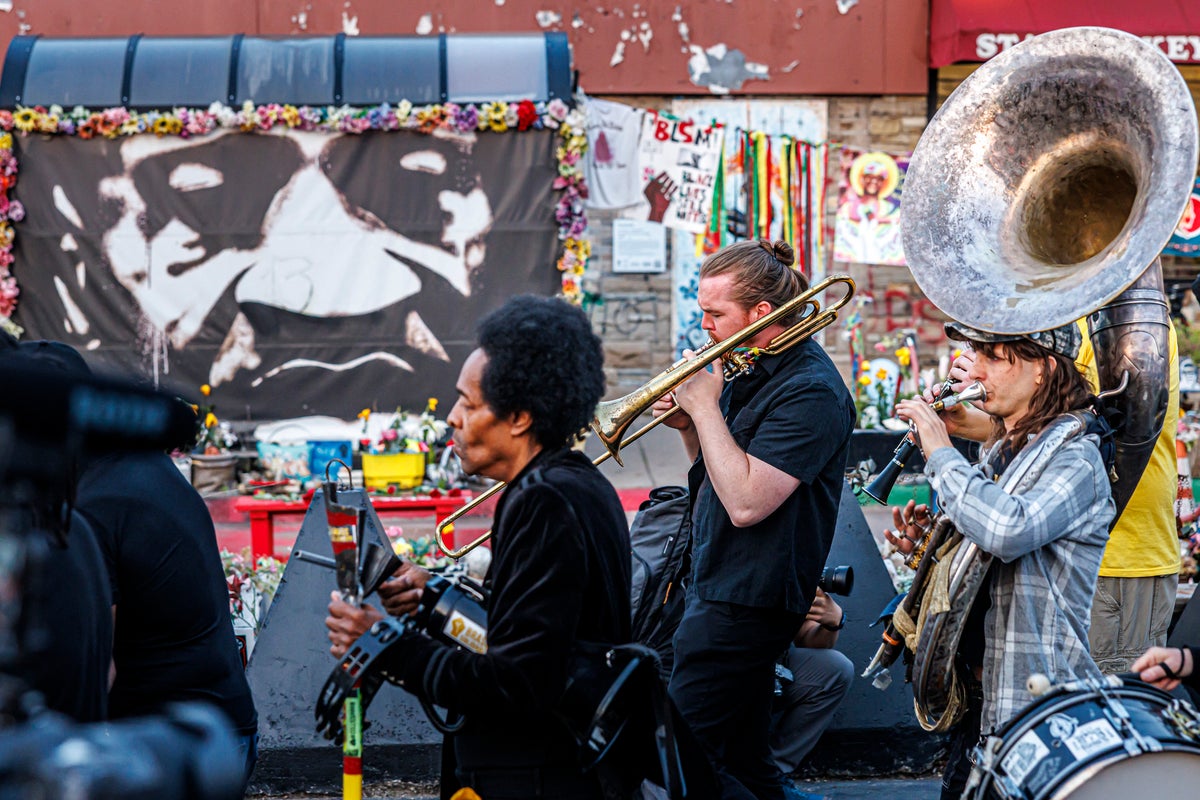
Six years after the murder of George Floyd, the city of Minneapolis is moving forward with a major infrastructure overhaul of 38th Street and Chicago Avenue, the intersection known globally as George Floyd Square. The city's plan involves reconstructing the aging roadway, redesigning pedestrian spaces, and permanently integrating a memorial dedicated to Floyd. However, the project faces deep community skepticism. Local business owners, activists, and residents remain sharply divided over how to balance the need for public safety and economic recovery with the preservation of a sacred space for civil rights history.
The intersection has existed in a state of suspended animation since May 2020. For years, makeshift barricades, art installations, and a community-led occupation kept the area largely closed to standard transit. While the city eventually re-established standard traffic flow, the underlying tension never truly left. The upcoming reconstruction project represents the local government's most definitive attempt to reclaim administrative control over the geography, under the banner of civic improvement.
Behind the blueprints and city council resolutions lies a complex web of competing interests that standard news coverage frequently glosses over. To understand why this construction project is so fraught, one must look beyond the concrete and asphalt to the deep-seated mistrust between the neighborhood and City Hall.
The Friction Between Infrastructure and Activism
Municipal governments view intersections as assets to be managed, optimized, and maintained. Activists view them as battlegrounds for justice. When these two opposing philosophies collide on a single patch of pavement, bureaucratic gridlock is inevitable.
The city's redesign plan aims to upgrade aging utility lines, improve pedestrian safety, and create a dedicated zone for the memorial. On paper, it looks like a standard urban renewal project. In reality, every square inch of the design is contested. Some community members fear that a sanitized, city-sanctioned plaza will erase the raw, grassroots history of the uprising. They argue that turning a site of active protest into a manicured public park diminishes the political weight of what happened here.
Conversely, a significant contingent of neighbors and merchants is desperate for normalcy. The prolonged disruption has taken a heavy toll on the local economy.
The Economic Stagnation of 38th and Chicago
Small businesses operate on razor-thin margins under the best of circumstances. For those located within the immediate perimeter of the square, the last six years have been a test of survival. Foot traffic plummeted when the intersection was blocked, and insurance premiums spiked following the unrest. Some businesses closed permanently, while others stayed open only through sheer willpower and community mutual aid.
The city has promised that the reconstruction will ultimately boost the local economy by creating a more welcoming environment for visitors. But construction itself is a destructive process. Months of heavy machinery, torn-up sidewalks, and restricted access could be the final blow for enterprises that are already hanging on by a thread. Business owners are demanding concrete financial mitigation strategies, not just vague promises of future prosperity.
The Question of Public Safety
Safety remains the most polarizing topic in the debate surrounding the square's future. The reduction of a visible police presence in the immediate aftermath of 2020 allowed community-led safety initiatives to take root, but it also coincided with a rise in violent crime in the broader area.
Residents are caught in the middle. Many desire a robust emergency response and a reduction in gun violence, yet they remain deeply skeptical of the Minneapolis Police Department, which is still undergoing federal oversight and systemic reform. The physical layout of the redesigned intersection will directly impact how the area is patrolled and secured, making the architectural blueprints a matter of literal life and death for those who live there.
The Ghost of Urban Renewal History
To comprehend the community's resistance to city intervention, one must examine the historical precedent of urban renewal in Minneapolis. This is not the first time the city has arrived with blueprints promising to improve a Black neighborhood.
During the mid-twentieth century, the construction of Interstate 35W cut directly through the heart of South Minneapolis, destroying hundreds of homes and disrupting thriving Black communities. The legacy of that displacement still lingers in the institutional memory of the neighborhood. When modern city planners present slick digital renderings of a revitalized 38th and Chicago, older residents do not see progress. They see the potential vanguard of gentrification.
Property values around the intersection have fluctuated wildly over the past decade. There is a palpable fear that once the city spends millions of dollars beautifying the area, real estate developers will swoop in, drive up rents, and price out the very people who stood on the front lines to protect the space. The city insists its racial equity framework will prevent this outcome, but historic precedents offer little reassurance.
A Blueprint Without Consensus
The city conducted numerous community engagement sessions, surveys, and workshops over the past two years to gather input on the design. Officials point to these meetings as evidence of a democratic, inclusive process. However, participation does not equal agreement.
The feedback gathered during the outreach process revealed a deeply fragmented community. One faction demanded that the entire four-block radius remain closed to vehicular traffic to create a permanent pedestrian memorial zone. Another faction insisted that the streets be fully reopened to support emergency vehicles and commercial shipping. The final compromise plan tries to please everyone and, as a result, risks pleasing no one.
The current design features a modified transit flow that allows vehicles to pass through while carving out specific areas for reflection and art. It is a mechanical solution to an emotional and political problem.
+-----------------------------------------------------------------+
|                  THE COMPETING PRIORITIES                       |
+-----------------------------------------------------------------+
| ACTIVISTS               | NEIGHBORS             | CITY OFFICIALS|
| ----------------------- | --------------------- | --------------|
| Preservation of protest | Restored public safety| Infrastructure|
| Grassroots autonomy     | Reliable transit      | Traffic flow  |
| Systemic accountability | Economic stability    | Legal liability|
+-----------------------------------------------------------------+
The Legal and Financial Stakes
Beyond the cultural and social debates, the city faces massive logistical and legal hurdles. Navigating the reconstruction of an active memorial site requires a delicate touch that bureaucracies rarely possess.
The city must balance public access with liability. The makeshift structures and artwork currently occupying the space do not conform to standard municipal building codes or the Americans with Disabilities Act (ADA). By taking formal control of the site and initiating a total reconstruction, the city assumes full legal responsibility for whatever happens on that pavement. This pressure explains the push to standardize the layout, even if it means dismantling elements of the organic memorial.
Funding for the project relies on a complex mixture of local property taxes, state infrastructure bonds, and federal grants. Each of these funding sources comes with strict timelines and compliance metrics. If the city delays construction any longer to iron out community disputes, it risks losing millions in external funding. This creates an artificial urgency that further alienates a community already feeling rushed and ignored.
The Limits of Public Architecture
Cities often mistake architectural intervention for social healing. A new sidewalk, some planted trees, and a bronze plaque cannot resolve the systemic issues that brought thousands of people into the streets in the summer of 2020.
The physical reconstruction of George Floyd Square will alter the landscape of South Minneapolis, but it will not alter the underlying social dynamics. The tension between the community and the state will persist long after the wet cement dries and the orange construction cones are removed. The success or failure of the project will not be measured by the smoothness of the new asphalt, but by whether the people who call this neighborhood home feel respected, protected, and rooted in their own space.
The bulldozers are scheduled to arrive, and the city will get its new intersection. What remains to be seen is whether they can build a space that honors a tragedy without erasing the uncomfortable truths that the tragedy exposed.