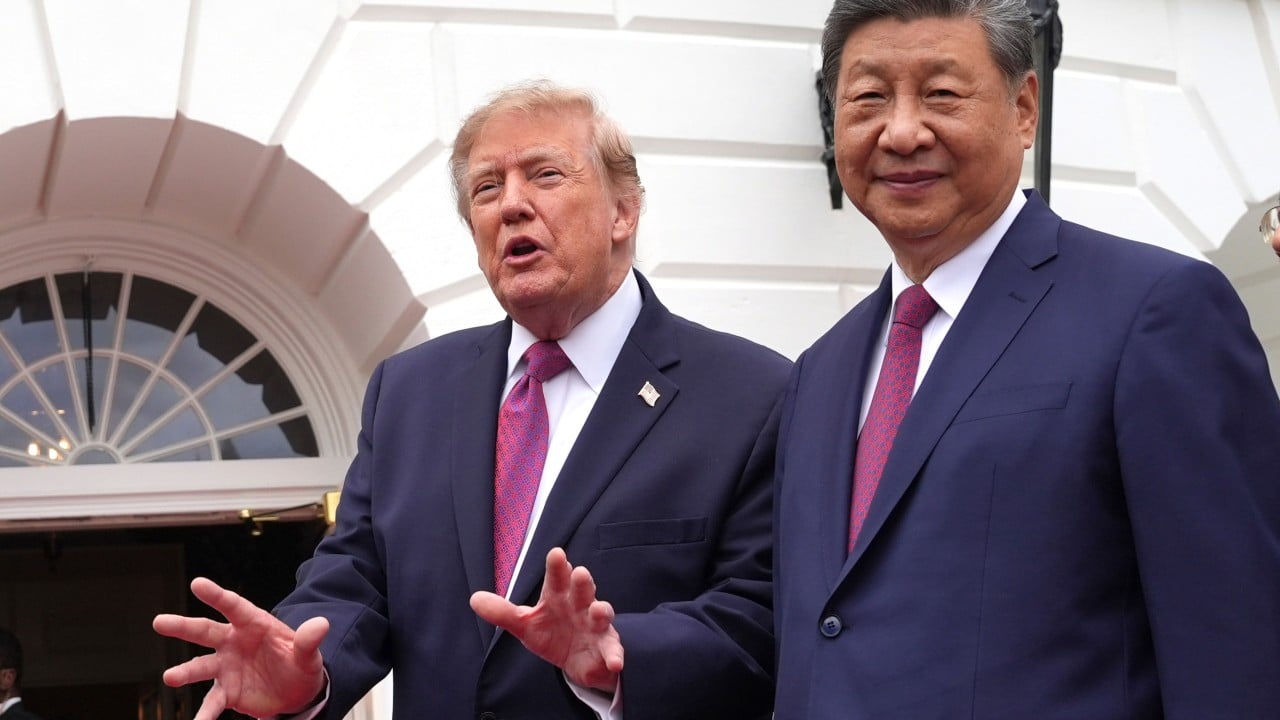
History isn't just about what happened yesterday. It is a weapon used to claim tomorrow. When Chinese President Xi Jinping and U.S. President Donald Trump sat down at the White House and started swapping praise over the legendary World War Two Flying Tigers, most people missed the quiet geopolitical earthquake happening underneath.
Beijing wasn't just reminiscing about American pilots helping Chinese forces fight the Japanese. They were executing a subtle, high-stakes maneuver to rewrite the historical ledger. And back in Taipei, officials are finding out just how hard it is to defend your own past when global superpowers start erasing you from the map.
The Missing Republic In The Room
Here is the core problem. When Xi invoked the joint U.S.-China fight against fascism, he conveniently omitted a tiny detail: the People's Republic of China did not exist during World War Two.
The actual government fighting Imperial Japan alongside American volunteers like the Flying Tigers was the Republic of China (ROC)—the very government that retreated to Taiwan in 1949. By co-opting the narrative of wartime blood and sacrifice, Beijing is systematically laying a historical foundation to claim continuity over Taiwan's sovereignty.
Taipei officials and local scholars aren't just annoyed; they are facing a severe dilemma. If they stay silent, Beijing successfully claims the legacy of the anti-Japanese war. If they speak up too loudly to claim their rightful place in history, they risk alienating Washington or walking straight into regional diplomatic traps.
Why Washington Keeps Missing The Plot
You would think American diplomats might correct the record, but high-level summits rarely dwell on archival accuracy when trade deals and geopolitical leverage are on the table. President Trump welcomed the nod to wartime cooperation, focusing on the shared heroics of American aviators.
For Washington, invoking the Flying Tigers is an easy diplomatic handshake. For Beijing, it is a calculated tool of psychological warfare. Scholars in Taipei point out that Xi's historical framing is designed for a global audience, planting the seed that modern China's borders and authority stretch backward in time to swallow up historical entities that Beijing historically opposed.
It's a classic case of narrative capture. Control the history of a conflict, and you control the moral justification for future territorial claims.
The Domestic Trap For Taiwan
The headache isn't just external. Taiwan has its own complicated internal debates over identity and history. Modern Taiwanese politics often struggles with how to frame the legacy of the ROC and its mainland past without alienating younger generations who view themselves strictly as Taiwanese, not Chinese.
When Beijing claims the glory of the anti-Japanese resistance, it forces Taipei into an awkward defensive crouch. The ruling authorities in Taiwan have to constantly balance defending their historical legitimacy against a massive neighbor while navigating a local populace that is largely exhausted by cross-strait identity politics.
If you ignore the propaganda win, you lose the narrative war. If you fight every single historical distortion, you look reactive.
What This Means For The Future Of The Region
Don't expect historical debates to stay confined to dusty textbooks. As great power competition heats up, memory is ammunition. Every summit, every joint statement, and every anniversary speech becomes a battlefield for legitimacy.
Taiwan has to find sharper, more modern ways to project its own history onto the global stage before the official record gets rewritten entirely by default. Because in geopolitics, nobody remembers the footnotes if the loudest voice in the room gets to write the headline.
Trump and Xi discuss the "Flying Tigers"
This video provides an in-depth news analysis of the diplomatic fallout and historical debates sparked by the U.S.-China discussions over the Flying Tigers.