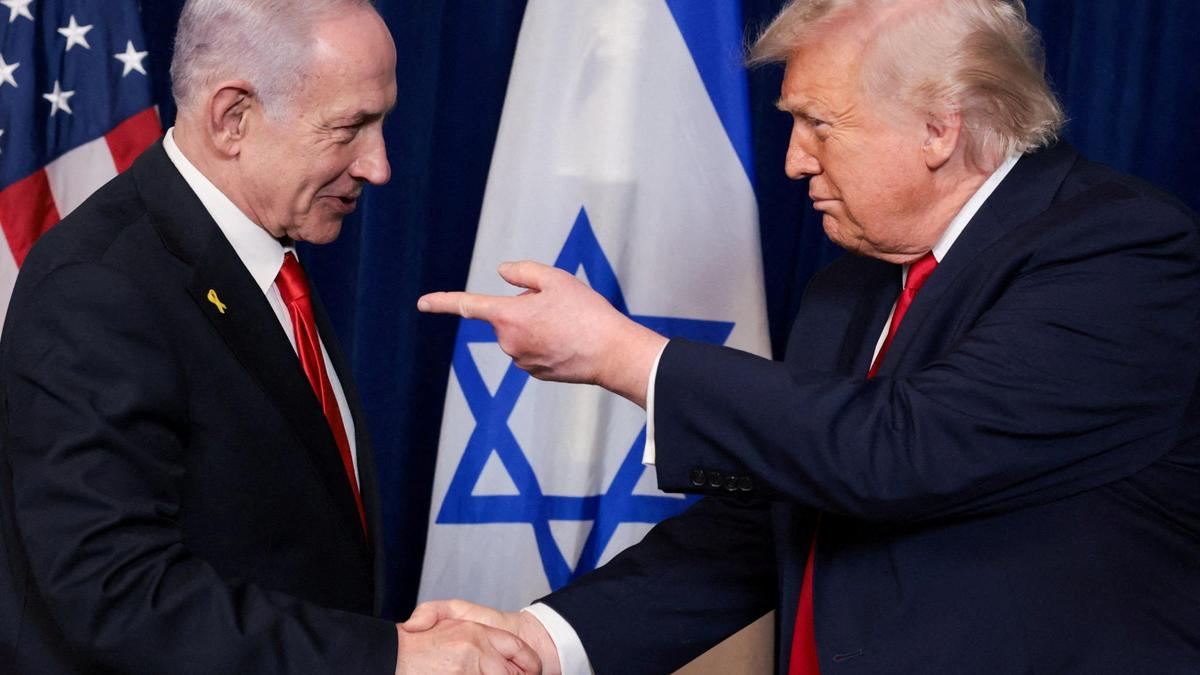
The conventional narrative surrounding the recent friction between Washington and Jerusalem is fundamentally flawed. Pundits are rushing to portray U.S. President Donald Trump’s intervention to halt Israeli strikes on Beirut as a devastating blow to Benjamin Netanyahu. They frame it as a sudden fracture in the U.S.-Israel alliance, a sign of Netanyahu’s weakening domestic grip, and proof of an erratic American foreign policy.
This analysis is lazy. It views geopolitical strategy through the lens of a daytime soap opera, focusing entirely on surface-level friction while ignoring the structural realities of military leverage and diplomatic theater.
The media is asking the wrong question. They want to know if Netanyahu faces a crisis of confidence after being checked by the White House. The real question we should be asking is how this choreographed friction serves the long-term strategic objectives of both leaders.
The Illusion of the Red Line
Mainstream commentary operates on the assumption that a public disagreement between a U.S. president and an Israeli prime minister represents a policy failure. In reality, calculated diplomatic friction is a tool.
When the White House signals a hard stop on specific operations in Beirut, it provides both administrations with distinct tactical advantages:
- Maximum Pressure Plausible Deniability: By allowing Israel to push the envelope up to the absolute brink before publicly pulling back the reins, the U.S. establishes a "good cop, bad cop" dynamic. Regional adversaries are forced to calculate that Israel is entirely willing to level critical infrastructure, and only Washington's intervention is preventing total destruction.
- Netanyahu’s Domestic Shield: For Netanyahu, bowing to American pressure is not a sign of weakness; it is a highly effective political shield. When dealing with the hard-right elements of his governing coalition demanding an uncompromising, total war strategy, Netanyahu can point directly to Washington. He can maintain his posture as a hawk whose hands are temporarily tied by the realities of superpower patronage.
- Trump’s Transactional De-escalation: For Trump, the intervention reinforces his core brand as a dealmaker who prevents protracted foreign entanglements. It demonstrates to regional Arab partners—essential for any expansion of the Abraham Accords—that American leverage over Israel is real, functional, and active.
Dismantling the Logic of Perpetual Escalation
The critics arguing that Netanyahu has been castrated by this decision misunderstand the mechanics of modern urban warfare and military logistics. Air campaigns face a point of diminishing returns.
Imagine a scenario where an air force continues high-tempo strikes on a dense urban center indefinitely without a corresponding ground maneuver to hold that specific terrain. The tactical value plummets while the political and diplomatic costs compound exponentially.
Israel’s security establishment knows this. I have analyzed defense procurement and military operational cycles for two decades. The bottleneck is never just ammunition or targets; it is the sustainability of political capital and regional intelligence networks.
By pausing strikes on Beirut proper, the Israel Defense Forces (IDF) do not lose their operational edge. They reallocate assets to the southern border zone, consolidate intelligence gains, and allow the diplomatic pressure on the Lebanese state to ferment. The halt is not a retreat; it is an operational reset masquerading as a diplomatic concession.
The Flawed Premise of "People Also Ask"
The public discourse around this event is shaped by fundamentally flawed premises. Let us address the most common misconceptions directly.
Does the U.S. halting strikes mean Israel is losing its strategic independence?
No. Israel remains entirely dependent on American resupply chains for precision-guided munitions and air defense interceptors. Total strategic independence is a myth perpetuated by nationalists. However, tactical autonomy remains intact. The U.S. rarely stops an operation before its primary tactical objectives are already achieved. The halt happened because the high-value target list in Beirut had already been exhausted, not because Washington suddenly found religion on urban collateral damage.
Will this cost Netanyahu his position as Prime Minister?
The pundits have predicted Netanyahu’s political demise every Tuesday for the last fifteen years. They ignore the math of the Knesset. As long as his coalition partners realize that breaking the government means a center-left opposition takes power, they will grumble, threaten, and ultimately vote to keep the government alive. Public friction with a U.S. president actually allows Netanyahu to run his classic playbook: positioning himself as the only leader strong enough to navigate American pressure without completely capitulating.
The Real Cost of the Contrarian Reality
Let’s be entirely transparent about the downside of this perspective. Accepting that this friction is largely theater means acknowledging a darker truth about geopolitics: conflicts are rarely settled by clean, decisive victories.
Instead, they are managed through managed instability. The downside of the Trump-Netanyahu dynamic is not that the alliance is breaking, but that it perpetuates a cycle of controlled violence. The pause in Beirut guarantees that the underlying structural drivers of the conflict remain unresolved, ensuring another flare-up within months, if not weeks.
This approach values short-term tactical containment over long-term strategic clarity. It keeps the region in a state of permanent volatility, but it does so in a way that maximizes the political survival of the incumbents in both Washington and Jerusalem.
Shift Your Analytical Framework
Stop reading headlines that treat foreign policy as a scorecard of wins and losses between allied leaders.
When a superpower tells a client state to halt an action, look at what both sides gained by making that command public. Look at the shifting troop movements away from the capital. Look at the diplomatic backchannels opening in Riyadh and Doha.
The halt on Beirut wasn't a veto. It was a intermission. Treat it accordingly.