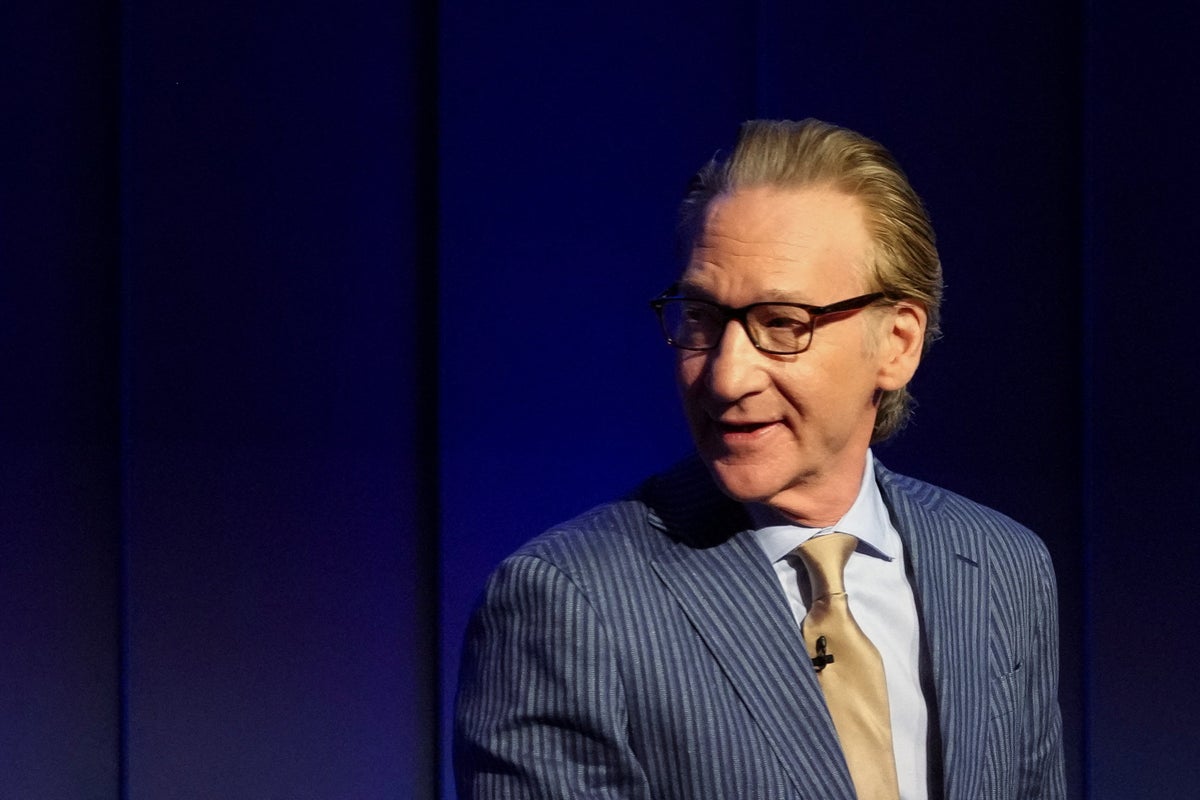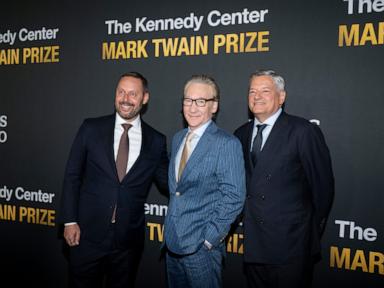
The establishment media loves a narrative about institutional courage. When Bill Maher accepted the Mark Twain Prize for American Humor at the Kennedy Center, the collective commentary fell into a predictable groove. The mainstream consensus painted a picture of a prestigious institution bravely navigating "Trump-era upheaval" by honoring a polarizing, free-speech warrior who skewers both sides.
It is a comforting story. It is also entirely wrong.
The Kennedy Center did not show courage by honoring Bill Maher. They showed desperation. Institutional high-culture operations are not navigating political upheaval; they are actively renting out their remaining cultural capital to aging iconoclasts who no longer pose any real threat to the status quo. To understand why Maher winning this prize matters, you have to stop looking at it as a victory for edgy comedy and start looking at it as the final, bureaucratic corporate capture of American dissent.
The Myth of the Equal Opportunity Offender
Mainstream profiles love to use the phrase "equal opportunity offender" to describe Maher. The logic goes like this: because he mocks both the progressive left’s obsession with identity politics and the populist right’s embrace of election denial, he represents some pure, unvarnished middle ground.
This is a fundamental misunderstanding of how political leverage works in media.
Maher is not an outsider throwing bricks at the castle. He is the ultimate insider whose specific function is to make wealthy, upper-middle-class audiences feel intellectually superior to the rest of the country. When a comedian mocks the far right for being uneducated and the far left for being overly sensitive, they are not challenging power. They are validating the exact worldview of the people sitting in the $500 seats at the Kennedy Center.
True satire punches upward at structures that control material reality—monopolies, military expenditures, systemic economic disenfranchisement. Mocking Twitter trends and political campaign theater is low-hanging fruit. It is safe. It is profitable. By giving Maher the Mark Twain Prize, the cultural elite did not honor a rebel; they threw a party for their most loyal court jester.
How Institutions Use Controversy for Survival
Look at the financial reality of major performing arts centers. They are bleeding younger audiences. Their traditional donor bases are aging out. To survive, institutions like the Kennedy Center need to generate noise, but it has to be a specific type of sanitized noise that does not scare away corporate underwriters.
Enter the manufactured controversy of Bill Maher.
By framing the event around "navigating upheaval," cultural commentators give the institution a veneer of relevance. It allows a stuffy, legacy organization to pretend it is at the center of the cultural zeitgeist. I have spent years analyzing how legacy media brands try to buy back their youth, and the playbook is always the same: find a figure who creates loud, superficial debate but never actually threatens the tax status or the social standing of the board of trustees.
Compare Maher’s current position to the actual legacy of Mark Twain. Twain’s Anti-Imperialist Writings were so genuinely disruptive to the American consensus that parts of his work were suppressed or viewed as deeply dangerous to the state's geopolitical ambitions. He attacked the core moral rot of empire. Maher hosts a weekly show on a premium cable network owned by a massive media conglomerate, where his monologues align perfectly with the standard editorial line of centrist corporate executives. The gap between actual disruption and institutional recognition has never been wider.
The Deceptive Metric of Free Speech Warrior Status
The defense of Maher usually hinges on his stance against censorship and cancel culture. His defenders argue that in an era of hyper-partisanship, a voice that refuses to self-censor is inherently valuable.
Let us break down the mechanics of this "free speech" market.
There is an incredibly lucrative media ecosystem built entirely around complaining that you are not allowed to speak. It is the most profitable business model in modern commentary. When a public figure with a massive platform claims they are being silenced, they are not fighting the system—they are marketing a product.
- The Reality Check: Maher has never been canceled. He transitioned seamlessly from network television to premium cable decades ago and has remained there, collecting massive paychecks, precisely because his brand of "offensiveness" is highly predictable and demographic-friendly.
- The Audience Illusion: The audience gets a dopamine hit of feeling transgressive without having to take any actual social or economic risks.
When you strip away the branding, what is left is not a fearless truth-teller, but a highly competent businessman who mastered the art of ideological positioning.
The Death of Structural Satire
We are asking the wrong questions about comedy and politics. The debate always centers on what a comedian is allowed to say, rather than what their commentary actually achieves.
Modern political humor has shifted from a tool of subversion to a mechanism of pacification. When people watch a nightly or weekly takedown of political absurdity, it functions as a pressure valve. You watch the incompetence of the ruling class get mocked for an hour, you laugh, your anger is neutralized, and you go to sleep. Nothing changes. The systems stay intact. The defense budget grows. The corporations consolidate.
If your satire results in a black-tie gala where politicians, media executives, and donors applaud you in a massive federal cultural center, your satire has failed its primary civil function. It has been house-trained.
Stop looking at institutional awards as a metric of cultural impact. When the establishment hands out a prize for humor during a time of crisis, it is not because the humorist forced them to look in the mirror. It is because the humorist convinced them that everything is going to be just fine.