The hospital room smells of stale floor wax and distant memories. For anyone who has sat in a plastic chair beside a beeping monitor, watching a loved one's shoulders grow thinner under a sterile blanket, cancer is not a statistic. It is a slow, relentless thief. It is a disease of cunning adaptation, a rogue biological algorithm that learns how to outsmart our most desperate defenses.
For decades, modern medicine fought this war with blunt instruments. We poisoned the body to save it, deploying chemotherapy like a scorched-earth campaign that flattened everything in its path, hoping the tumor would die before the patient did. Even as targeted therapies arrived—precision weapons designed to lock onto specific molecular anomalies—cancer proved frustratingly slippery. It mutates. It finds a workaround. It outwits us.
Then came a shift in philosophy. Instead of looking for a single magic bullet, scientists began to realize that winning required an orchestra.
Consider what happens when a patient receives a diagnosis today. The shock wave hits the family, but behind the scenes, a quiet revolution is taking place in laboratories from Cambridge to Shanghai. Researchers are no longer asking how to kill a cancer cell with one drug. They are asking how to trap it with three. They are looking at antibody-drug conjugates, molecular guided missiles that carry toxic payloads directly to the surface of a tumor cell, dropping their cargo only when they are safely inside enemy lines.
AstraZeneca recently placed a massive bet on this exact future, throwing two billion dollars behind an ambitious acquisition of Summit Therapeutics and its experimental drug, ivonescimab. It is a figure that sounds abstract until you translate it back into human terms. Two billion dollars represents an admission of a stark reality: the old way of building single-agent blockbusters is hitting a wall. The future belongs to combinations.
To understand why this matters, you have to look at how cancer survives. A tumor is not just a clump of rogue cells; it is an ecosystem. It builds walls. It cloaks itself from the immune system, waving chemical white flags that tell our white blood cells to stand down. Traditional therapies might knock down the front door, but the cancer simply slips out the back.
Ivonescimab is designed to block two different escape routes at once. It acts like a double-bolted lock. By targeting both PD-1, which blinds the immune system, and VEGF, which feeds the tumor with a fresh supply of blood vessels, the drug effectively starves the enemy while simultaneously ripping off its disguise.
Clinical data is often presented as cold percentages, dry rows of figures on a slide deck meant for investors in Manhattan boardrooms. But behind every data point in a clinical trial is a person who was told they had months left, only to see their scans light up with hope instead of disease progression. When AstraZeneca CEO Pascal Soriot talks about driving the next generation of cancer combinations, he is talking about transforming terminal diagnoses into manageable, chronic conditions. He is talking about buying time—that most precious, irreplaceable commodity.
Yet, stepping into this new era is not without anxiety. The sheer complexity of combining potent biological agents raises the stakes for patient safety. When you mix powerful therapies, you multiply the variables. Side effects do not simply add up; they can compound in unpredictable ways. Oncologists walk a tightrope every day, balancing the aggression of the treatment against the fragility of a human body already battered by disease.
This is where the true challenge lies. The science is sprinting forward, but the infrastructure of care must keep pace. We need smarter clinical trials that can test infinite combinations of drugs without taking a decade per study. We need predictive biomarkers that can tell a doctor, before a single pill is swallowed, exactly which cocktail of drugs will work for this specific patient, sparing them the agony of trial and error.
The two billion dollar investment in Summit is a loud statement in a quiet room. It tells the medical community that the era of the lone-wolf drug is ending. We are entering the age of the coalition.
Imagine a future where a lung cancer diagnosis no longer carries the terrifying finality it does today. Imagine a clinic where treatments are custom-assembled like a tailored suit, hitting the tumor from three different angles simultaneously, leaving it nowhere to run and no way to hide.
We are not there yet. The road from a corporate acquisition to a patient's bedside is paved with rigorous testing, regulatory hurdles, and heartbreaking setbacks. But the trajectory is clear. The war against cancer will not be won by a single breakthrough, but by the relentless, coordinated accumulation of better tools, better combinations, and a deeper respect for an adversary that refuses to go quietly.
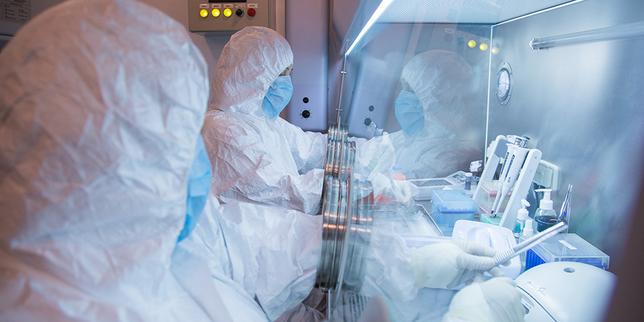
The monitors in the hospital room still beep. The plastic chairs are still hard. But somewhere in a brightly lit lab, a team of researchers is looking at a molecular structure on a screen, testing a new combination, and quietly rewriting the odds.