The envelope sits on your kitchen table, thick and heavy enough to stop a door. It smells faintly of cheap ink and civic guilt. You pour a cup of coffee, stare at the dense blocks of legalese inside your official voter guide, and feel that familiar, creeping paralysis.
Somewhere between the tax exemptions and the bond measures, your eyes glaze over. You reach for your phone to look up a quick cheat sheet. You just want someone to tell you what Propositions 40, 41, and 42 actually mean before you walk into that voting booth tomorrow morning.
Stop. Put the phone down for five minutes.
Because what looks like three dry, bureaucratic adjustments to state law is actually the final act of a quiet, nine-figure war fought over your kitchen table. While you were worrying about the price of groceries and whether your property taxes would spike next spring, a handful of the wealthiest people on earth poured millions into shaping the exact words printed on your ballot. They hired armies of signature gatherers. They bought every commercial break during the evening news. They turned direct democracy—a tool originally invented to protect working people from corporate monopolies—into a private auction house.
I have spent the last decade watching these ballot wars unfold from the inside out, sitting in windowless campaign offices where strategists laugh about how easily a confusingly worded "Yes" can trick a voter into voting against their own paycheck. I have seen the glossy mailers hit my own mailbox, funded by shadowy committees with names that sound like sunlit nature preserves or neighborhood bake sales, when the money actually traces back to three men in glass towers two hundred miles away.
It is exhausting. Worse, it is designed to make you give up. When you feel overwhelmed by the fine print, you either skip the measure entirely or guess based on a thirty-second ad you half-heard while washing dishes. That confusion is not an accident. It is the entire business model.
To understand what is really happening with Propositions 40, 41, and 42, we have to peel back the polished campaign slogans and look at the human lives caught in the gears.
The Architecture of a Modern Ballot Fight
Let us strip away the political jargon first. In most states with a ballot initiative process, getting a measure in front of voters used to require thousands of volunteers standing outside grocery stores with clipboards, fueled by genuine grassroots anger. Today, it requires roughly five to ten million dollars before a single voter even sees the text. Paid signature firms charge anywhere from eight to fifteen dollars per valid signature.
Once you have that kind of money, you do not just ask voters to pass a law. You write a counter-measure to confuse them. You create a shell game.
Think of Propositions 40, 41, and 42 not as three separate questions, but as three chess pieces moved across the same board by the same ultra-wealthy players. Depending on which way you tilt the board, either working families keep their leverage, or a small circle of tech founders, real estate developers, and private equity titans permanently lock in their financial advantage.
To make this concrete, let us step into a hypothetical scenario. Meet Elena. She is forty-two, works as a surgical nurse at a regional hospital, and rents a two-bedroom apartment twelve miles from her shift because she cannot afford a down payment in the city where she saves lives. Elena pays her taxes, votes in every general election, and has twenty minutes on a Tuesday night to figure out her ballot.
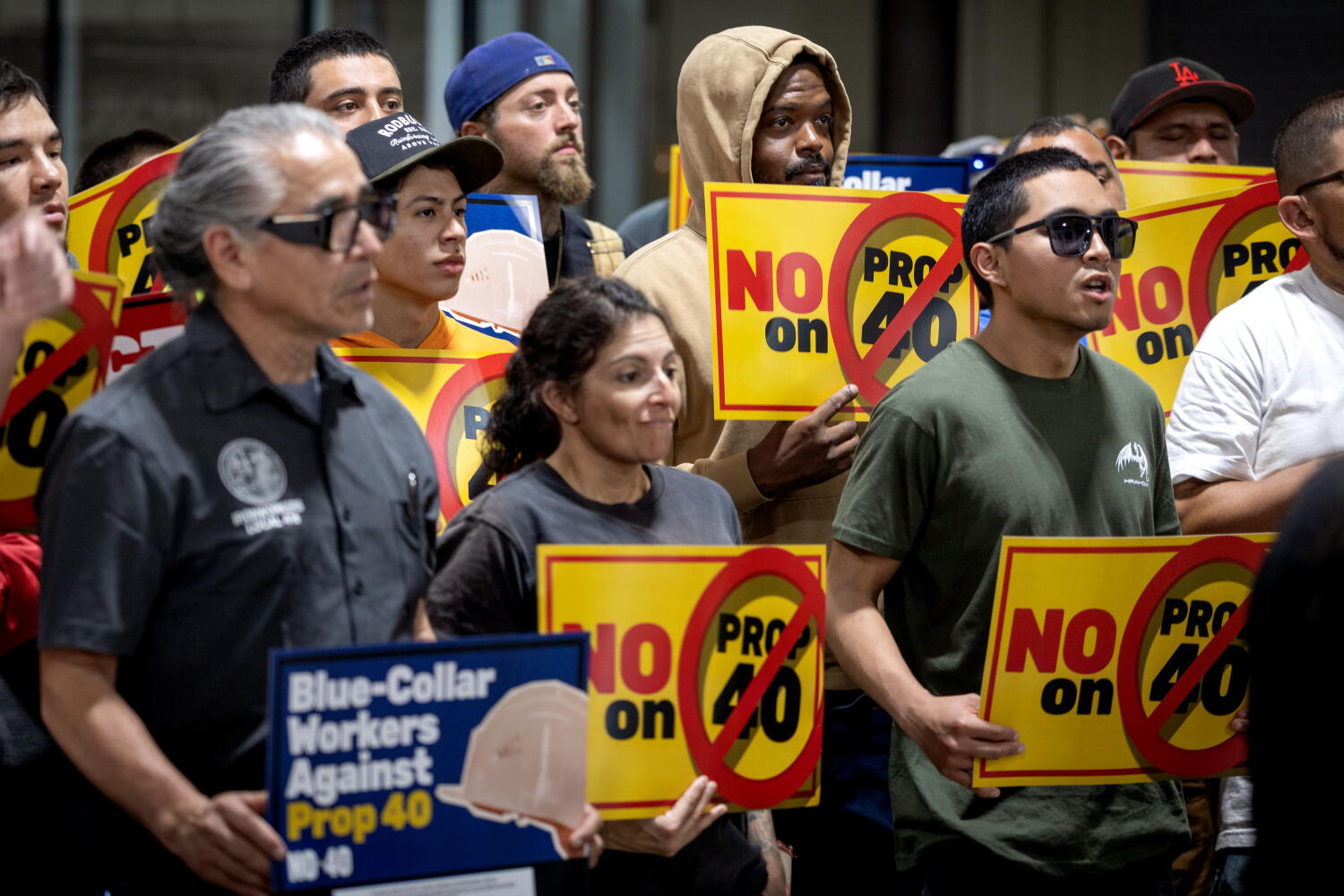
When Elena looks at Proposition 40, she sees a measure promising to "protect taxpayers from runaway government spending" by requiring a two-thirds supermajority vote for any new local tax or fee. Sounds great on a bumper sticker. Who wants higher taxes?
Nobody. Not Elena, and certainly not the commercial real estate billionaires who wrote the check to put Proposition 40 on the ballot.
Here is the invisible catch Elena does not see in the summary. That two-thirds threshold does not just apply to income taxes or sales taxes. It applies to administrative fees, developer impact fees, and local bond measures meant to fix crumbling water pipes or build affordable housing near Elena’s hospital. In practice, a two-thirds requirement means a vocal minority of thirty-four percent can veto the will of sixty-six percent of the community.
More importantly, look at who benefits immediately. If a billionaire developer wants to build a luxury high-rise that strains the local sewer system and clogs the surrounding streets, local officials normally charge an impact fee to pay for the extra infrastructure. Under Proposition 40, raising or adjusting that fee becomes nearly impossible. The developer pockets the savings. Meanwhile, when the sewer line backs up or the local clinic closes, Elena’s rent still goes up, and her public services quietly rot from the inside.
The Decoy Strategy Behind Proposition 41
If Proposition 40 is a blunt instrument, Proposition 41 is a scalpel disguised as a bandage.
Suppose you are a billionaire hedge fund manager or the founder of a massive gig-economy platform. You know voters are skeptical of corporate giveaways. You know they want accountability, better healthcare access, or cleaner energy. So what do you do when grassroots advocates or lawmakers threaten to regulate your industry or tax your windfall profits?
You write your own version of the law, give it a heartwarming title, and spend eighty million dollars convincing voters that your version is the real reform.
This is the exact DNA of Proposition 41. On the surface, it presents itself as a streamlined, modern approach to funding public infrastructure and regulating private industry partnerships. The television ads feature smiling teachers, hard-hatted construction workers, and earnest narrators talking about "common-sense accountability" and "cutting red tape."
Look closer at the legal text—specifically the preemption clauses buried on page fourteen.
In plain English, a preemption clause is a legal padlock. It says that once this state proposition passes, local cities and counties are forbidden from passing stronger rules on their own. Furthermore, because it was passed by voters at the ballot box, the elected legislature cannot amend or fix it later without going back to the voters in another multi-million-dollar election.
Think about what that means in real life. Imagine buying a house, signing a contract that looks like a standard mortgage, and realizing five years later that a clause on the back page forbids you from ever fixing the roof unless you get permission from the bank's board of directors.
When billionaires fund a measure like Proposition 41, they are not trying to solve a public problem. They are trying to buy permanent immunity from future regulation. By locking their preferred rules into the state constitution or statutory code via a ballot initiative, they bypass city councils, bypass state legislatures, and strip voters of the ability to adjust course when things go wrong.
I remember sitting in a diner with a retired union organizer a few years back after a similar measure passed. He stared at his plate and said something I have never forgotten: "They realized it's cheaper to buy the rulebook once than to bribe the referees every season."
That is Proposition 41 in a single sentence. It is an investment, not a donation. If you spend one hundred million dollars on a ballot campaign to avoid paying two billion dollars in taxes or labor protections over the next decade, that is a two-thousand-percent return on investment. No stock on Wall Street comes close to those margins.
Proposition 42 and the Illusion of Free Money
Then we arrive at Proposition 42, the measure that triggers the fiercest tug-of-war among ordinary voters because it touches something raw and urgent: housing, public debt, and the feeling that the system is rigged against anyone who was not born into wealth.
Proposition 42 asks voters to approve a massive multi-billion-dollar bond package—or, depending on the competing framing, restructures how public money is borrowed and distributed for critical state projects.
Let us be completely honest here, because pretending this is simple does a disservice to your intelligence. Bonds are confusing. Even economists argue over when public borrowing makes sense and when it becomes a generational trap.
Here is the basic math of how a bond works, stripped of all political spin. When the state issues a bond, it is essentially taking out a massive mortgage. Investors—often large institutional funds, banks, and wealthy individuals—buy those bonds because the interest payments are steady and frequently tax-exempt. Over twenty or thirty years, taxpayers pay back the original amount borrowed, plus interest, which usually doubles the total cost of the project.
So why are billionaires fighting on both sides of Proposition 42?
Because money at this scale is never neutral. One faction of ultra-wealthy donors—largely tied to real estate development, construction conglomerates, and financial institutions—wants Proposition 42 passed because it guarantees a massive, steady pipeline of state-backed contracts and tax-free bond yields. Another faction of billionaires—primarily anti-tax ideologues and tech libertarians—is spending millions to defeat it, arguing that pouring billions into a broken bureaucratic system is like pouring water into a bucket with no bottom.
And where does that leave someone like Elena, our surgical nurse?
She is stuck between two terrible choices. If Proposition 42 fails, the affordable housing complexes, hospital upgrades, and transit extensions promised in the measure vanish overnight. There is no backup plan sitting in a drawer at the state capitol. Yet if Proposition 42 passes without strict oversight, billions of taxpayer dollars will flow through opaque agencies, enriching private contractors and bondholders while delivering half the promised results at twice the projected cost.
It is completely normal to feel frustrated by this. Anyone who tells you Proposition 42 is an obvious, effortless choice is trying to sell you something.
How to Read a Ballot When the Deck Is Stacked
When you feel like every option has a hidden hook, the temptation is to throw up your hands and walk away. Do not do it. Cynicism is the exact reaction the people funding these campaigns are counting on. If you stay home, their paid ads decide your future.
Instead, you need a reliable filter—a way to cut through fifty pages of legal jargon in three minutes without needing a law degree. Over years of tracking money in politics, I have learned to rely on three simple questions whenever I stare at a confusing proposition.
First: Follow the money, not the name.
Ignore the title of the proposition. Ignore the name of the committee on the mailer. Look exclusively at the top three financial contributors listed in your official voter guide. If a measure claiming to help small businesses or lower healthcare costs is funded entirely by three billionaires or a massive corporate trade association, stop and ask why. People do not spend fifty million dollars out of pure charity. They expect that money back, with interest.
Second: Check the lock.
Ask yourself whether the measure creates a permanent rule that lawmakers cannot change later. Good governance requires flexibility. When a proposition requires a supermajority vote for future changes, or embeds specific corporate exemptions directly into the constitution, it is a trap. You should never hand away your community's ability to adapt to future emergencies just to get a short-term promise today.
Third: Look at who bears the risk.
In any financial or policy arrangement, someone holds the bag when things go wrong. Under Proposition 40, local communities bear the risk of collapsing infrastructure while wealthy property owners keep their tax shields. Under Proposition 41, workers and local neighborhoods bear the risk of unchecked corporate power while executives get legal immunity. Under Proposition 42, future taxpayers bear the debt burden, meaning the dollars spent must actually build tangible, lasting public assets—not vanish into consulting fees.
The Choice Waiting in the Booth
Let us go back to Elena’s kitchen table. It is late now. The coffee has gone cold. Tomorrow morning, she will wake up at five, put on her scrubs, and drive past three half-empty luxury condo towers and two tent encampments on her way to the hospital.
Before she leaves, she will pick up her pen and fill in those little ovals next to Propositions 40, 41, and 42.
For months, the richest people in the country have treated her vote like a commodity to be bought, manipulated, and priced into their quarterly projections. They have bet tens of millions of dollars that she will be too tired to look past the headlines, too rushed to read the fine print, and too overwhelmed to connect the dots between a two-thirds tax threshold and the crumbling road she drives to work.
They have every advantage. They own the media platforms, they fund the think tanks, and they write the checks.
Except for one small detail. The curtain in the voting booth still closes behind you, and out there in the quiet, all their millions shrink down to the exact same weight as a single mark from a ballpoint pen.