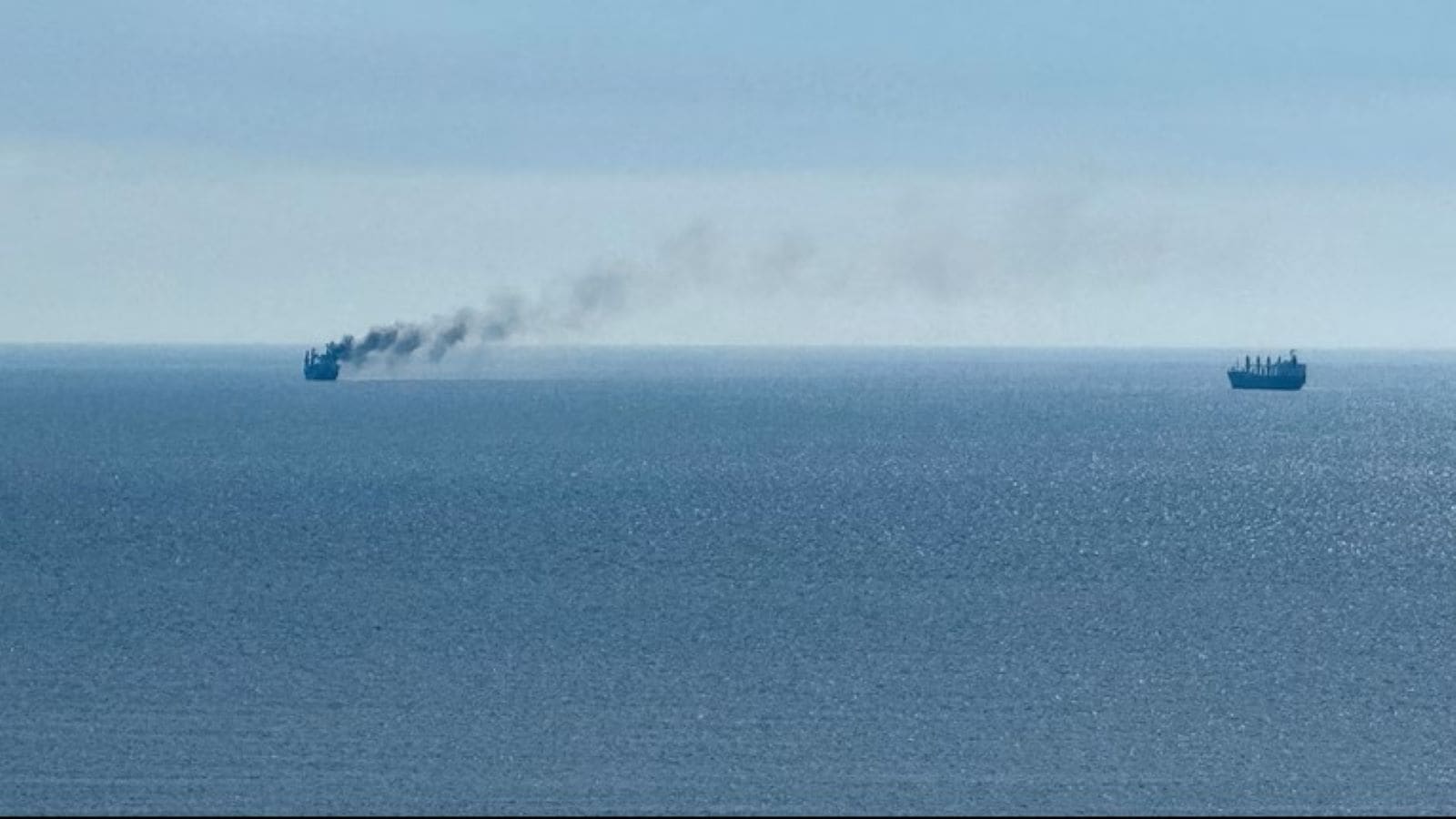
Commercial merchant ships aren't warships. They shouldn't be targets. Yet, the tragic realities of global conflict zones just hit home for the international maritime community in the most devastating way possible.
On July 19, 2026, the Guinea-Bissau-flagged bulk carrier MV Golden Leo was carrying a cargo of corn out of Ukraine's port of Odesa. It didn't make it to open water. A targeted strike involving three Russian Kh-59/Kh-69 cruise missiles slammed into the starboard side of the vessel's superstructure. The impact ignited a massive fire on board, trapping the crew.
The cost of this strike wasn't measured in lost grain. It was measured in human lives.
India's Ministry of External Affairs (MEA) confirmed the grim toll. Four Indian seafarers were killed in the attack, and a fifth was rushed to an Odesa hospital in critical condition. Out of 17 crew members on board—primarily a mix of Indian and Syrian nationals—ten people lost their lives, including a local Ukrainian maritime pilot who was guiding the ship out of the combat zone.
This isn't an isolated incident. It is a stark warning that the Black Sea has returned to a state of total economic warfare, and civilian sailors are paying the ultimate price.
The Re-escalation of the Black Sea Trade War
For a brief period, international agreements and fragile corridors offered a semblance of safety for commercial shipping. That safety is gone. The maritime routes across the Black Sea and the Sea of Azov have devolved into an unrestricted conflict zone where agricultural supply chains are targeted intentionally.
Ukrainian forces have repeatedly targeted Russian energy infrastructure, including state-backed oil tankers. In response, Moscow has systematically weaponized strikes against Ukraine's deepwater ports and the foreign civilian vessels that dare to dock there.
The numbers painting the picture of July 2026 are terrifying.
- 28 civilian deaths recorded in the Odesa region within the first three weeks of July alone due to Russian missile and drone strikes.
- 3 separate shipping attacks occurred within a four-day window, including a drone strike on the Marshall Islands-flagged Venturo and an assault on an Antigua and Barbuda-flagged vessel.
- A 33% reduction in Ukraine's Black Sea grain export capacity, directly caused by persistent infrastructure bombardment.
The MV Golden Leo wasn't an anonymous foreign ship caught in crossfire. Data from the London Stock Exchange Group (LSEG) shows the bulk carrier is owned by Mumbai-based Ocean Grace Shipping Ltd. The attack brought a highly regional war directly to India's doorstep, highlighting the terrifying exposure of global seafarers.
New Delhi Navigates a Diplomatic Tightrope
India's response to the tragedy was swift but distinct in its diplomatic phrasing. The MEA issued a strong statement condemning the attack, explicitly calling the targeting of commercial shipping and the endangerment of civilian crew members "deplorable".
"India condemns such attacks and reiterates that targeting commercial shipping and endangering innocent civilian crew members, or otherwise impeding freedom of navigation and commerce, is deplorable and should be avoided," the Ministry stated.
What the statement didn't do, however, was name Russia directly. India has long maintained a complex, strategic relationship with Moscow, frequently advocating for dialogue and diplomacy rather than outright public condemnation. But as more Indian citizens find themselves in the line of fire, maintaining this neutral posture is becoming incredibly difficult.
The tragedy comes right after the Indian government urged local shipowners and crew recruitment firms to stop sending sailors through the Strait of Hormuz due to intensifying clashes between the United States and Iran. From the Middle East to Eastern Europe, the global shipping lanes that keep the world fed and fueled are flashing red.
The Human Cost of Global Supply Chains
It's easy to look at global shipping as a game of logistics, tonnage, and freight rates. But the global merchant navy relies entirely on a workforce that overwhelmingly comes from developing nations.
India is one of the single largest suppliers of seafarers on earth, with well over 320,000 active sailors working on international vessels. They take these jobs to send money home, unaware that a routine cargo run could turn into a military engagement.
When a cruise missile strikes a ship's superstructure, it hits the living quarters, the bridge, and the galley. It hits the spaces where civilian workers sleep and eat. The Ukrainian Navy labeled the attack on the Golden Leo an "act of terror" because the ship was unarmed, carried zero military utility, and was strictly moving food.
Protecting Maritime Crews in High-Risk Zones
If you operate a shipping company, manage logistics, or have family members working at sea, you can't treat these incidents as distant news. The rules of engagement have shifted. If a port is open, it doesn't mean it's safe.
Shipowners must mandate comprehensive war-risk insurance assessments before booking cargo in the Black Sea or the Gulf of Aden. Relying on a foreign flag of convenience—like Guinea-Bissau—provides zero protection against modern precision-guided cruise missiles. Crewing agencies must offer full transparency to sailors regarding the exact risk profiles of their destinations.
For individual seafarers, knowing your rights is vital. Under international maritime guidelines, crew members have the right to refuse transit through officially designated warlike operations areas without facing blacklisting or contract termination.
Demand clarity from your employers. Monitor the joint war committee circulars. The tragedy in Odesa proves that when geopolitical tensions boil over, a civilian flag won't keep the missiles away.