Every time the thermometer ticks past ninety degrees in Los Angeles, the media rolls out the exact same tired script. We get sweeping aerial shots of fried palm trees, interviews with sweaty tourists melting on the Santa Monica pier, and earnest anchor desks warning us about unprecedented atmospheric doom. The lazy consensus writes itself: Southern California is turning into a permanent furnace, and we are helpless victims of an escalating meteorological crisis.
It is a neat, emotionally charged narrative that sells clicks. It is also fundamentally incomplete. You might also find this similar coverage insightful: The Ballot Box Paradox Inside the Conservative War on Mail-In Voting.
If you spend your time hyperventilating over every late-October Santa Ana wind event or August coastal spike as a sign of imminent planetary collapse, you miss the actual mechanics governing how this region operates. Southern California is not just warming up; it is mismanaged, poorly engineered for its actual climate classification, and chronically reliant on a collective amnesia regarding historical weather extremes.
Let us look at the actual physics. The media loves to treat record highs as anomalies born exclusively of modern industrial output. They forget, or choose to ignore, that Southern California is fundamentally a Mediterranean-to-desert transition zone. High pressure systems parked over the Great Basin are not a recent invention of the twenty-first century. These thermal domes have baked valleys from the Inland Empire to the San Fernando basin for millennia. As discussed in latest reports by Reuters, the implications are notable.
When cold air masses pool over the high deserts of Nevada and Utah, they spill westward over the Sierra Pelona and San Gabriel mountains. As that air compresses on its descent toward sea level, it heats up dramatically—often by several degrees Fahrenheit per thousand feet of descent. This is the Santa Ana wind phenomenon. It has scorched the chaparral since long before the first subdivision was bulldozed into the hills.
Yet, every single time it happens, journalists act as if the sky is falling for the very first time. They focus entirely on the symptom—the mercury rising—while ignoring the systemic failures that turn a normal weather cycle into a human disaster.
The Architectural Lie We Built in the Sun
The real crisis is not that Southern California gets hot. The crisis is that we built a massive, water-guzzling, concrete-radiant megalopolis and acted surprised when it absorbed solar radiation like a brick oven.
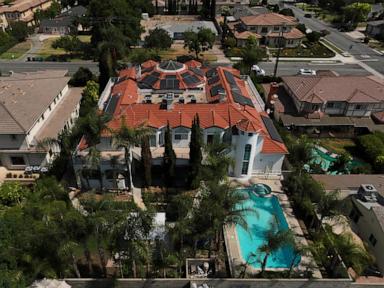
For decades, urban planners treated Los Angeles and its surrounding counties as an extension of the Midwest or the Eastern Seaboard, just with more sunshine. They laid down sprawling grids of dark asphalt parking lots, built single-story suburban boxes devoid of natural shade corridors, and paved over natural riverbeds that once acted as vital thermal sinks and drainage channels.
Dark asphalt absorbs up to ninety-five percent of incoming solar radiation, re-emitting it slowly as thermal energy well into the night. This creates the urban heat island effect, a phenomenon that routinely pumps urban core temperatures up by ten to fifteen degrees compared to adjacent undeveloped land.
When local news stations broadcast breathless alerts about record-breaking heat, they almost exclusively pull data from official weather stations located at tarmac-heavy airports like LAX or Burbank. These sites are literal heat traps. They measure the microclimate of a jet runway, not the actual livable thermal envelope of the region. By treating these localized airport spikes as a generalized regional Armageddon, reporters obscure the real culprit: terrible urban design.
If you pave a desert in black tar, do not act shocked when it feels like a frying pan.
The Water Shell Game
You cannot talk about Southern California heatwaves without addressing the hydrologic shell game that keeps the region hydrated. The standard media panic usually includes a mandatory segment on reservoir levels and mandatory lawn-watering restrictions. The subtext is always the same: residents are drinking too much water and watering their grass too often.
This is a convenient distraction that shifts the blame from heavy industrial and agricultural misallocation onto suburban homeowners.
Southern California imports the vast majority of its water from hundreds of miles away—the Sacramento-San Joaquin River Delta and the Colorado River. We pump liquid uphill, across mountain ranges, and through massive aqueduct systems, all to keep green lawns alive in a semi-arid shrubland and to flood-irrigate massive commercial agriculture operations in Imperial County.
When a heatwave hits, agricultural water demand spikes alongside residential use. Yet, policymakers rarely touch the structural incentives that allow water-intensive crops like alfalfa to be grown in an arid basin and shipped overseas to feed livestock. Instead, they slap residents on the wrist for running their sprinklers on Tuesdays instead of Wednesdays.
The heat is not killing our water supply; our institutional refusal to price and allocate water based on geographic reality is. As long as the state subsidizes water for high-impact commercial farming in desert adjacent zones while threatening citizens with fines for washing their cars, every heatwave will feel like a crisis of scarcity rather than a routine exercise in resource management.
Designing for the Burn
If we want to survive the next century of high-temperature events, we need to stop treating heatwaves as meteorological emergencies and start treating them as permanent design constraints.
Stop planting non-native, thirsty lawns that require artificial microclimates to survive. Shift municipal codes to mandate cool roofs—reflective white membranes or light-colored tile that bounce solar radiation back into the atmosphere rather than trapping it in buildings. Rip up surplus asphalt parking lots and replace them with permeable pavers, urban forests, and bioswales that provide both shade and evaporative cooling.
Until city councils and developers stop building concrete traps and pretending air conditioning is a substitute for proper environmental engineering, every summer will bring the exact same theatrical panic.
The heat is not the enemy. Our refusal to adapt to it is.