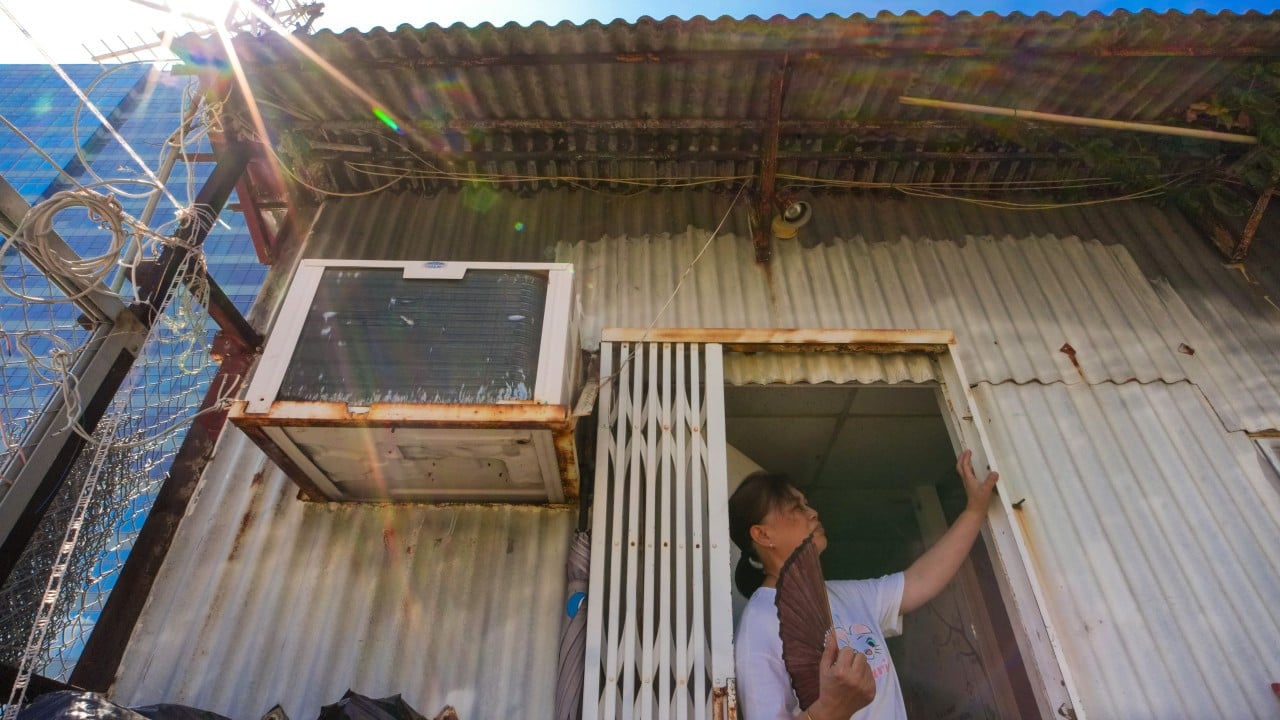
Every summer, the media machine spins up the exact same predictable panic. Reporters roll into cramped urban quarters, thermometer in hand, screaming about indoor temperatures hitting 52 degrees Celsius in subdivided flats. They frame it as a shocking anomaly, a localized tragedy born purely of evil landlords and concrete jungles. They demand emergency subsidies, portable air conditioners, and institutional pity.
They are missing the entire point.
I have spent over a decade auditing urban housing density and thermal performance metrics across the world's densest metro areas. I have stood in those exact subdivisions when the heat index makes breathing feel like swallowing wet wool. The misery is real. The sensation of heat reaching 52 degrees is not an exaggeration of discomfort. But the narrative that this is purely a housing design failure is a lazy, dangerous delusion.
By framing subdivided flat thermal stress as a localized hardware malfunction, city officials and activists let structural economics off the hook. Worse, they advocate for solutions that guarantee higher energy bills, grid failure, and long-term systemic lock-in.
Stop treating a macro energy crisis like a micro interior design flaw.
The Physics Nobody Wants to Acknowledge
Let us dispense with the emotional hand-wringing and look at the thermodynamics.
A subdivided flat is not hot because it is small. It is hot because of building envelope failure, urban heat island compounding, and internal metabolic heat generation packed into microscopic footprints.
When you cram three households into a space previously zoned for one, you multiply the internal heat load exponentially. Refrigerators dump thermal energy directly into the living volume. Cooking appliances radiate massive BTUs. Human bodies continuously release sensible and latent heat. Combine that with zero cross-ventilation—because external walls were chopped up by interior drywall partitions—and you have created a literal thermal trap.
The lazy consensus is that if we just blast air conditioning or mandate better fans, the problem disappears. This is thermodynamics illiteracy.
Air conditioners do not destroy heat; they move it. If you drop a cheap window AC unit into a subdivided flat without fixing the exhaust path, you simply vent hot air into the adjacent communal corridor, raising the ambient temperature of the entire floor until every single unit is fighting a losing battle against its neighbors' exhaust. It is a localized arms race of thermal warfare.
Worse yet, the grid cannot handle it. When thousands of partitioned units simultaneously spike their power draw to run inefficient compressors, voltage drops, transformers blow, and the entire neighborhood plunges into blackout. You have traded a hot room for a pitch-black, unventilated oven.
The Institutional Hypocrisy of Thermal Pity
Governments love the "extreme heat in tiny flats" headline. It gives them a safe villain. They can point to greedy slumlords, hand out a few hundred bucks in one-off heat subsidies, and pretend they are tackling inequality.
It is theater.
Real urban reform requires addressing zoning laws that make legal, human-scale micro-housing financially impossible to build. When the state criminalizes modular, high-efficiency co-living spaces through draconian building codes, it drives the urban poor directly into the unregulated black market of subdivided flats. The illegal partition is not the disease; it is the immune response to a housing market choked by bureaucratic gatekeeping.
I have watched local agencies spend millions on temporary cooling centers while actively blocking zoning variances that would allow private developers to construct modern, mechanically ventilated single-room occupancy buildings with central heat-recovery systems.
You cannot legislate away basic physics with charity vouchers.
Dismantling the People Also Ask Fallacy
Type "subdivided flat heat" into any search engine, and you will find a predictable queue of queries reflecting total public confusion:
- How do you cool down a subdivided flat without AC?
- Are window fans effective in partitioned rooms?
- Can landlords be forced to install cooling equipment?
Let us answer these with brutal honesty, starting with the first.
You do not cool down a subdivided flat without AC if the ambient exterior air is stagnant and 35 degrees with 90 percent humidity. Opening a window does nothing when the outdoor air is a literal hair dryer. The standard advice to "create a cross-breeze" is useless when your flat has a single window facing an internal light well that acts as a chimney for every cooking stove and AC compressor below you.
As for window fans, they only work if there is a pressure differential and a cooler destination to push the heat toward. If you blow hot air into a hallway that is already 45 degrees, you are just rearranging the deck chairs on the Titanic.
And forcing landlords to install cheap, inefficient equipment? That guarantees one of two outcomes: either the landlord hikes the rent to absorb the capital expenditure, pushing the tenant onto the street, or they install the cheapest possible unit that triples the tenant's monthly electricity bill, forcing them to choose between buying food or running the compressor.
The Unconventional Playbook for Surviving the Heat Island
If you actually want to fix thermal stress in high-density micro-housing, you have to abandon emotional band-aids and adopt radical engineering principles.
1. Shift from Convective to Radiative Management
Stop trying to cool the air. Cooling the air in a leaky, uninsulated subdivision is energy suicide. Instead, focus on mean radiant temperature. Applying high-performance ceramic thermal barrier coatings to internal partition walls prevents heat absorption from adjacent units. Mylar window films cut solar heat gain coefficient by up to 80 percent without blocking natural light.
2. Centralize Exhaust, Decentralize Intake
Individual exhaust fans fighting each other destroy building pressure. Modern retrofits require a centralized negative-pressure stack pulling hot air out of internal corridors, allowing cooler makeup air to filter through insulated intake vents. It costs a fraction of retrofitting individual split-type air conditioners and actually preserves indoor air quality.
3. Legalize Modular Co-Living Infrastructure
The underground subdivided flat market exists because the formal market abandoned affordability. By legalizing purpose-built micro-apartments with centralized VRF (Variable Refrigerant Flow) cooling systems, landlords can achieve economies of scale that make high-efficiency thermal management economically viable.
The Bottom Line
The next time you see a headline about 52-degree indoor temperatures, look past the outrage bait. Recognize it as the predictable symptom of a broken housing supply chain meeting the laws of thermodynamics.
Pity will not drop the ambient temperature by a single fraction of a degree. Better engineering, aggressive zoning reform, and an absolute refusal to accept low-density suburban fantasies for high-density global cities are the only tools that matter.
Stop funding temporary band-aids for a structural hemorrhage. Fix the envelope, free the zoning, and stop pretending that a broken housing market can be cooled with a box fan.


