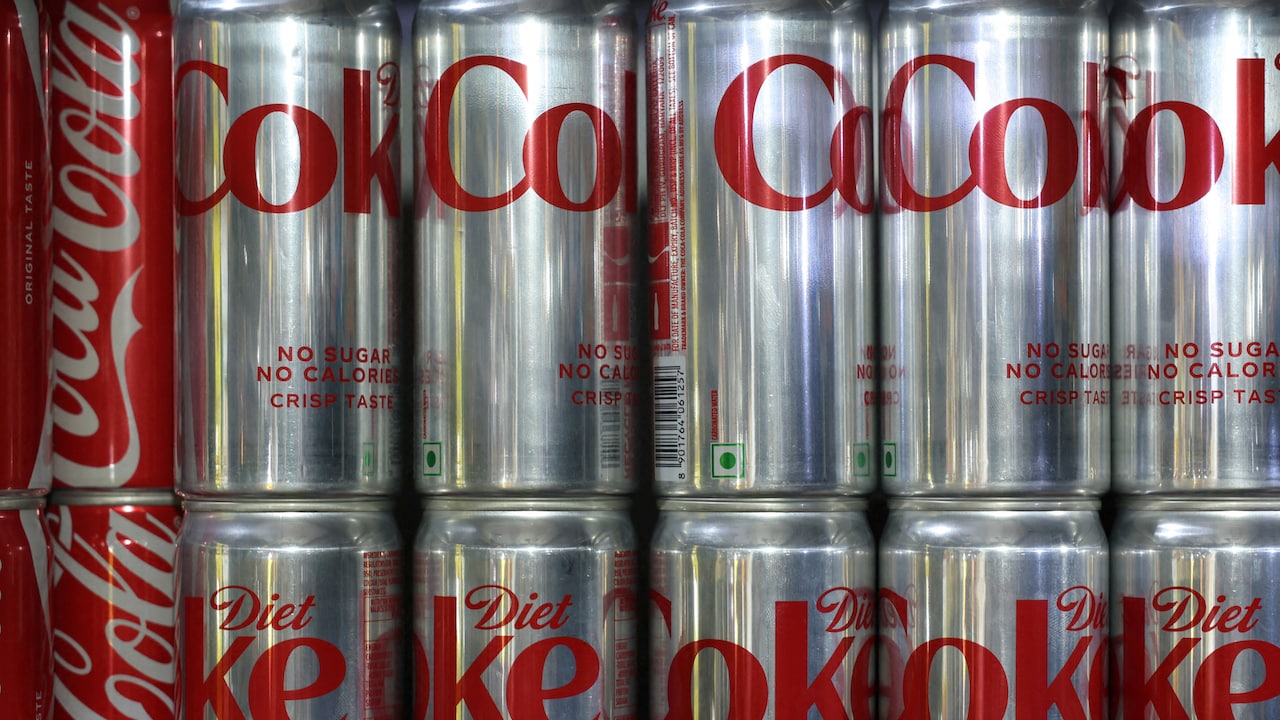
Blaming geopolitical tensions in the Middle East for a price bump in Indian Diet Coke cans is a masterclass in lazy financial journalism.
The standard narrative goes something like this: regional conflict flares up, shipping lanes get disrupted, supply chains seize, and suddenly the consumer pays 10% more for an artificial soda in New Delhi. It sounds logical on the surface. It gives readers a clean, cinematic explanation. It is also completely wrong.
I have spent years analyzing FMCG (Fast-Moving Consumer Goods) supply chains and corporate pricing strategies. When a global brand hikes prices in an emerging market, regional conflict is almost never the structural cause. It is the narrative shield. Companies love geopolitical crises because they provide perfect cover to push margin expansions that consumers would otherwise reject.
Let us dismantle the supply chain mythology and look at how soda pricing actually works.
The Aluminum Shell Game
The headline argument rests on raw material and shipping costs. The assumption is that disrupted trade routes in the Middle East drive up freight rates, which drives up the cost of raw inputs, which forces Coca-Cola’s bottling partners to pass those costs down to the retail end-user.
This falls apart the second you examine the cost breakdown of a soda can.
For a standard can of Diet Coke, the actual liquid inside—water, carbon dioxide, caramel color, phosphoric acid, and artificial sweeteners—costs pennies. The packaging, primarily aluminum, is the single most expensive physical component. But beverage giants do not buy aluminum on the spot market day-to-day. They run multi-year hedging operations.
Major bottlers lock in aluminum futures months, sometimes years, in advance. A sudden spike in freight shipping costs along a specific maritime route does not retroactively alter locked-in futures contracts for Indian bottling plants sourcing local or regional raw stock.
Moreover, India's aluminum manufacturing base is massive. Companies like Hindalco and Vedanta supply vast quantities of domestic aluminum. The idea that a can packaged and distributed domestically in India relies on an uninterrupted, real-time pipeline through a combat zone is a complete misunderstanding of localized manufacturing.
So why did the price go up?
Because Coca-Cola's local bottling partners wanted to protect their operating margins against domestic inflation, currency fluctuations, and rising sugar-free ingredient costs, and they needed an excuse that shoppers would accept without switching to a competitor.
The Psychology Of Covered Price Hikes
Imagine a scenario where a local company raises the price of a popular product by 10% on a Tuesday. The executive team gives no explanation. The public reaction is immediate backlash. Consumers accuse the brand of corporate greed. Local media runs stories about gouging.
Now imagine the exact same 10% price hike, but executed on the same Tuesday while every news outlet is broadcasting global supply chain panics. The narrative changes completely. The consumer grumbles, accepts the price hike as an inevitable casualty of world events, and hands over their rupees.
This is the covered price hike.
FMCG giants operate on strict margin targets. In India, Diet Coke occupies a specific niche. Unlike standard Coca-Cola, which targets mass-market price sensitivity across rural and urban demographics, Diet Coke is overwhelmingly consumed by urban, upper-middle-class buyers. This demographic is far less price-sensitive. They have disposable income, they are health-conscious (or at least sugar-conscious), and their purchasing habits are sticky.
When input costs tick up marginally—due to local transport fuel costs, sugar-free sweetener tariffs, or domestic wage adjustments—brands face a choice:
- Absorb the loss and let margins shrink.
- Raise prices during calm economic periods and face public backlash.
- Wait for a high-profile global crisis, attribute the hike to external chaos, and permanently shift the price floor upward.
They choose option three every single time.
Breaking Down The Real Cost Breakdown
To understand why a 10% price jump isn't driven by Middle East logistics, look at where the money actually goes when you purchase a can of Diet Coke in India:
| Cost Component | Percentage of Retail Price | Primary Local/Global Factor |
|---|---|---|
| Retailer & Distributor Margin | 25% - 35% | Domestic trade terms |
| GST & Local Taxes | 28% + Sin Tax Surcharges | Indian Tax Policy |
| Marketing & Advertising | 15% - 20% | Local agency spends & endorsements |
| Bottling & Logistics | 10% - 15% | Domestic diesel & regional trucking |
| Raw Materials (Can + Liquid) | 8% - 12% | Local aluminum supply & global futures |
Notice where global maritime shipping falls? It barely touches the scale.
The overwhelming drivers of price adjustments in India are local taxes—specifically India's heavy taxation on carbonated beverages—and domestic distribution costs. India levies a high Goods and Services Tax (GST) rate on aerated drinks, often combined with additional compensation cesses. When local state taxes shift or domestic diesel prices rise, distribution margins get squeezed.
Attributing a price increase to a distant war is convenient public relations. It shifts blame from local corporate pricing power and domestic tax environments to abstract international forces that nobody can control.
The Flaw In The "Supply Chain Collapse" Media Narrative
Search queries and mainstream reporting on this topic miss the core mechanics of corporate finance. Media outlets routinely ask: How will international conflicts affect the price of consumer goods in Asia?
That is the wrong question.
The real question is: How much pricing power do premium beverage brands hold over urban Indian consumers before demand breaks?
The media treats pricing as a passive reaction to external inputs: Input costs go up by $X$, so retail prices go up by $Y$.
That is not how corporate pricing desks operate. Pricing is dynamic, value-based, and psychological. Brands set prices based on what the market will bear, not merely what the factory floor spent. If Diet Coke consumers in Mumbai and Bengaluru are willing to pay 10% more for their daily caffeine fix without reducing their consumption volume, the price will stay up long after any shipping lanes reopen, freight rates stabilize, and fuel prices drop.
Have you ever seen a soda brand drop its prices by 10% when global freight rates collapse back to baseline?
No. The new price becomes the new baseline. The margin expands, the corporate board celebrates, and the media moves on to the next headline.
The Risk Of Calling The Bluff
There is a downside to this strategy for FMCG operators.
By constantly using global crises to mask price increases on niche products, brands push consumers closer to alternative domestic options. India's beverage landscape is changing rapidly. Local brands and functional drink startups are aggressively capturing market share in major metros.
If a brand pushes its pricing power too far under the guise of geopolitical inflation, it risks breaching the value threshold for its core urban audience. A consumer might tolerate a price increase once under the belief that world events caused it. But when local, zero-sugar alternatives offer the same utility at half the price, brand loyalty erodes fast.
I've watched multinational brands lose significant market share in emerging markets because they mistook consumer tolerance for consumer loyalty. They assumed their pricing power was infinite as long as they had a global headline to point to.
It isn't.
Stop looking at distant conflict maps to explain the extra rupees missing from your wallet at the grocery store checkout. The war didn't raise the price of your soda. A board of directors looked at your purchasing habits, realized you would pay more, and used a news cycle to prove themselves right.
.png)