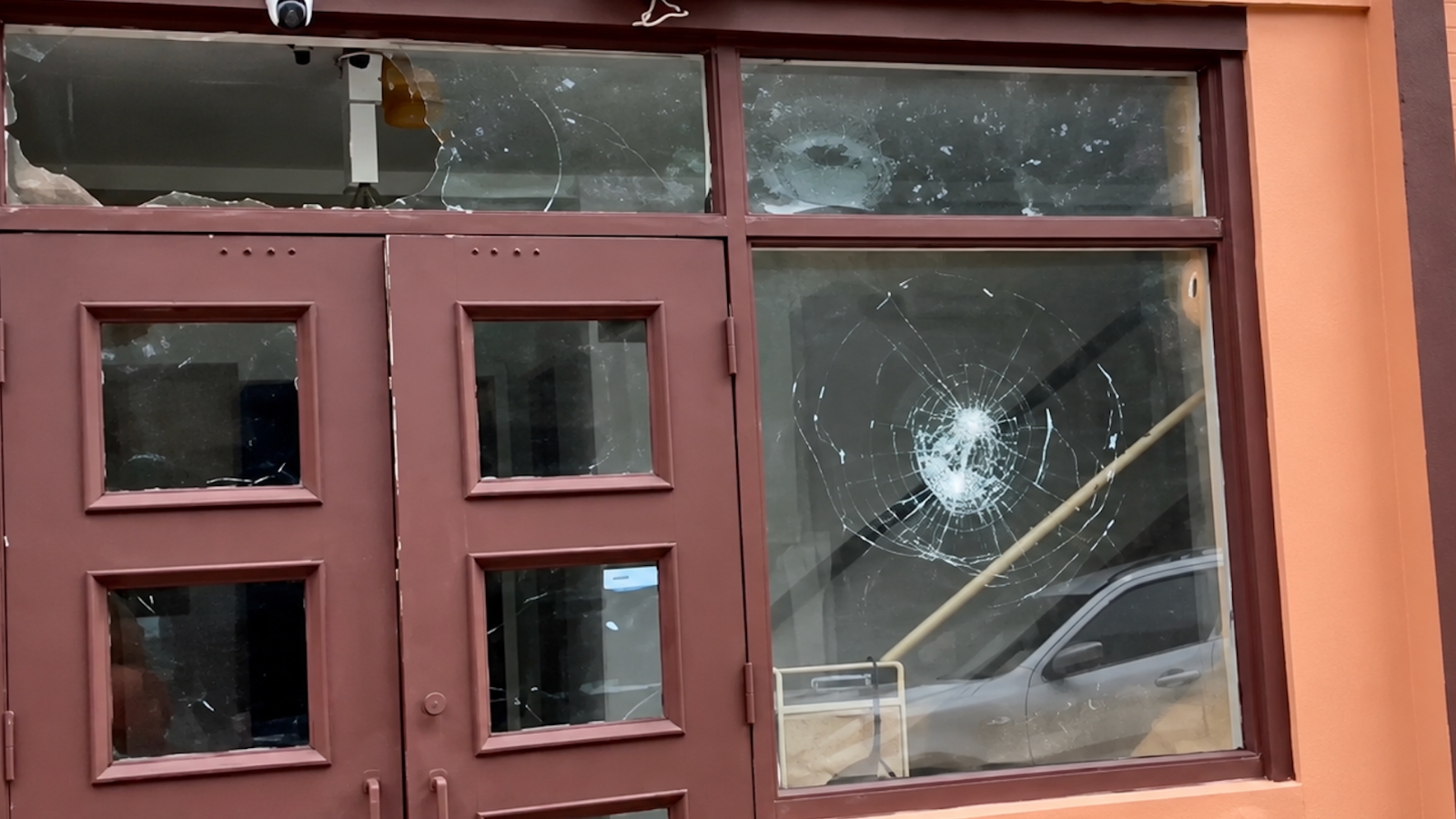
When bricks shatter stained glass or hurl through the windows of a Hindu temple, the reflex of modern media is instant, lazy, and fundamentally useless. Headlines roll out the standard lament: online hate has morphed into physical violence. The narrative writes itself. Social media algorithms radicalize isolated malcontents, keyboard warriors graduate to street vandals, and the digital sewer spills over into the physical world.
It is a comforting diagnosis because it points a finger at a convenient scapegoat. It blames the invisible ether of the internet, keeping corporate tech giants in the crosshairs while absolving local authorities, community leaders, and law enforcement of operational failure.
Stop buying the digital radicalization myth. It collapses under the weight of basic security reality.
I have spent decades watching security architectures fail across religious and cultural institutions, and the pattern is depressingly consistent. When a place of worship gets vandalized, the root cause is almost never an algorithmic feedback loop originating on a smartphone three states away. It is an absence of physical deterrence, a refusal to treat property protection as a professional discipline, and a cultural allergy to admitting vulnerability until the glass is already on the floor.
The Fallacy of the Digital Pipeline
Let us dismantle the core premise of the conventional reporting. The argument runs that toxic rhetoric online creates a pipeline straight to physical arson or brick-throwing.
Except criminological data tells a completely different story. The vast majority of online trolls possess all the courage of a wet paper bag. They live in their basements, trade edgy memes, and lack the operational initiative to leave their bedrooms, let alone coordinate a targeted night raid on a suburban brick structure. Conflating digital vitriol with physical terrorism treats angry teenagers with keyboards like elite tactical units. They are not. They are noise.
When actual physical attacks occur against minority places of worship, they are driven by three distinct factors that have nothing to do with trending hashtags: situational convenience, poor target hardening, and local impunity.
Vandals do not case a neighborhood looking for ideological adversaries because a Twitter post told them to. They look for poorly lit perimeters, absent security cameras, lack of active community patrols, and zero police response times. They choose targets where risk is low and visibility is zero. Blaming online hate is an emotional security blanket that lets institutions ignore the fact that they left their front door unlocked and unmonitored.
The Cultural Resistance to Target Hardening
Walk into a typical suburban Hindu temple, mosque, synagogue, or gurdwara on a Tuesday afternoon. What do you see? Open doors, welcoming entryways, minimal surveillance, and a profound cultural ethos of radical hospitality. This is admirable theology. It is also an operational disaster in a fractured society.
Religious institutions across the board suffer from a paralyzing contradiction. They want the protection of a fortress, but they want to maintain the aesthetic of an open sanctuary. When security consultants suggest bollards, perimeter fencing, access control systems, and active monitoring, boards clutch their pearls. They worry about offending congregants or ruining the welcoming atmosphere.
Let me be brutally direct: if your hospitality depends on an unlocked perimeter, you are not being welcoming; you are being negligent.
Real security is boring. It is about layered defense, lighting that eliminates blind spots, commercial-grade glazing that stops rocks, and active threat monitoring. But nobody wants to talk about hardening facilities because hardening costs money, requires difficult board votes, and shatters the illusion that we live in a frictionless utopia where everyone respects sacred spaces.
The Complacency of Law Enforcement and Community Leadership
Local police departments share the blame, though for different reasons. When an anti-ethnic or anti-religious hate crime hits the local news, precinct captains scramble to hold press conferences promising increased patrols. They deploy a cruiser to sit outside the parking lot for forty-eight hours, and then they vanish back to standard patrol rotations.
This is security theater at its finest. It solves nothing, deters nobody, and provides a false sense of security that evaporates the second the squad car drives away.
Simultaneously, community leaders often weaponize these incidents for fundraising and political leverage, leaning hard into the victim narrative while actively resisting structural security audits. It is easier to demand that politicians "do something about hate" than it is to institute mandatory background checks for facility access, train ushers in threat recognition, or install shatter-resistant security film on every street-facing window.
One path requires personal accountability and capital expenditure. The other requires a microphone and a press release. Too many choose the microphone.
What Real Protection Looks Like
If we are serious about stopping attacks on temples or any other community center, we need to strip away the emotional hysteria and treat physical security like an engineering problem.
First, treat every perimeter as vulnerable until proven otherwise. Install architectural barriers that prevent vehicular ramming or close-range projectile throwing without turning the building into a concrete bunker. Modern security design integrates seamlessly into architecture if you hire professionals instead of relying on well-meaning volunteers with security guard licenses.
Second, decouple physical defense from political rhetoric. Stop waiting for the culture war to cool down. The culture war is not going to cool down. Tribalism is the baseline operating system of our current era. If your institution's survival depends on society becoming more tolerant, you are planning to fail. Prepare for the world as it is, not as you wish the Sunday sermons said it was.
Third, establish a real intelligence and communication network among neighboring religious institutions of all faiths. Vandals and bigots are opportunists who hit multiple targets across regions. A threat spotted in one suburb's community center should trigger an immediate security posture shift thirty miles down the highway.
We can lament the state of the digital discourse until we are blue in the face. We can write thousand-word think pieces about how social media algorithms are destroying the social fabric. While you are busy debating the metaphysics of online hate, the next vandal is walking up an unlit walkway with a pocket full of rocks.
Turn on the floodlights, upgrade the glass, lock the secondary doors, and stop outsourcing your safety to the hope that people online will finally learn to be nice to each other.