Every time a European government website stutters, the press release is already drafted before the forensic logs are even parsed.
The script never changes. A ministry portal goes offline or suffers a noisy intrusion. Within hours, a prime minister steps up to a microphone, invokes the specter of Moscow, and warns the public about hybrid warfare. The mainstream media dutifully transcribes the quote, slaps a menacing stock photo of a hooded figure over a blue matrix background on the front page, and moves on to the next news cycle.
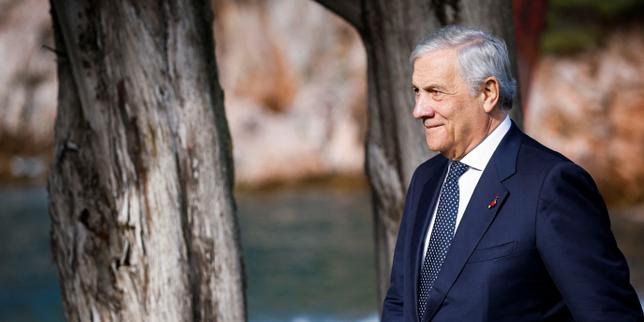
When Giorgia Meloni pointed the finger at "pro-Russian hackers" following the cyberattack targeting Italy’s Ministry of Foreign Affairs, the press treated her statement as an intelligence briefing. It wasn't. It was a political reflex.
If you actually work in incident response, watching politicians attribute cyberattacks within twenty-four hours of detection is like watching a coroner declare a cause of death from across the street. It is theater. Worse, this knee-jerk obsession with foreign boogeymen actively sabotages European cybersecurity by giving incompetent bureaucratic IT departments a permanent "get out of jail free" card.
The Attribution Illusion
Let’s get one technical reality straight right out of the gate: real cyber attribution takes months, not hours.
In professional threat intelligence, attributing an intrusion to a specific state-sponsored actor—or even a loosely affiliated hacktivist collective—requires painstakingly correlating infrastructure overlaps, malware compilation timestamps, operational security failures, and geopolitical signals intelligence. Thomas Rid, a professor of strategic studies at Johns Hopkins University and author of Cyber War Will Not Take Place, has spent over a decade dismantling the myth of instant attribution. His work proves that attribution is not a technical binary; it is an art form that blends forensics with political judgment, and rushing it almost guarantees you are falling for a false flag.
When a politician yells "pro-Russian hackers" before the National Cybersecurity Agency (ACN) has published a single Indicator of Compromise (IoC), they are not sharing verified forensics. They are reacting to a Telegram post.
Groups like NoName057(16) or Killnet thrive on this exact media ecosystem. They run basic Distributed Denial-of-Service (DDoS) scripts—essentially digital vandalism that floods a server with junk traffic until it temporarily tips over—and immediately brag about it on Telegram. They don't exfiltrate classified diplomatic cables. They don't compromise air-gapped networks. They knock down public-facing web pages that nobody uses anyway, and then watch Western prime ministers validate their existence on international television.
By naming them, Meloni didn't expose a grand geopolitical conspiracy. She handed a bunch of script kiddies running rented botnets the greatest PR victory of their lives.
DDoS Is Not Espionage (Stop Treating It Like Warfare)
The press coverage surrounding the Farnesina incident—and virtually every other European government breach—commits a massive category error. Journalists routinely conflate a loud disruption with a deep intrusion.
To understand why the mainstream narrative is broken, you have to separate the noise from the actual threat:
- Volumetric DDoS Attacks: Imagine a thousand people standing in front of a bank's revolving door so customers can't walk in. Nothing inside the vault is touched. No money is stolen. The moment the crowd disperses, the bank operates normally. This is 90% of what "pro-Russian hacktivists" actually execute against European ministries.
- Advanced Persistent Threats (APTs): Imagine a team of thieves tunneling beneath the bank vault over six months, bypassing the motion sensors, photographing every safety deposit box, and leaving without scratching the paint. Groups like APT28 (Fancy Bear) or APT29 (Cozy Bear) operate like this. They do not want you to know they are there. They do not post bragging rights on Telegram.
When media outlets report a DDoS campaign or a low-level credential stuffing attack with the same breathless panic reserved for a full-scale espionage breach, they destroy the public's ability to assess actual risk. I’ve sat in war rooms where executives panicked over a front-page DDoS attack while completely ignoring an active, silent ransomware staging on their domain controller. Noise distracts from real danger.
The Convenient Scapegoat for Legacy Tech Debt
Here is the uncomfortable truth nobody in Rome, Paris, or Brussels wants to admit: European public sector IT infrastructure is held together with digital duct tape and expired compliance certificates.
I have audited government contractors and public agencies across the continent, and the internal architecture is almost universally horrifying. You find unpatched Microsoft Exchange servers exposed directly to the public internet. You find flat networks with zero segmentation, meaning an attacker who compromises a cafeteria vendor’s portal can pivot straight into administrative databases. You find multi-factor authentication treated as an optional luxury rather than a baseline requirement.
When a ministry gets hit, blaming an unstoppable foreign adversary serves a vital bureaucratic function. It absolves leadership of structural negligence.
If your agency gets breached because your IT director failed to patch a known vulnerability that CISA added to its catalog two years ago, somebody has to be fired. Budgets have to be audited. Procurement contracts with bloated, underperforming IT consultancies have to be scrutinized.
If you get hit by "Russian state-sponsored cyber warfare," nobody gets fired. Instead, the ministry gets praised for its resilience, and the exact same incompetent leadership gets handed an emergency budget increase to buy shiny new threat intelligence feeds they don't know how to read.
Why False Flags Are a Hacker's Best Friend
Suppose you are a financially motivated cybercriminal sitting in Bucharest, São Paulo, or Miami. You just found an exposed API endpoint on an Italian government server, and you want to scrape citizen data to sell on an underground forum.
How do you ensure that the ensuing investigation gets bogged down in geopolitical theater instead of actual criminal tracking? You leave a few Cyrillic comments in your web shell. You route your final hop through a compromised proxy server in Moscow. You spin up a burner Telegram channel, slap a Russian flag on the avatar, and claim the attack is retaliation for NATO aid to Ukraine.
Instant misdirection.
Because Western politicians are addicted to the Cold War 2.0 narrative, they will swallow the bait whole. While intelligence agencies waste cycles analyzing geopolitical motives, the actual criminals cash out their stolen data in Monero and disappear.
Think about what happens in an incident response investigation when leadership forces a political conclusion from hour one. Investigators suffer from confirmation bias. Instead of following the packet captures wherever they lead—even if they lead to a disgruntled local contractor or a teenager using automated vulnerability scanners—analysts are pressured to find evidence that supports the Prime Minister's press conference. That is how real threats go undetected for years.
What People Also Ask (And Why the Questions Are Wrong)
Whenever a high-profile government cyberattack hits the news, search engines light up with the same predictable questions from a confused public. Almost all of them are built on flawed assumptions.
"Are Italian government secrets safe after this attack?"
You are asking the wrong question. If a threat actor truly compromised classified diplomatic cables at the Foreign Ministry, you wouldn't read about it in a press release the next day. High-level espionage is discovered months or years later, usually by a third-party intelligence partner, and it is quietly remediated behind closed doors. Public announcements almost exclusively follow loud, low-sophistication disruptions or basic website defacements. Your diplomatic secrets weren't touched by a Telegram group running DDoS scripts; they are far more threatened by officials using unencrypted messaging apps on personal phones.
"Can Italy retaliate against Russian hackers?"
This assumes there is a clean, uniform target to hit back at. The modern cybercrime ecosystem is a decentralized gig economy. A single attack might involve bulletproof hosting rented in the Netherlands, a botnet infected across smart TVs in Brazil, an initial access broker operating out of Southeast Asia, and a final operator sitting in Eastern Europe. Who exactly are you retaliating against? Launching offensive cyber operations against infrastructure in Russia based on hasty, low-confidence attribution doesn't deter hacktivists—it just escalates state-level conflict over an incident that probably amounted to a temporary server timeout.
"How can governments stop pro-Russian cyberattacks?"
Stop treating them like military invasions and start treating them like basic hygiene failures. You don't need an international treaty to stop a DDoS attack or a basic web application exploit. You need proper Content Delivery Network (CDN) configuration, rate limiting, Web Application Firewalls (WAFs), and ruthless patch management. The overwhelming majority of attacks claimed by patriotic hacktivists succeed simply because the target left the front door unlocked.
The Real Cost of Cyber-Alarmism
Admittedly, taking a skeptical stance on state attribution carries its own risks. Dismissing foreign interference too casually can lull policymakers into underfunding genuine national defense capabilities. Russian military intelligence—specifically units within the GRU—undeniably conducts aggressive, destructive cyber operations across Europe, from wiper malware in Ukraine to GPS jamming in the Baltics. Pretending Moscow isn't active in the digital space would be sheer delusion.
The danger lies in crying wolf over every minor outage.
When leaders use the exact same apocalyptic rhetoric for a minor website disruption as they do for a critical infrastructure attack on an electrical grid, they numb the public. When the day finally comes that a genuinely catastrophic cyberattack hits European banking, energy, or telecommunications, nobody will listen to the warnings because the government spent the last five years screaming "cyber warfare" every time a ministry homepage loaded slowly.
How to Fix Government Cybersecurity (Without Another Press Conference)
If European leaders actually want to secure their ministries rather than score cheap political points on the evening news, the blueprint isn't secret. It just lacks the glamour of a geopolitical standoff.
- Mandate Radical Transparency on Root Causes: Every time a public agency suffers a breach or outage, require them to publish a mandatory, unredacted post-mortem within 30 days detailing the exact technical failure. Did a firewall misconfiguration allow the traffic through? Was a server running end-of-life software? Force bureaucrats to own their technical debt publicly instead of hiding behind "classified national security" excuses.
- Kill the Lowest-Bidder IT Procurement Model: Government IT contracts are notoriously awarded to massive legacy systems integrators who bill millions for bloated, insecure software while subcontracting the actual engineering to the cheapest available labor. Shift funding toward small, elite internal engineering teams paid competitive private-sector salaries.
- Implement Zero Trust Architecture by Default: Stop assuming anything inside a ministry network is safe. Enforce phishing-resistant multi-factor authentication (FIDO2/WebAuthn hardware keys) across every single civil servant, contractor, and minister—no exceptions for VIPs who find hardware keys inconvenient.
- Enforce Media Silence on Low-Tier Hacktivists: Intelligence agencies and prime ministers should adopt a strict policy of never naming amateur hacktivist groups in official statements. Deny them the oxygen of publicity. Treat DDoS floods as routine network weather, mitigate them quietly at the edge, and save the prime minister's podium for threats that actually matter.
Until Rome and its European neighbors stop using Moscow as a convenient scapegoat for their own crumbling digital infrastructure, the breaches will continue. Not because Russian hackers are unstoppable geniuses, but because European bureaucracy refuses to look in the mirror.