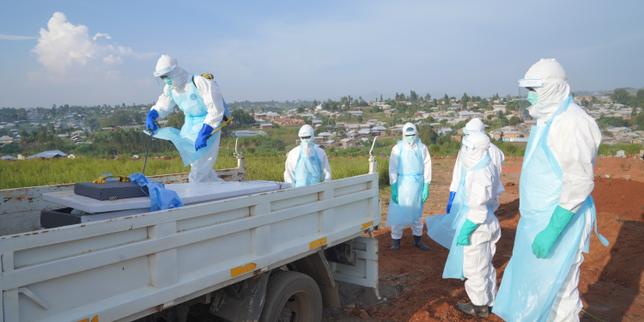
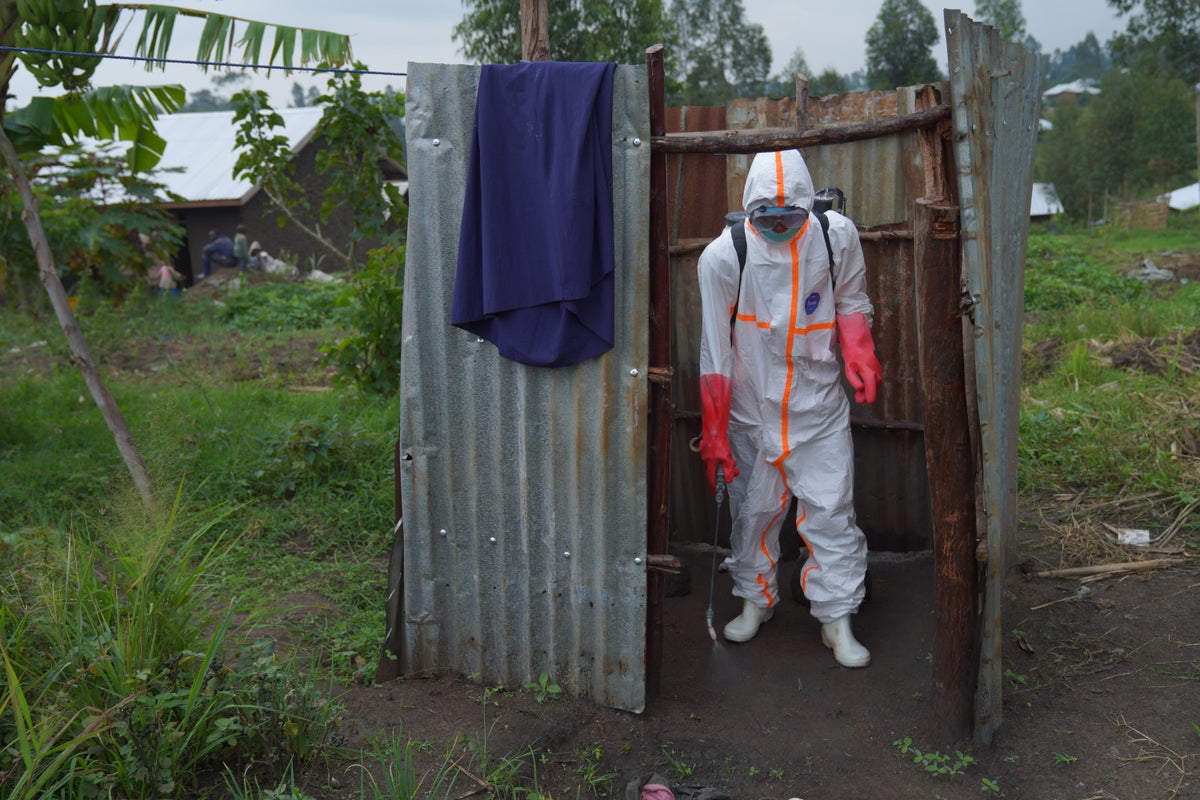
The headlines are screaming about a historic tragedy. The narrative from international health agencies and legacy media outlets follows a predictable, exhausted script. We are told that the current Ebola surge in the Democratic Republic of Congo has crossed a grim threshold, surpassing past outbreaks to become a terrifying statistical monster. We are fed stories of a rogue pathogen running wild, accelerated by hostile geography, broken infrastructure, and community mistrust.
It is a clean story. It is also fundamentally lazy.
Blaming the virus is the ultimate cop-out for public health bureaucrats who refuse to interrogate systemic failures. The problem in the DRC is not that the Bundibugyo species of Ebola is uniquely apocalyptic, nor is it simply a matter of bad luck in a conflict-scarred zone. The real scandal is that international containment playbooks are built on archaic, top-down models that treat local populations like compliance problems rather than sovereign partners. When an intervention relies on armed escorts, foreign experts parachuting into regional capitals, and hand-washing posters that ignore the reality of daily survival, failure is not a surprise. It is a mathematical certainty.
The Flawed Premise of the Panic
Every time an epidemic flares in Central Africa, the global response follows a rigid formula. Step one: declare a public health emergency of international concern. Step two: lament the weakness of local health infrastructure. Step three: express shock when communities push back against centralized mandates.
This cycle misses the point entirely. To understand why numbers are climbing past four thousand confirmed cases with a case fatality ratio hovering near forty-seven percent, you have to look past the biomedical data and examine operational arrogance. For decades, international organizations have treated disease control as an exercise in military-style containment. They map transmission chains while ignoring the social contracts that govern local trust.
When Médecins Sans Frontières or World Health Organization personnel express dismay that patients are arriving too late—or dying in the community instead of treatment centers—they frame it as ignorance. Consider the counter-perspective. If your primary interaction with the state and external actors has historically been neglect, exploitation, or violent conflict, why would you walk into an isolated, quarantined compound run by strangers to die away from your family?
It is not a lack of education. It is rational risk assessment.
Dissecting the Biological Red Herring
Much of the current panic centers on the fact that the outbreak is driven by the Bundibugyo strain, which lacks the portfolio of widely approved vaccines and therapeutics that were fast-tracked during previous outbreaks involving the Zaire species. Commentators point to this lack of silver-bullet pharmaceuticals as the primary driver of the death toll.
This is a dangerous misdirection. Vaccines and monoclonal antibodies are magnificent tools, but they are downstream of basic operational execution. Having a specialized vaccine does not matter if the supply chain breaks down before it reaches a remote mining community in Ituri, or if mistrust prevents people from rolling up their sleeves.
Historically, case fatality ratios should drop as an epidemic matures because surveillance improves and patients are identified earlier. Yet in this current wave, the fatality rate has climbed as the weeks have worn on. Bureaucrats blame viral mutation or lack of specific drugs. The operational reality is much simpler: active case finding is failing because response teams are stuck in fortified urban hubs instead of embedding with local community health workers who already possess the trust of the populace.
The Uncomfortable Economics of Epidemic Response
Let us address the money. International outbreak response is a multi-million-dollar machine fueled by emergency appeals. Donors open their wallets wide when headlines feature bleeding eyes and exponential case curves. But this emergency-response model creates a perverse incentive structure. It starves routine, foundational healthcare systems of steady funding while showering cash on high-profile, short-term crisis interventions.
Imagine a scenario where seventy percent of the capital currently deployed for emergency contact-tracing and reactive containment had been invested over the last decade into local primary healthcare clinics, baseline water sanitation, and decentralized medical staffing in eastern Congo. The outbreak would likely have sputtered out before it crossed provincial boundaries.
Instead, the global health apparatus waits for the fire to catch, flies in expensive consultants, sets up tents, and then acts baffled when the structural dry tinder keeps the blaze burning.
What Actually Works
If we want to stop treating recurring Ebola waves like cyclical acts of God, we have to discard the colonial playbook of disease control.
First, decentralize ownership completely. Local leaders, traditional healers, and grassroots youth networks cannot be treated as an afterthought or a secondary "community engagement" checkbox. They must design the response architecture from day one. If a community says a quarantine center is a vector of fear, you do not build a bigger fence; you change the care delivery model to support home-based supportive care with proper personal protective equipment distributed directly to families.
Second, stop separating epidemic response from everyday survival needs. In regions battered by decades of militia violence and economic disenfranchisement, telling people to stay home and avoid markets is a starvation order. If you lock down an economy without guaranteeing food security and financial safety nets, compliance vanishes—and rightly so. People will risk a statistical probability of viral infection over a guaranteed certainty of starvation every single time.
The current crisis in the DRC is historic, yes. But history is being written by a global health establishment that refuses to adapt its methods to reality. Until we accept that epidemics are solved by political trust and economic dignity rather than just syringes and security briefs, the numbers will keep climbing.