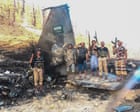
Up to 169 lives vanished from the ledger during a brutal surge of fighting in Yemen as Houthi forces clashed for control of vital Red Sea coastal heights. This localized mountain warfare is not merely another chapter in a forgotten regional ledger. It is a calculated escalation over maritime bottlenecks that dictate the cost of goods moving from the Suez Canal to the Bab el-Mandeb strait. When irregular infantry fight uphill against entrenched positions for barren volcanic rock, they are bleeding for geometry. Every contour line on those escarpments commands a clear line of sight over commercial shipping lanes.
Decades of reporting from this corner of the Arabian Peninsula teach a hard lesson. Wars here are rarely decided by sweeping armor maneuvers or high-altitude precision strikes alone. They grind down to foot-mobile infantry slugging it out across ancient mule tracks and jagged volcanic ridges. The recent death toll of 169 highlights an uncomfortable truth for military planners and shipping executives alike. Air dominance does not hold ground. Artillery hidden in cave networks cannot be bombed out by a passing jet. You need boots on the dirt, and right now, both sides are willing to spend infantry battalions to secure a few kilometers of commanding high ground overlooking the water.
The Geography of Attrition
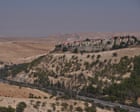
To understand why men die in droves over dust and rock, look at a topographical map of Yemen's Tihama coastal plain. The coastal highway runs like a narrow thread between the Red Sea and the western escarpment of the Sarawat mountains. Whoever holds the ridges controls the artillery positions that can rain high-explosive ordnance down on any logistics convoy moving north or south.
During the recent surge around the coastal heights, Houthi forces utilized classic guerrilla tactics adapted for modern asymmetric warfare. They deployed dispersed mortar teams, anti-tank guided missiles, and drone-adjusted artillery from natural limestone caves. The opposing forces attempted to clear these positions using mechanized infantry columns. That tactic played directly into the defenders' hands. A tank crawling up a switchback road is nothing more than a slow-moving target in a shooting gallery.
Veteran military observers recognize this pattern from earlier conflicts in the region. The mountains favor the defender who knows every goat path and water cistern. Attackers must supply long, vulnerable supply lines through arid terrain where water is heavier and more valuable than ammunition. When casualties mount into the hundreds over a single week of fighting, it signals that neither faction believes a diplomatic off-ramp is viable. They are playing for final territorial facts on the ground before any hypothetical peace conference convenes in Geneva or Muscat.
The Maritime Fallout
The geopolitical shockwaves of these mountain battles ripple far beyond the borders of Yemen. The coastal heights serve as physical fire-control platforms for anti-ship missiles and explosive surface craft. When Houthi fighters secure a ridge overlooking the Red Sea shipping corridor, insurance rates for container vessels spike within hours.
Consider the mechanics of modern maritime logistics. A single oil tanker rerouted around the Cape of Good Hope adds thousands of miles and millions of dollars in fuel costs to a voyage from the Persian Gulf to Rotterdam. Every time the casualty count rises in the Tihama hills, global supply chains twitch. The connection between a trench fight on a nameless YemeniBlood on the Escarpment The Hidden War for Yemen Red Sea Heights
news
Up to 169 lives extinguished in a matter of weeks along a fractured stretch of desolate Yemeni terrain. That is the grim toll emerging from the contested coastal heights overlooking the Red Sea, where Houthi forces and opposing factions are locked in a relentless struggle for topographic supremacy. This is not merely another chapter in a forgotten civil war. It is a strategic choke point battle that directly threatens the nervous system of global maritime trade, yet international media treats it like white noise.
You hear the sanitized updates about shipping disruptions in the Bab el-Mandeb strait. You see the corporate briefings from container lines forced to route around the Cape of Good Hope, adding weeks and millions of dollars to every voyage. What you rarely see is the brutal, boots-on-the-ground reality of why those disruptions happen. The fight is over the high ground. Whoever commands the ridge commands the shipping lane.
Anatomy of an Escarpment War
Geography dictates strategy in western Yemen. The coastal plain along the Red Sea is narrow, flanked abruptly by jagged mountain escarpments that rise thousands of feet toward the central highlands. For an insurgent or de facto governing force like the Houthi movement, holding these high-altitude vantage points is an existential necessity.
Military analysts often look at drone capabilities and anti-ship missile inventories as autonomous marvels. They miss the human logistics required to sustain them. Operating radar guidance systems, mobile launchers, and communication relays in contested mountainous terrain requires secure supply lines, local intelligence networks, and permanent defensive fortifications dug directly into the rock.
When opposing forces push toward these coastal heights, they are not just taking real estate. They are attempting to blind the network.
The recent spike in casualties—reaching an estimated 169 dead in concentrated clashes—stems from a calculated push by anti-Houthi elements trying to outflank the coastal artillery range. Every meter of elevation gained or lost alters the geometric equation of maritime security. If the high ground falls, the missile vectors change. If the ridge holds, the Red Sea remains a high-risk zone for any vessel flying international flags.
The Logistics of Attrition
War in the Tihama region and the adjacent foothills is a masterclass in brutal adaptation. Both sides operate under severe economic constraints, yet both manage to sustain protracted violence through localized supply chains and foreign patronage.
The Houthis have spent years converting these peaks into subterranean redoubts. Natural caves are reinforced with concrete. Communication lines are buried deep to resist bunker-busting ordnance. This defensive depth explains why conventional ground offensives by regional adversaries historically stall out. You cannot bomb a mountain into submission when the combatants live inside it.
Conversely, the forces arrayed against them rely on fragmented coalitions with competing political objectives. Trust is scarce. Coordination is brittle. When 169 bodies accumulate in a localized theater, it signals a desperate tactical gamble rather than a well-coordinated grand strategy. Someone tried to rush the ridge. The ridge held.
The Global Echo
Why should an executive in Chicago, a manufacturer in Stuttgart, or a port worker in Singapore care about a nameless ridge in Yemen?
Because the global economy is a fragile, highly optimized organism that treats supply chain redundancy as an unnecessary expense until catastrophe strikes. The Red Sea route handles roughly twelve percent of global trade. When maritime security collapses here, the price shock ripples outward within forty-eight hours. Insurance rates spike. Fuel consumption surges. Delivery schedules disintegrate.
The escalation in the coastal heights proves that localized ground combat remains the primary driver of geopolitical disruption. No amount of naval patrols or offshore carrier strike groups can solve a problem rooted in domestic territorial control. As long as opposing factions bleed each other for control of the escarpment, the waterway below remains hostage to the high ground.
The smoke clearing over the Yemeni foothills does not signal an end to the crisis. It marks the entrenchment of a permanent standoff. The high ground has a price, and the ledger is measured in blood.