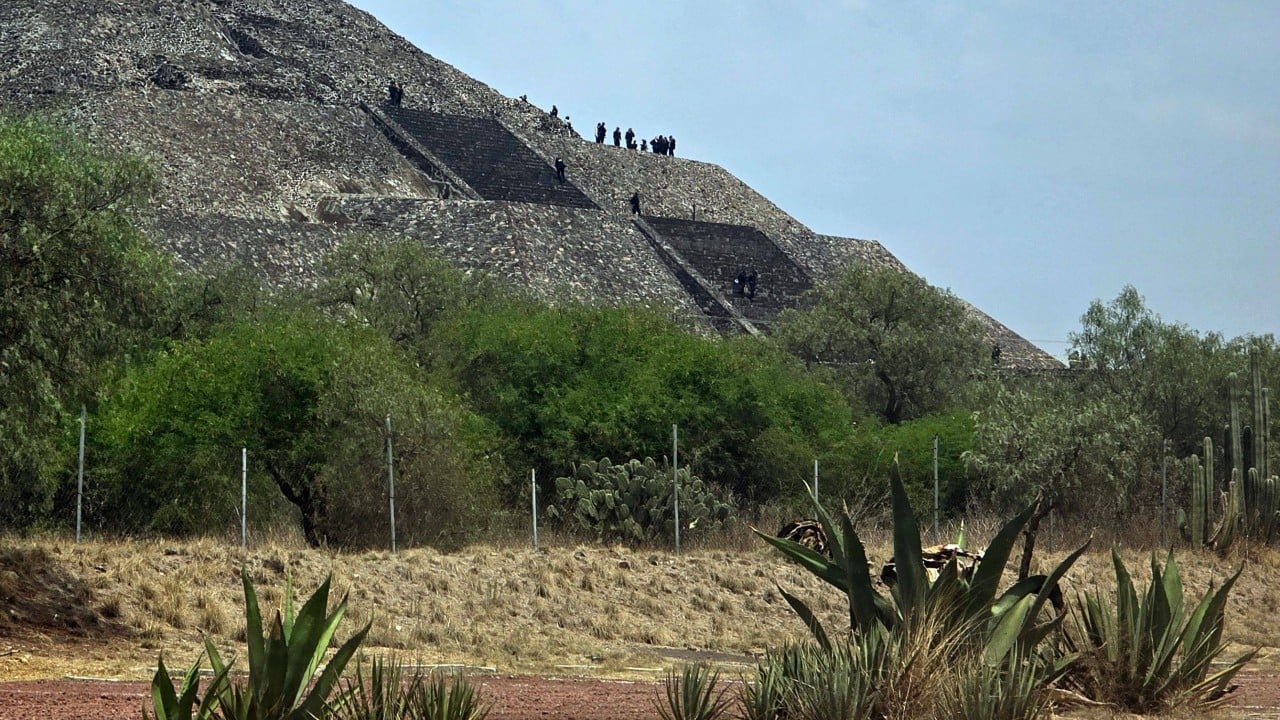
The sun-drenched stones of Mexico’s most sacred archaeological sites are no longer safe from the encroaching reach of the cartels. A Canadian citizen is dead and six others are recovering from gunshot wounds after a violent afternoon that shattered the curated tranquility of a prominent historical park. This was not a random act of street crime or a case of being in the wrong place at the wrong time. It was the predictable result of a security vacuum that has allowed organized crime to monetize every square inch of the Mexican tourism industry.
While government press releases often describe these incidents as "isolated events," the reality on the ground tells a much grimmer story. The violence that unfolded at the archaeological site represents a tactical shift in how criminal organizations operate. They are no longer content to fight in the shadows of the suburbs; they are moving their disputes directly into the paths of the millions of international visitors who pump billions of dollars into the Mexican economy every year.
The Illusion of the Secure Perimeter
For years, the Mexican government and regional tourism boards have maintained a quiet agreement with the public. They suggested that as long as travelers stayed within the boundaries of designated "tourist zones" or archaeological parks, they were shielded from the brutal drug war raging elsewhere. That illusion died under a hail of bullets this week.
The archaeological sites of the Yucatan and surrounding regions are massive, sprawling complexes. They are difficult to police and even harder to secure. Criminal groups have recognized that these locations offer high-visibility targets where even a minor skirmish can generate global headlines, providing them with leverage against local authorities or rival factions. The Canadian victim, identified as a traveler seeking culture and history, became a casualty in a war for territorial control that has nothing to do with the ancient Maya and everything to do with the modern narcotics trade.
The Logistics of the Breach
The shooting occurred during peak hours, a time when the heat of the day usually keeps crowds moving between the shade of the ruins and the air-conditioned buses waiting in the parking lots. Witnesses describe a scene of pure chaos. There were no metal detectors at the entrance. There was no visible armed security near the primary structures.
In many of these sites, the "security" consists of underpaid staff members whose primary job is to ensure tourists don't climb on restricted monuments or leave trash behind. They are not trained for active shooter scenarios. They are not equipped to intercept professional hitmen who enter the park disguised as everyday visitors. The vulnerability is structural.
Why the Tourism Corridor is Bleeding
To understand why a Canadian tourist was killed in a place of worship and history, you have to follow the money. The Mayan Riviera is the crown jewel of Mexico’s economy. It is the source of endless foreign currency. But where there is massive cash flow, there is a demand for illicit services.
The cartels are no longer just trafficking drugs through these corridors; they are taxing the businesses that operate within them. They demand protection money from the tour operators, the souvenir vendors, and even the transportation companies. When a group refuses to pay, or when a rival cartel attempts to move in on a lucrative "plaza," the results are public executions.
The violence has moved from the back alleys of Cancun and Playa del Carmen to the very heart of the country’s cultural heritage. By targeting or operating within archaeological sites, cartels send a message to the state: no place is sacred, and no one is untouchable.
The Failure of the National Guard
In response to previous spikes in violence, the Mexican federal government deployed the National Guard to the beaches and hotel zones. You see them frequently now—soldiers in camouflage carrying assault rifles, patrolling the white sands while tourists sip margaritas. It is a visual sedative, designed to make travelers feel protected.
But the National Guard is a reactive force, not a preventative one. They are stationed at the visible entry points, but they lack the intelligence networks to stop an assassination before it happens. Their presence has also had an unintended side effect. By tightening security in the hotel zones, they have pushed the criminal elements into the "softer" targets of the interior, such as the archaeological parks and cenotes that lie an hour or two away from the coast.
The Cost of Silence
The official response to the death of the Canadian national followed a tired, predictable script. Local prosecutors quickly announced an investigation. They hinted that the shooting was a targeted attack between criminals and that the tourists were merely collateral damage.
This rhetoric is a dangerous form of gaslighting. When a tourist is killed by gunfire in a public park, the motive of the shooter is secondary to the failure of the state to provide safety. Labeling it a "dispute between gangs" is an attempt to absolve the tourism industry of responsibility. It suggests that if you are a "good" tourist, you have nothing to fear. The six people currently in the hospital would likely disagree.
A Pattern of Escalation
This is not the first time the Yucatan Peninsula has seen its reputation stained. Over the last twenty-four months, there have been shootings in high-end beach clubs, midnight executions in downtown bars, and now, a murder at a historical landmark.
Each time, the industry predicts a massive drop in bookings. Each time, the numbers dip slightly and then recover as travelers' memories fade and the allure of cheap flights wins out. But the ceiling is lowering. International travel advisories from the United States and Canada are becoming more specific, more urgent, and harder for the average traveler to ignore.
Navigating a Broken Landscape
For the traveler, the calculus of visiting Mexico has fundamentally changed. The old advice—don't buy drugs, don't leave the resort at night—is no longer sufficient. When the violence reaches the ruins of an ancient civilization in broad daylight, the "safe" zones have effectively ceased to exist.
The burden of safety has been shifted entirely onto the individual. You are expected to monitor local news, track cartel movements via social media alerts, and maintain a level of situational awareness that most people go on vacation to escape. It is a high price to pay for a photo in front of a pyramid.
The Economic Fallout
If Mexico cannot secure its archaeological treasures, it risks losing its status as a premier global destination. Tourism accounts for nearly 9% of the country's GDP. A sustained exodus of North American and European travelers would be catastrophic.
Yet, the government seems paralyzed. To admit the scale of the problem is to admit that they have lost control of the territory. So, they continue to treat these deaths as anomalies. They continue to promise "increased surveillance" that rarely materializes in a meaningful way. They continue to hope that the sun and the tequila will be enough to distract from the shell casings on the ground.
The Reality of the Risk
The death of a Canadian tourist at an archaeological site is a turning point. It marks the end of the era where history was a sanctuary. The cartels have realized that the state will protect the hotels, but they cannot protect every ruin, every trail, and every jungle path.
The investigation into this specific shooting will likely result in a few low-level arrests. The "intellectual authors" of the crime will remain in the shadows, continuing to manage their portfolios of extortion and trafficking. The park will reopen. The blood will be washed from the stones.
Travelers must now decide if the cultural enrichment of the Mayan heartland is worth the growing physical risk. The ruins have stood for over a thousand years, surviving the collapse of empires and the arrival of conquistadors. Whether they can survive the modern plague of cartel warfare remains to be seen.
Verify the status of regional travel advisories before departing, and understand that in the current climate, a federal security presence is often more of a theater than a shield.


:strip_icc()/pic2513216.jpg)