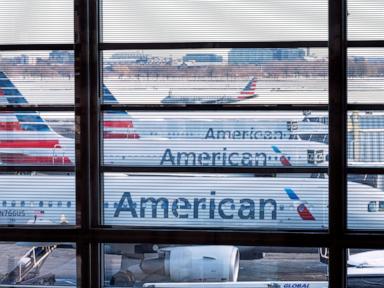
The smell of burning kerosene has a strange way of triggering anticipation. Walk through any airport terminal, press your forehead against the cool glass of the observation deck, and you can smell it—the faint, sharp scent of jet fuel. For decades, that smell meant one thing: departure. It was the scent of a family squeezing three generations into a lakeside cabin, of a college graduate backpacking through European cobblestones, of a long-distance couple finally bridging the gap.
Now, that same scent is a math problem. A brutal, unforgiving math problem.
Step inside the glass offices of American Airlines headquarters in Fort Worth, Texas. The atmosphere is quiet, stripped of the romanticism of flight. Here, the world is mapped out in spreadsheets, algorithmic forecasts, and fluctuating commodity charts. On a Tuesday morning, a team of analysts stares at a glowing monitor displaying the moving average of Gulf Coast kerosene. The curve looks like a sheer mountain face.
Every single penny added to the price of a gallon of jet fuel costs the airline roughly forty million dollars annually. When those pennies turn into dollars, the system fractures.
The decision comes down with a clinical finality. American Airlines quietly pulls the plug on a handful of its anticipated summer routes. No grand announcements. No dramatic press conferences. Just a series of updates in a scheduling database that cascade through the travel ecosystem, erasing flights to European hubs and regional vacation spots from the summer board.
To the industry, it is a temporary suspension of unprofitable routes due to macroeconomic headwinds.
To the people holding the tickets, it feels like a door slamming shut.
The Chemistry of a Broken Promise
Consider Sarah. She is a fictional composite, but her reality is shared by tens of thousands of travelers this season. Sarah spent fourteen months saving for a direct flight from a mid-sized American hub to a coastal destination in Europe. She booked the tickets in January, mapping out itineraries, securing hotel rooms, and counting down the days. For Sarah, the flight was not a corporate asset; it was a milestone.
Then came the email. A cold, automated notification informing her that her flight no longer existed.
To understand why Sarah’s summer plans were erased, you have to look beneath the wings of the aircraft. A Boeing 777 preparing for a transatlantic crossing carries roughly thirty-thousand gallons of fuel. It is the single heaviest component of the aircraft at takeoff. On a standard flight, fuel accounts for nearly thirty percent of an airline's total operating expenses. When global energy markets spike—driven by geopolitical instability, refining bottlenecks, and a sudden surge in global demand—that percentage balloons.
Suddenly, a route that made perfect financial sense in October becomes a financial sinkhole by May.
Airlines operate on razor-thin margins. The public often perceives major carriers as untouchable corporate monoliths, but the reality is much more fragile. They are hyper-sensitive economic organisms. When the cost of their primary input rises exponentially, they have only two levers to pull: raise ticket prices to astronomical levels, or stop flying the route entirely.
American Airlines looked at the data for the upcoming summer rush and realized that charging three thousand dollars for a basic economy seat to keep a secondary route alive was a losing proposition. The demand would evaporate. The planes would fly half-empty. And flying a half-empty widebody jet across the Atlantic in the current energy climate is the fastest way to burn through cash.
So, they grounded the routes.
The Anatomy of the Ripple Effect
When a major carrier pulls back, the damage is rarely contained to the airline itself. The aviation industry is an intricate web of dependencies. Think of a single transatlantic flight as a river that feeds an entire ecosystem.
When American Airlines cancels a route to a city like Dubrovnik or a regional domestic hub, the primary loss is obvious: the passengers lose their direct connection. But consider what happens next. The boutique hotel owner in the destination city suddenly sees a wave of cancellations. The local tour guides, the airport baggage handlers, the catering companies that supply the inflight meals—all of them feel the sudden contraction of the artery.
Inside the hubs, the pressure builds. Passengers from canceled regional routes are funneled into the remaining flights. The remaining seats become a premium commodity.
This is the hidden tax of the fuel crisis. It is not just that certain flights are gone; it is that the flights left standing become hyper-competitive battlegrounds. The middle class is gradually priced out of the sky. What was once a accessible marker of modern life—the ability to cross an ocean for a summer vacation—slips back into the realm of luxury.
The aviation industry has spent the last two decades democratizing travel. Budget carriers forced legacy airlines to lower fares, making air travel a casual assumption rather than a milestone event. We grew accustomed to the idea that the world was small, that any destination was just a credit card swipe away.
The current fuel crisis is a sharp, painful reminder of the physical limits of globalization. Physics demands energy to lift hundreds of tons of steel into the stratosphere. And right now, that energy is too expensive to sustain our collective wanderlust.
The View from the Cockpit
There is a unique tension experienced by the crews who operate these networks. A veteran captain, someone who has spent thirty years watching the terrain shift beneath their wings, understands that an airplane is ultimately an economic engine.
Every decision made in the cockpit is now viewed through the lens of conservation. Pilots practice eco-piloting techniques, taxiing on a single engine, optimizing their ascent profiles, and seeking the most direct routing from air traffic control to save a few hundred pounds of fuel. They know that efficiency is no longer just a corporate buzzword; it is the thin line between keeping their regular routes or seeing their schedules gutted.
Yet, despite the meticulous efficiency of the crews, the macroeconomics win. You cannot optimize your way out of a systemic energy shortage.
The industry is caught in a transition trap. Airlines are pouring billions into Sustainable Aviation Fuel (SAF), looking for alternatives derived from cooking oil, municipal waste, and plant matter. But the infrastructure for SAF is in its infancy. Today, sustainable fuel accounts for less than one percent of total global aviation consumption. It is a future promise that offers zero comfort to the traveler whose flight was canceled this morning.
For now, the industry remains shackled to traditional crude oil. When the oil market twitches, the airlines convulse.
The Quiet Terminals
The true cost of the suspended routes is found in the stillness of the gates that should have been bustling.
Picture an airport gate at 6:00 PM on a July evening. In a normal year, this gate is a chaotic symphony of human emotion. Children clutching backpacks, business travelers tapping away at laptops, gate agents reassuring nervous flyers, and the low, steady hum of a jet engine idling outside the window. It is a place of transition, crackling with the energy of where people are going.
Instead, the gate is dark. The digital sign above the desk is blank. The rows of empty seats stretch out into the hallway, reflecting the sterile overhead lights. Outside, the tarmac is clear. The aircraft that should have been roaring down the runway toward a distant coastline is sitting in a maintenance hangar or rerouted to a high-density, low-risk domestic shuttle run between New York and Chicago.
The silence at that gate is the real headline. It represents a summer of missed connections, aborted business ventures, and family reunions put on hold indefinitely. It represents a tightening of the world, a slow shrinkage of our horizons forced by the cold realities of a resource-constrained planet.
We will continue to fly, of course. The major hubs will remain crowded, the main arteries will stay clogged, and American Airlines will eventually restore these routes when the numbers balance out. The corporate balance sheets will heal, the analysts in Fort Worth will see their charts turn green again, and the industry will march forward.
But a season will have passed.
For those who looked at the sky this year and saw their paths blocked by the invisible wall of energy costs, the summer will be defined not by the places they went, but by the quiet spaces left behind. The world feels just a little bit larger today, and the distant horizon just a little harder to reach.