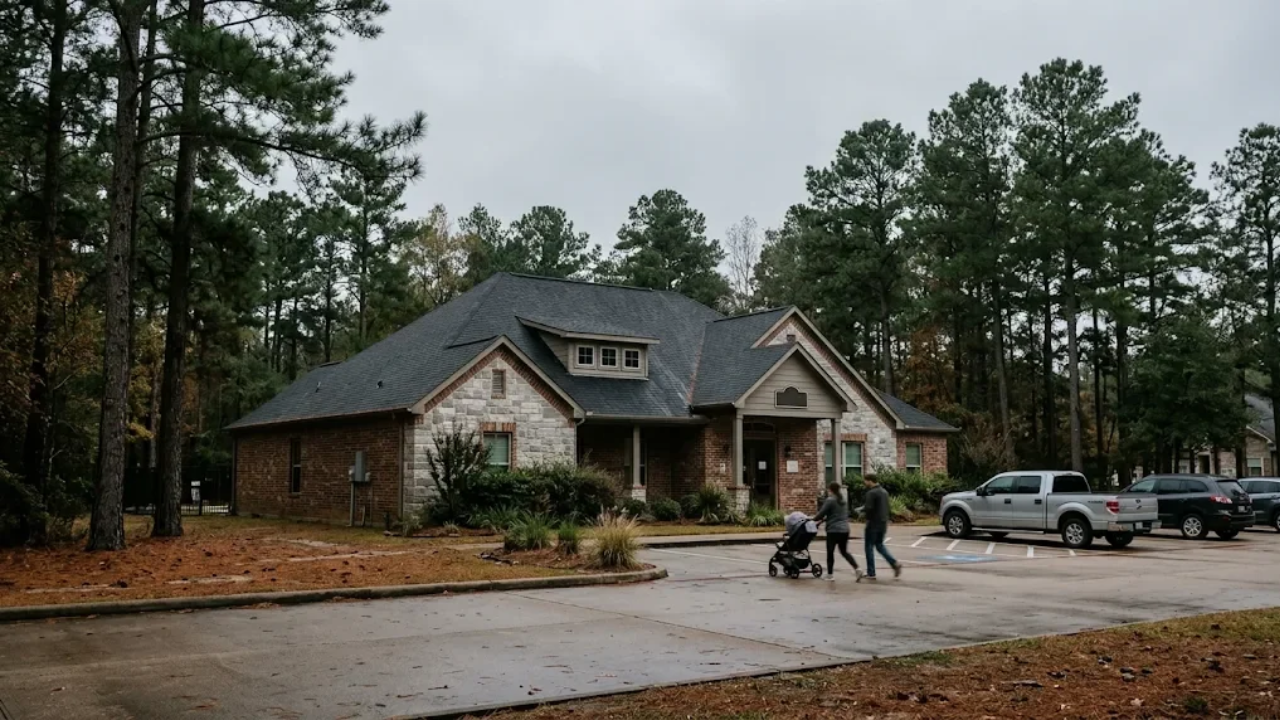
When an argument over neighborhood dues or architectural violations turns into a fistfight in a suburban driveway, the injured party naturally looks toward the entity with the deepest pockets. In Texas, a state appellate ruling has drawn a hard, unforgiving legal line around that impulse. A Texas court of appeals determined that a homeowners association cannot be held vicariously liable when a physical altercation breaks out between a resident and a volunteer board treasurer. Unless the association explicitly authorized the violence, or the violent act fell directly within the narrow scope of the volunteer's official duties, the HOA walks away unscathed.
The decision sounds technical. It is anything but. For the millions of Texans living under deed restrictions, and the tens of thousands of unpaid volunteers running those neighborhoods, this ruling exposes a massive fault line in community governance. It clarifies the exact legal boundary between corporate accountability and individual rogue behavior, leaving injured residents to pursue personal assets rather than corporate insurance policies, while simultaneously forcing volunteer board members to confront the terrifying reality of personal liability.
The Anatomy of Vicarious Liability in Community Associations
To understand why the Texas appellate court shielded the association, you have to strip away the emotional heat of a neighborhood brawl and look at cold corporate agency law. In almost every jurisdiction across the United States, holding an organization responsible for the bad acts of an individual relies on a legal doctrine known as respondeat superior. Loosely translated, it means "let the master answer."
Under normal business conditions, if a delivery driver runs a red light while dropping off packages, the delivery company pays for the wreckage. The driver was acting within the course and scope of employment. The company profited from the drive, controlled the route, and assumed the operational risk.
Homeowners associations operate in a legal gray zone that breaks this traditional model. Most Texas HOAs are structured as nonprofit corporations under the Texas Business Organizations Code. Their leadership consists almost entirely of unpaid homeowners elected by their neighbors. When a volunteer treasurer takes the title, they are given authority to review bank statements, approve vendor checks, collect assessments, and present financial reports at board meetings.
They are never given authority to throw a punch.
When a dispute erupts between a homeowner and a board member—whether at a contentious monthly meeting, beside a community mailbox, or on a front lawn—courts examine a single, ruthless question. Was the physical violence an execution of the board member's official duties, or was it a personal detour fueled by anger?
In the Texas case, the appellate judges looked at the duties of a volunteer treasurer. Financial administration does not require physical force. Even if the argument started over an assessment discrepancy, a late fee, or a budget line item, the moment the verbal dispute crossed into physical battery, the treasurer stepped outside the boundaries of their corporate role. The court ruled that an association is not a guarantor of peace between neighbors, nor is it automatically liable every time a volunteer loses their temper.
Why Plaintiffs Target the HOA Instead of the Individual
Anyone who has spent time around civil litigation knows the golden rule of personal injury lawsuits. You do not sue people who cannot pay.
If a resident suffers a broken jaw, a concussion, or permanent nerve damage during an altercation with a neighbor, suing the individual attacker often yields a hollow victory. Standard homeowners insurance policies almost universally contain an intentional acts exclusion. If a policyholder intentionally strikes someone, their personal insurer will immediately issue a reservation of rights letter and refuse to cover the judgment. Collecting money directly from an individual means chasing wage garnishments—which are heavily restricted in Texas—or trying to place liens on property protected by Texas's notoriously strict homestead exemptions.
The HOA, by contrast, is an attractive target. Associations carry Commercial General Liability (CGL) policies and Directors and Officers (D&O) insurance. Plaintiffs' attorneys routinely draft complaints designed to trigger those corporate policies. They argue that the association was negligent in selecting the volunteer, failed to properly train board members on de-escalation, or created a hostile environment by encouraging aggressive enforcement of deed restrictions.
The Texas appellate ruling slams the door on that strategy when the underlying act is an unprovoked or spontaneous physical fight. By refusing to stretch vicarious liability to cover a volunteer's physical outburst, the court preserved the financial integrity of the broader community. Had the ruling gone the other way, every homeowner in that subdivision would have effectively paid for the treasurer's temper through special assessments and skyrocketing insurance premiums.
The Thin Line Between Official Duty and Personal Battery
The legal reasoning behind this shield is solid, yet it rests on a distinction that can feel razor-thin in the real world. Consider a hypothetical example to see how quickly the legal ground shifts.
Suppose an HOA board instructs its architectural committee chair to physically remove an unapproved political sign from a resident's yard, and a scuffle breaks out when the homeowner tries to stop them. In that scenario, a court might find that the board explicitly authorized the physical act—entering the property and seizing the sign—making the resulting confrontation a foreseeable consequence of an official directive. Here, the HOA faces massive exposure.
Now contrast that with a volunteer treasurer who runs into a delinquent homeowner at the community pool. They argue about a lien placed on the homeowner's house. Shouting escalates to shoving, and someone ends up in the emergency room. The treasurer was not ordered to confront the resident at the pool. Collecting debts through physical intimidation is not part of a treasurer's job description.
Texas courts consistently hold that foreseeability is the linchpin of direct negligence claims against a corporation. Unless the association knew—or reasonably should have known—that the volunteer had a documented history of violent behavior before putting them in a position of authority, the HOA cannot be held liable for failing to predict a fistfight.
The Volunteer Trap and the D&O Insurance Illusion
While the appellate ruling protects the HOA's bank account, it creates a terrifying reality for the volunteer sitting in the treasurer's chair. Many board members serve under a dangerous misconception. They believe that because they are unpaid volunteers protected by the Texas Charitable Immunity and Liability Act or the Federal Volunteer Protection Act, they are practically untouchable.
They are wrong.
Statutory volunteer immunity is riddled with exceptions. Both state and federal laws strip away personal protection when a volunteer's conduct involves willful or wanton misconduct, gross negligence, or an intentional tort like assault and battery. The moment a volunteer swings a fist, their statutory shield vaporizes.
Worse still, the association's D&O insurance policy—the very coverage board members rely on to sleep at night—will almost certainly abandon them. D&O policies are built to cover "wrongful acts" defined as errors, omissions, misstatements, or breaches of fiduciary duty committed while managing the association. Bodily injury and intentional physical violence are standard exclusions in nearly every D&O contract written in America.
When the Texas appeals court ruled that the HOA was not liable for the fight, it implicitly left the volunteer treasurer standing alone in the legal crosshairs. The association's corporate counsel represents the entity, not the individual's personal interests once those interests diverge. A volunteer who loses control during a dispute faces the prospect of hiring a private criminal defense attorney, paying a civil litigator out of pocket, and watching their personal savings vanish—all over an unpaid neighborhood job.
The Pressure Cooker of Modern HOA Governance
You cannot examine this ruling in a vacuum. Over the past decade, the operational reality of running a Texas homeowners association has changed drastically, turning volunteer boards into high-stress pressure cookers.
Neighborhood associations are no longer simple clubs that organize Fourth of July parades and pay to mow the front entrance. Modern master-planned communities in Texas operate like quasi-municipal governments. Volunteer treasurers manage multimillion-dollar budgets, oversee complex reserve studies, negotiate six-figure landscaping and security contracts, and authorize foreclosure proceedings on neighbors who fall behind on dues.
At the same time, economic pressures have made homeowners fiercely defensive. Rising property taxes, surging personal insurance rates, and inflation have left residents with zero patience for $200 fines over dead grass or unapproved fence stains. When an unpaid neighbor wields municipal-style power over another neighbor's property and wallet, friction is inevitable.
Boards routinely lack basic conflict-resolution infrastructure. A newly elected treasurer might be an accountant, a retired engineer, or a stay-at-home parent. They understand spreadsheets, not crisis intervention. Yet they are thrust into open forums where angry residents scream at them from three feet away, film them on smartphones, and accuse them of embezzlement on neighborhood social media pages.
What Boards and Homeowners Get Wrong About Premises and Security Liability
When news of an HOA liability ruling circulates, confusion inevitably spreads regarding what an association is actually responsible for keeping safe. Residents often assume that because they pay monthly or quarterly assessments, the HOA functions like a private security firm or a landlord with a duty to police resident behavior.
Texas law rejects that premise outright. A homeowners association is not a general insurer of resident safety.
Even when an altercation happens on common elements—like a clubhouse, a tennis court, or a community park—the HOA's legal duty is narrow. Under Texas premises liability law, a property owner or manager generally has no legal duty to protect people from the criminal or violent acts of third parties unless there is a specific, foreseeable risk based on prior similar incidents on the property.
A single heated argument at a board meeting does not legally put an HOA on notice that a physical brawl is imminent. To prove an association failed to provide adequate security, a plaintiff has to show a pattern of violent crime or explicit, credible threats that the board consciously ignored.
This creates a stark divide between perceived responsibility and legal reality:
- The Resident Assumption: "The fight happened at an HOA-sponsored event between a board member and a homeowner, so the HOA is responsible for the medical bills."
- The Legal Reality: "The HOA is a corporate entity that only acts through authorized corporate directives; an unauthorized fight between two adults is a private tort, regardless of who holds a board title."
How Associations Accidentally Pierce Their Own Corporate Shield
Even with strong appellate precedent in their favor, HOA boards can easily destroy their own legal defenses through careless operational habits. Plaintiffs' attorneys actively hunt for administrative sloppy work that blurs the line between a volunteer acting as a private citizen and a volunteer acting as an official corporate agent.
The most common self-inflicted wound is unauthorized solo enforcement. When a treasurer or board president takes it upon themselves to walk onto a resident's driveway to demand payment, argue over a violation notice, or confront a homeowner without board authorization, they create ambiguity. If the board knew the treasurer regularly ambushed residents on their property and silently approved of the results, a plaintiff can argue ratification—the legal concept that an organization accepted and endorsed an agent's rogue methods after the fact.
Another critical failure is ignoring early warning signs. If a board member repeatedly threatens residents, uses aggressive physical posturing during meetings, or has a known history of volatile outbursts, keeping that person in office turns a vicarious liability defense into a direct negligence nightmare. A plaintiff no longer has to argue that the fight was part of the treasurer's job; they simply argue the board was negligent for keeping a known powder keg in a position of authority.
Smart boards eliminate these vulnerabilities before a confrontation ever happens. They enforce strict board codes of conduct that prohibit individual directors from confronting residents one-on-one regarding violations or delinquent accounts. All enforcement and collection communications go through licensed community association managers or third-party collection attorneys, creating a professional buffer between neighbors.
When meetings grow hostile, disciplined boards do not argue back. They gavel the meeting into recess, adjourn, and leave the room. They hire off-duty peace officers to sit in the back of annual meetings where contentious budget votes or recall elections are on the agenda. A $300 expense for a uniformed officer prevents a $300,000 lawsuit before a single fist is raised.
The Hard Truth for Injured Residents
For a resident who has been physically assaulted by an aggressive board member, the Texas appellate ruling feels like a miscarriage of justice. You walk away with hospital bills, missed work, and physical trauma, only to be told by the courts that the organization the attacker represented bears zero financial responsibility.
That frustration is understandable, but misdirecting legal fire at the HOA only drains resources and delays actual accountability. When an altercation occurs, the remedy lies in the criminal justice system and direct civil action against the individual aggressor—not in trying to force neighboring homeowners to subsidize a private crime through association insurance policies.
Law enforcement treats a battery committed by an HOA treasurer no differently than a battery committed by a stranger on the street. Filing immediate criminal charges creates an official evidentiary record, triggers potential court-ordered restitution for medical expenses as a condition of probation, and strips the aggressor of any narrative that they were merely "doing their job" for the neighborhood.
In civil court, pursuing the individual directly means targeting non-exempt assets, investment accounts, and secondary properties, rather than wasting two years fighting an insurance defense firm hired by the HOA to prove the obvious point that treasurers are hired to count money, not throw punches.
Texas courts have made their position unmistakably clear: putting on the badge of a volunteer board member does not turn an association into a bodyguard, nor does it turn the neighborhood treasury into a slush fund for personal violence. Every homeowner who steps into a boardroom—and every resident who steps up to the microphone—carries sole, personal responsibility for keeping their hands to themselves.