The air in the back room of the shop smells of rain, vinegar, and decaying lignin. Lignin is the compound that binds wood fibers together; as it breaks down over decades, it releases a faint, vanilla-like scent that book lovers associate with safety, quietude, and the passage of time.
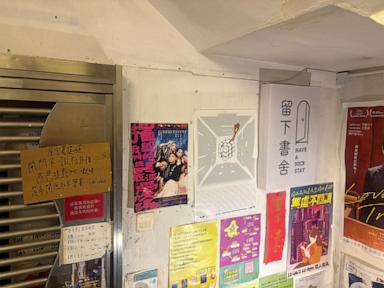
For thirty years, Albert has lived in this smell. His shop, tucked away on a second-floor walk-up in the dense, neon-veined labyrinth of Mong Kok, is a sanctuary of towering, slightly listing shelves. Outside, the double-decker buses roar down Nathan Road. Inside, there is only the rhythmic click of a struggling dehumidifier.
But lately, the smell of old paper has begun to trigger a different chemical reaction in Albert’s body: adrenaline.
He stands before a cardboard box of second-hand stock acquired from a retiring academic. His fingers hover over a spine. The book is an essay collection on the social movements of early 2000s East Asia, published by a university press in Taipei. It contains no calls to violence. It does not mention weapons. Yet, Albert hesitates.
His hand retreats. He wipes his palm on his trousers.
This is the new mechanics of survival in Hong Kong. It is a quiet, internal friction that happens thousands of times a day behind the counters of independent bookstores, art spaces, and libraries. It is what happens when the state decides that the ultimate responsibility for drawing the line between legal expression and state subversion belongs not to the courts, but to you.
The Sterile Broadcast
On a humid afternoon, the television mounted above a nearby noodle stall broadcasts a press conference. A government official stands behind a pristine rostrum, speaking in the measured, polite cadence of a career bureaucrat.
The message is clear, delivered with the practiced ease of someone who will never have to execute the order they are giving. The official states that booksellers must take it upon themselves to ensure that none of the titles on their shelves harm national security. If they are unsure about a book, they should remove it.
The official’s tone suggests this is a simple matter of civic hygiene, like checking the expiration date on a carton of milk.
But books are not milk.
"It is their duty to ensure they do not violate the law," the official says, his face a mask of neutral competence. "If they cannot guarantee a book is safe, they should not sell it."
To the casual observer, this sounds like a standard legal warning. To Albert, and to the handful of independent booksellers left in this city, it is a psychological eviction notice.
Consider the mechanics of this request. The government has not published a blacklist. There is no master index of forbidden texts, no handy database where a shopkeeper can scan a barcode to see a green light or a red light. Instead, the law is kept deliberately fluid. It is an invisible, shifting fence.
If you build a fence, people know where not to walk. If you keep the fence invisible and move it every night, people eventually stop walking altogether.
The Weight of the Unspoken
To understand how we arrived at this quiet room in Mong Kok, one must understand what Hong Kong used to be.
For decades, this city was the literary lung of the Chinese-speaking world. It was a place where writers from the mainland could publish works that would never survive the censors in Beijing. It was a destination where tourists from Guangzhou and Shanghai would arrive with empty suitcases, only to fill them with dense histories, political biographies, and poetry before boarding the train back home.
The bookstores of Causeway Bay and Mong Kok were more than retail spaces. They were intellectual free ports.
Then came the silence.
It did not happen all at once with a dramatic burning of books in the streets. It happened through a series of quiet disappearances, starting a decade ago when a group of booksellers vanished into thin air, only to reappear weeks later in custody across the border, delivering flat, rehearsed confessions on television.
It happened through the passing of sweeping security legislation in 2020, and the subsequent enactment of further domestic security laws in 2024.
Now, the pressure is applied not by midnight knocks on the door, but by the slow, suffocating weight of self-preservation. When the burden of proof is shifted to the citizen, the citizen becomes their own warden.
Albert walks back to his desk. He pulls out a ballpoint pen and a yellow legal pad. He begins to write down the names of authors whose books currently sit on his shelves.
Some are obvious. Dissidents. Politicians who are now in prison.
But what about the others? What about the sociologist who wrote a thesis on the housing crisis? What about the novelist who used the metaphor of a crumbling wall to describe a failing marriage? What about the poet who wrote of "yellow umbrellas" in a poem about a rainy autumn afternoon?
In the current climate, a metaphor is a liability.
The Anatomy of the Shiver
A young woman enters the shop. She wears wire-rimmed glasses and a heavy canvas backpack. She is a student, perhaps twenty years old, representing a generation that grew up in a very different Hong Kong than the one Albert knew.
She moves slowly along the history section. Her fingers trace the spines.
Albert watches her from his desk behind the cash register. Ten years ago, he would have recommended a rare memoir or struck up a conversation about her research. Today, he feels a tightening in his chest.
Who is she? Is she a genuine student? Or is she someone who will take a photograph of a cover, upload it to a government hotline, and trigger a surprise inspection?
This is the true poison of the official's directive. It destroys the fragile, beautiful trust that exists between a bookseller and a reader. When every customer is a potential informant, the bookshop ceases to be a sanctuary. It becomes a theater of mutual suspicion.
The young woman pulls a book from the shelf. It is a translation of Václav Havel’s essays on the power of the powerless.
She looks at the cover. Then she looks at Albert.
Their eyes meet for a fraction of a second. In that tiny sliver of time, an entire conversation takes place. It is a silent negotiation of fear. Albert does not smile. He does not nod. He looks down at his yellow legal pad and begins scribbling meaningless numbers.
She gently slides the book back into its slot on the shelf. She walks out of the shop without buying anything.
The bell above the door jingles. The sound is sharp, cold, and final.
The Cost of Safety
But the real problem lies elsewhere. It is not just about the books that are removed; it is about the books that will never be written, never published, and never imported.
When a distributor in Taiwan or Europe looks at Hong Kong, they no longer see a vibrant, open market. They see a regulatory minefield. They see a city where a single shipment of poetry could result in customs seizures, police investigations, and corporate ruin.
They choose the quiet option. They simply stop shipping.
We are witnessing the slow, systematic draining of a city's intellectual reservoir. It is a process that leaves no physical scars. The streets of Mong Kok remain crowded. The neon signs still flash their garish pinks and greens. The restaurants still serve steaming bowls of wonton noodles.
But beneath the surface, the air is thinning.
Albert looks at the cardboard box on his floor. He knows what he has to do. He cannot afford the risk. He has a wife who worries every time he stays late at the shop. He has a daughter studying in London who begs him to retire and join her.
He picks up the Taipei essay collection. He does not put it on the shelf.
Instead, he walks to the blue plastic recycling bin in the corner of his back room. He opens the lid.
For a long moment, he holds the book. He remembers buying it in Taipei ten years ago. He remembers the rainy evening he spent reading it in a small cafe near the university, feeling a profound sense of connection to the writer's mind. He remembers thinking how lucky he was to live in a city where such thoughts could be stored, shared, and celebrated.
He lets go.
The book hits the bottom of the plastic bin with a hollow, dull thud.
It is the sound of a city turning its back on its own memory. It is the sound of a man agreeing to become a little less than he was, so that he might live to see tomorrow.
Albert closes the lid. He walks back to his desk, picks up his pen, and continues to audit his own soul.
Outside, the rain begins to fall in earnest, washing the dust off the neon signs, while inside, the dehumidifier hums its lonely, desperate song.