The ink on a treaty does not make a sound when it dries, but thousands of miles away, the air changes.
In a small, windowless cafe on the outskirts of Tunis, a young man named Bilal—a hypothetical composite of the thousands currently waiting on the Mediterranean’s rim—stares at his phone. The screen reflects a shifting geopolitical reality he cannot fully grasp, yet his entire future hangs on its subtext. For years, the dream was simple, if perilous: survive the sea, touch European soil, and let the legal machinery of human rights take over.
That dream just ran out of time.
Europe has rewritten its internal architecture. After nearly a decade of bitter infighting, paralysis, and shifting political tides, the European Union has finalized its New Pact on Migration and Asylum. On paper, it is a triumph of bureaucratic compromise, a sweeping overhaul designed to streamline asylum processes, enforce mandatory solidarity among member states, and accelerate deportations.
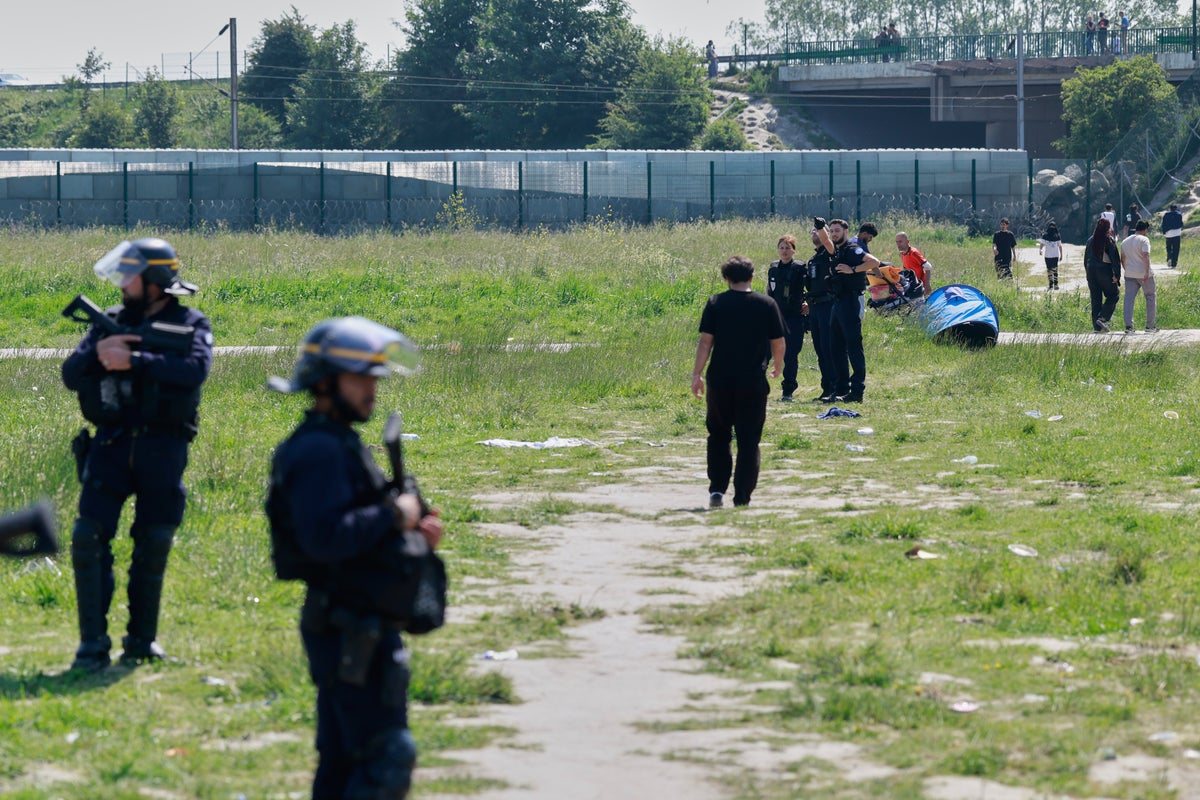
But look past the press releases issued in Brussels. The reality of this pact is not found in the polished corridors of the European Parliament. It is found in the dirt, the wire, and the remote detention centers stretching across North Africa and the Balkans.
Europe did not just fix its borders. It outsourced them.
The Mirage of the Threshold
For decades, international law operated on a foundational principle: once you cross the threshold, the rules protect you. If a migrant managed to set foot on a Greek island or a Spanish beach, they entered a legal mechanism. They had the right to an individual assessment, access to legal counsel, and protection from immediate expulsion while their case was reviewed.
The new European strategy effectively erases the threshold.
By introducing a mandatory "pre-entry screening procedure," the EU has created a legal fiction. A person holding a toddler, dripping with seawater on an Italian pier, is officially deemed not to have entered the territory of the member state. They are in a state of legal limbo, physically present but legally absent.
During this fast-tracked screening, which lasts a maximum of seven days, migrants are held in border facilities to undergo identity, health, and security checks. From there, they are funneled into one of two tracks. Those from countries with low asylum approval rates—statistically below twenty percent—are placed into an accelerated border asylum procedure.
This is where the clock becomes an enemy.
The accelerated process must be completed within twelve weeks. No extensions. No long delays for gathering evidence from war-torn hometowns. If the claim is rejected, as most under this track will be, the deportation process must take another twelve weeks. To prevent people from disappearing into the European underground, the pact explicitly relies on detention.
We are not talking about a few holding rooms. The pact mandates the creation of capacity to host tens of thousands of people at any given moment along the EU's external flanks. It is an industrial scale-up of confinement.
The Price Tag of Solidarity
The most contentious debate within the European project has always been about sharing the burden. Frontline nations like Greece, Italy, and Spain argued they were being left to manage a continental crisis alone, while wealthy northern nations complained about secondary movements—migrants moving undetected across open internal borders.
The solution cooked up by the policymakers is a system called "mandatory solidarity." It sounds noble. It functions like a corporate marketplace.
Northern and central European nations now face a strict choice. They can accept a relocated quota of asylum seekers from frontline states to ease the pressure. Or, if their internal domestic politics make that impossible, they can pay their way out.
The penalty for refusing a migrant is set at roughly twenty thousand euros per person.
Think about that mechanism for a moment. It attaches a direct monetary value to human relocation. A nation can balance its budget against its demographic anxieties, treating human beings as a line item in a regional ledger. This money does not go into a black hole; it is channeled into a common fund used to finance border management, surveillance technology, and "capacity building" in non-EU countries.
This financial loophole reveals the core vulnerability of the system. It acknowledges that solidarity cannot be forced through shared values, so it must be purchased through financial leverage. It turns human distribution into a transaction.
The Architecture of Distancing
The true engine of this migration overhaul, however, lies outside Europe entirely. The strategy hinges heavily on the concept of "safe third countries."
To understand how this works, consider the deal-making that preceded the pact's final implementation. The EU signed massive financial agreements with nations like Tunisia, Egypt, and Mauritania. The terms are straightforward: European billions flow into these economies, and in exchange, these governments agree to tighten their own coastal patrols, intercept boats, and accept the return of deported migrants.
Italy went a step further, constructing asylum processing centers directly on Albanian soil. Under this arrangement, migrants intercepted by the Italian coast guard in international waters are bypassed around Italy entirely and taken straight to Albania. Their claims are processed under Italian law, via video link, inside a secure facility guarded by Albanians but managed by Italians.
It is a masterful exercise in optical evasion. If the suffering happens somewhere else, does it still register on the European conscience?
By moving detention centers and processing hubs abroad, Europe creates a buffer zone. It allows leaders to tell their domestic electorates that the borders are secure and the numbers are down, while shielding citizens from the raw, human friction of the enforcement process. The legal challenges become murky. The jurisdiction becomes fragmented. The oversight disappears behind the horizon.
The Math Against the Myth
Proponents of the pact argue that this harsh efficiency is the only way to save the asylum system from collapsing under its own weight. They claim that by quickly weeding out economic migrants who are abusing the system, resources can be preserved for genuine refugees fleeing persecution and war.
But human stories rarely fit cleanly into bureaucratic categories.
Imagine a woman who has fled a village in sub-Saharan Africa. She is not fleeing a formal army; she is fleeing a localized militia that took her land and threatened her family. Her country of origin is deemed "safe" by European metrics because there is no official civil war. Under the new rules, she is fast-tracked. She is detained at the border. She has days to prove her case without a lawyer who speaks her language fluently, while coping with the trauma of a journey through the desert.
The math of the twelve-week deadline is designed for speed, not accuracy. When speed is the primary metric of success, nuance is the first casualty.
Furthermore, the entire apparatus relies on the cooperation of third-party regimes. Dictators and autocrats across North Africa now possess an extraordinary asset: they hold the tap to Europe’s political stability. Every time a North African state needs financial concessions, trade advantages, or political silence regarding its own human rights record, it can simply threaten to loosen its coastal enforcement.
Europe has not solved its migration problem; it has outsourced its political sovereignty to the highest bidder.
The Open-Ended Line
The Mediterranean remains wide, blue, and indifferent.
The pact is now law, the budgets are allocated, and the concrete for the new centers is being poured. The European Union, built on the ashes of a world war and founded on the explicit promise of universal human dignity, has chosen a path of defensive insulation. It has decided that the only way to preserve its internal freedom is to build an external fortress.
But fortresses are expensive to maintain, and the people outside them do not disappear just because the walls grow taller.
In the Tunis cafe, Bilal looks away from his phone and out toward the street. The sun is setting, casting long shadows across the pavement. He knows the risks are higher now. He knows that if he gets on a boat, he might end up in an Albanian camp, or a Tunisian detention center funded by German taxes, or sent back to the border he spent a year trying to leave behind.
He pockets his phone anyway.
The desire for a viable life is a force of nature. It does not read policy documents. It does not care about mandatory solidarity quotas or seven-day screening windows. It moves forward, relentlessly, looking for the cracks in the wall, proving every single day that you can move a border as far into the sea as you want, but someone will always try to swim across it.


