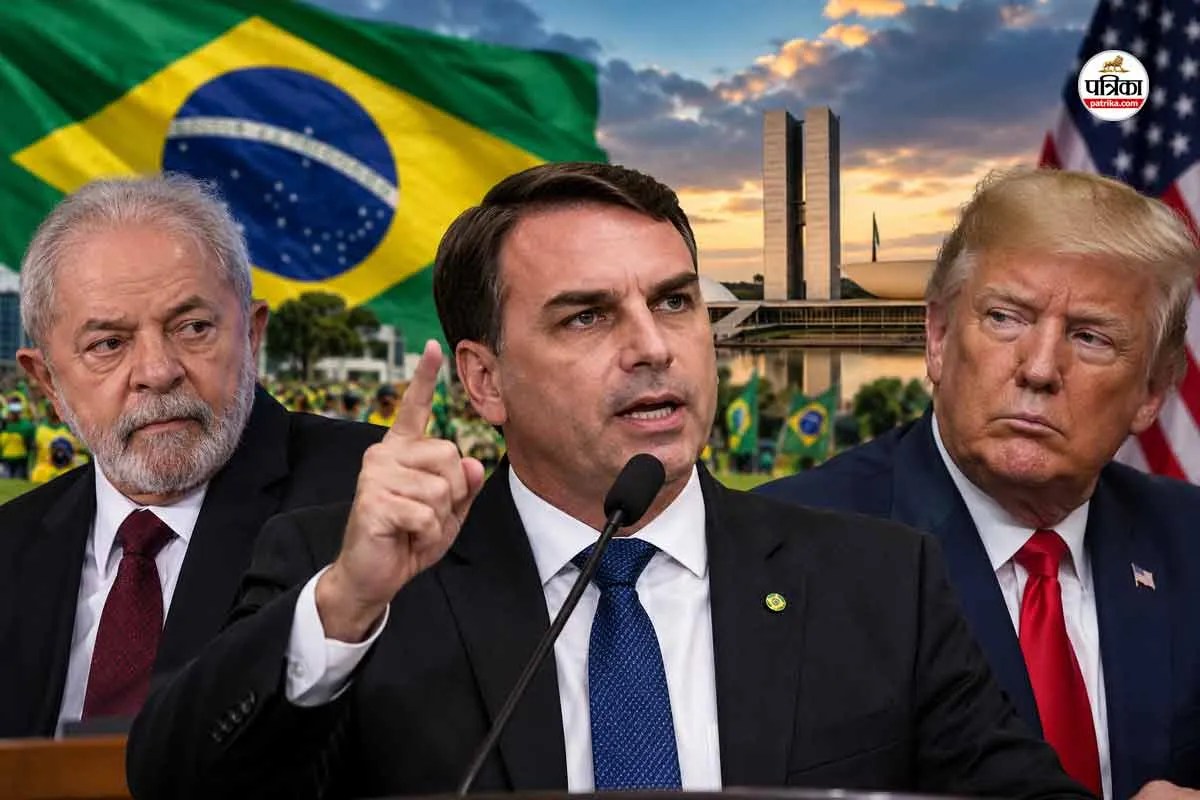
Contested election claims in Brazil rarely settle at the ballot box alone; they test whether institutional verification, legal enforcement, and external diplomatic signaling hold under pressure. Following the October 2026 presidential runoff in which incumbent Luiz Inácio Lula da Silva defeated Senator Flávio Bolsonaro, disputes over the outcome, judicial investigations, and Donald Trump's shifting posture exposed the fault lines between domestic legitimacy and cross-border political alignment.
Standard breaking-news summaries treat a disputed election, a losing candidate's challenge, and a foreign leader's mixed rhetoric as isolated headlines. That framing misses the structural mechanics at work. A rigorous analysis separates verified electoral and legal events from strategic narratives, maps how challenges to vote tallies interact with executive and judicial authority, and evaluates where Washington's rhetoric stops short of policy coercion.
Deconstructing the Competitor Narrative
Coverage built around a single headline—that political conflict intensified in Brazil as Flávio Bolsonaro challenged Lula's victory while Trump stayed quiet or ambiguous on backing—compresses a multi-actor power struggle into a simple clash of personalities. When reporting relies on surface friction without institutional context, it leaves three analytical gaps:
- Conflating rhetorical challenges with institutional overturn: Calling for an election to be annulled or questioning tabulation procedures carries political weight, yet overturning a national result requires legal standing, verifiable evidence, and institutional compliance that did not materialize in the October 2026 runoff.
- Treating external alignment as unconditional intervention: Foreign leaders routinely calibrate public statements to domestic politics and bilateral leverage. Treating a foreign president's guarded or shifting remarks as either total abandonment or guaranteed backing misreads diplomatic incentives.
- Separating electoral disputes from parallel legal exposure: Post-election friction does not occur in a vacuum. Investigations, court orders, and prior political conflicts shape how candidates respond to defeat and where they seek refuge or leverage.
Replacing surface commentary with structured mechanics clarifies what actually happened and why each actor moved the way they did.
Known Facts vs. Educated Hypotheses
Rigorous geopolitical analysis depends on keeping verified events separate from interpretation. Below is the baseline distinction between documented developments around the October 2026 Brazilian presidential contest and analytical hypotheses about their downstream effects.
Verified Facts
- Runoff outcome and margin: Luiz Inácio Lula da Silva won Brazil's October 2026 presidential runoff against Flávio Bolsonaro, securing a victory by roughly 4 million votes (reported in coverage around the 51% to 52% range versus roughly 48% to 49% for Bolsonaro).
- Challenge and tabulation dispute: Flávio Bolsonaro contested the result and called for annulment, while critics pointed to voting extensions and tabulation optics even as electoral officials stated that extended voting produced negligible changes to the overall tally.
- Judicial pressure and travel to the United States: Following the election, Flávio Bolsonaro faced legal scrutiny and a court order regarding his passports before traveling to the United States, where Donald Trump indicated openness to entry visas while offering conflicting commentary on the election itself.
- Mixed signals from Washington: Trump publicly criticized the election's appearance and called it "rigged" in remarks to reporters, yet also stated he did not endorse sides in the race, got along well with Lula, and was focused on U.S. domestic priorities rather than announcing punitive measures against Brazil's government.
Educated Hypotheses
- Rhetorical hedging over policy escalation: Trump's combination of sharp criticism of the vote and pragmatic remarks about Lula suggests a preference for keeping ideological allies rhetorically close without triggering immediate economic or diplomatic retaliation against Brasília.
- Fragmentation of post-election opposition: Moving an opposition figure's base of operations or public profile outside Brazil can preserve media visibility among sympathetic audiences while reducing day-to-day organizational leverage inside Brazil's legislature and state networks.
- Regional recalibration: Lula's runoff win interrupted a broader conservative momentum across Latin America, likely prompting regional governments to balance ideological affinity with pragmatic trade and security ties to Brazil.
The Three Pillars of Post-Election Contestation
When a closely watched national election ends in a contested challenge, the resulting political conflict operates across three distinct pillars. Understanding each pillar prevents analysts from overestimating noise or underestimating institutional friction.
1. The Legitimacy and Audit Pillar
Every contested election turns on whether voters and elites accept the credibility of the count. In Brazil, disputes over voting hours, tabulation transparency, and institutional impartiality serve as the primary lever for challengers trying to frame a loss as an irregularity rather than a voter rejection.
The operational mechanism is straightforward: highlighting procedural friction—such as extended voting windows or delayed tallies—creates doubt even when the numerical difference is large. Yet a multi-million-vote margin creates a high mathematical hurdle for any challenge claiming that minor procedural extensions altered the winner. Without verifiable evidence of systemic manipulation that matches the scale of the deficit, legitimacy challenges rely on political mobilization rather than legal reversal.
2. The Legal-Institutional Pillar
Electoral contests intersect directly with courts, police investigations, and constitutional rules. When a candidate faces active probes or judicial orders around the time of a vote, political conflict and legal jeopardy reinforce one another.
Challengers frequently argue that judicial actions are politically motivated, while institutions frame enforcement as routine rule-of-law execution. That clash raises the stakes of losing office: executive authority and political momentum no longer insulate allies from legal process in the same way. In Brazil, the memory of prior post-election disputes and court rulings makes institutional pushback faster and more rigid than in systems with weaker electoral courts.
3. The External Signaling Pillar
Foreign alignment acts as a force multiplier in domestic politics, but it is rarely a blank check. When a U.S. president alternates between calling an election "rigged" and saying "I like Lula" or "I'm not running for Brazil," observers see ambiguity where there is actually calculated optionality.
In international relations, this reflects two-level game dynamics—where leaders manage domestic constituencies and foreign counterparts simultaneously—alongside costly signaling. Verbal criticism costs very little and satisfies domestic supporters who favor an ideological ally. New tariffs, visa sanctions, or diplomatic ruptures carry real economic and strategic costs, including friction over trade, supply chains, and regional cooperation. Watching whether rhetoric converts into binding policy is the most reliable test of external backing.
The Cost Function of Contestation and Foreign Backing
Why do challenges persist even when the path to overturning a result is narrow, and why does external support often stop short of decisive intervention? Looking at the cost function of each actor explains the behavior.
For a losing candidate, contesting the outcome carries short-term mobilization benefits: it rallies loyalists, frames defeat as external unfairness, and preserves political relevance. The offsetting costs are institutional isolation, legal escalation, and credibility erosion among swing voters and moderate allies—including regional leaders who choose to recognize the certified result.
For the winning incumbent, governing after a disputed election requires balancing firm institutional defense with pragmatic statecraft. Over-escalating rhetoric against every critic risks keeping polarization at a boil, whereas steady administration, congressional negotiation, and measured engagement with major trading partners lower governance friction.
For a foreign power like the United States, full-throated intervention carries high opportunity costs. Brazil is South America's largest economy and a major actor in agriculture, commodities, regional diplomacy, and defense supply chains. Keeping rhetorical solidarity alive while holding back punitive measures preserves negotiating room with whoever sits in the Planalto Palace.
Cause-and-Effect Chains Standard Coverage Misses
Simple cause-and-effect stories—such as "Trump stayed silent, so the challenge failed" or "Lula won, so conflict ended"—flatten complex feedback loops. Four causal chains matter most for tracking what comes next:
- Public challenge to institutional friction: Calling for annulment and criticizing tabulation procedures energizes a core base, which prompts electoral and judicial authorities to defend procedures publicly, hardening positions on both sides before legal avenues are exhausted.
- Legal exposure to cross-border relocation: When travel restrictions or investigations loom after a defeat, leaving the country can remove immediate physical custody while simultaneously creating distance from local political networks and inviting accusations of flight from accountability.
- Mixed foreign rhetoric to bilateral hedging: Ambiguous statements from Washington—criticizing the process while praising rapport with the winner—signal to markets and diplomats that ideological solidarity has limits when bilateral interests are at stake.
- Domestic polarization to legislative and economic drag: Persistent conflict over legitimacy and courts complicates negotiations in Congress and keeps political risk premiums alive, even when macroeconomic fundamentals or trade flows remain operational.
Tactical Playbook for Tracking and Navigating the Dispute
Whether you are an analyst, investor, corporate strategist, or policy observer, tracking a post-election crisis requires disciplined verification rather than headline chasing. Use this four-step sequence to evaluate developments:
- Audit the claim against the math and law. Whenever a result or procedure is challenged, check the vote margin, the specific rule at issue, and whether electoral or judicial bodies have issued formal rulings. Separate political arguments about "fairness" or "optics" from legally actionable defects.
- Track policy actions over verbal signals. Log every statement from foreign capitals separately from concrete actions such as tariffs, sanctions, diplomatic recalls, or bilateral meetings. Rhetoric shifts daily; binding policy changes alter incentives.
- Map legal milestones alongside political moves. Track court assignments, injunctions, investigations, and travel orders as primary indicators of pressure on key figures, rather than treating them as side stories.
- Separate short-term volatility from medium-term governance. Distinguish immediate post-election market or media reactions from durable shifts in fiscal policy, congressional coalitions, trade rules, and regulatory enforcement.
Limitations and Blind Spots to Watch
No analytical framework eliminates uncertainty. Analysts should account for three structural blind spots:
- Information lag during fast-moving disputes: Early reports on vote tallies, travel movements, or private communications frequently contain errors or incomplete details that get corrected hours or days later.
- Misreading domestic political theater as foreign strategy: Remarks made by a leader during an intense domestic campaign cycle—such as U.S. midterm mobilization—are often calibrated for domestic voters rather than long-term Latin American strategy.
- Over-indexing on personalities over institutions: Focusing exclusively on individual leaders can obscure durable institutional checks, subnational power centers, and economic constraints that shape day-to-day governance.
Strategic Recommendation
Treat post-election rhetoric from both the challenger's camp and foreign capitals as negotiating and mobilization leverage unless backed by institutional rulings or binding policy shifts. For organizations exposed to Brazil or U.S.–Brazil ties, the optimal posture is disciplined contingency planning: maintain baseline operational plans around the certified government and existing legal frameworks, stress-test exposure to potential tariff or regulatory friction without overreacting to verbal salvos, and require two independent institutional or policy confirmations before revising long-term assumptions.