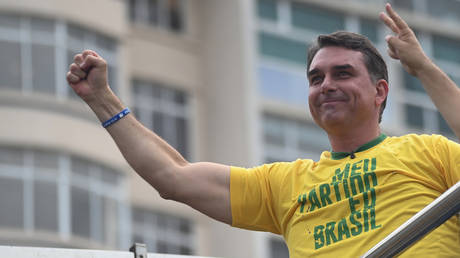
Elections in Latin America's largest democracy rarely follow a predictable script. When incumbent president Luiz Inácio Lula da Silva faced off against challenger Flávio Bolsonaro in the high-stakes runoff, observers worldwide tuned in. But the real story wasn't just about left versus right. It was a clash over the institutional soul of Brazil, pitting a seasoned political veteran against a rising conservative firebrand backed by a deeply energized base.
If you looked only at the first-round results, you might have bet heavily on a conservative upset. Flávio Bolsonaro pulled ahead initially, surprising critics and energizing the right with a platform focused on strict security reforms, including proposals for mega-prisons inspired by international models. For months, anti-establishment voters rallied behind him, frustrated by economic headwinds and eager for a sharp break from the status quo. Yet, politics rarely moves in a straight line once runoff dynamics take hold.
The Ground Shift That Upended the Race
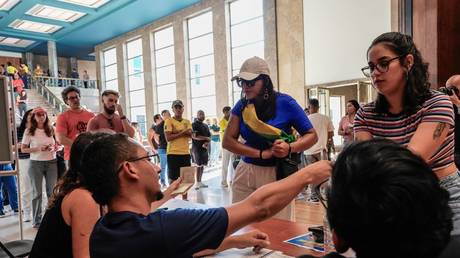
As the campaign entered its final stretch, the momentum shifted dramatically. Political momentum in Brazil can evaporate overnight, and that is precisely what happened to the challenger's camp. While Bolsonaro's numbers stagnated, civil society movements and student-led activism galvanized behind Lula. Millions of voters who stayed home or remained undecided during the initial vote suddenly mobilized, fearing a sharp ideological pivot.
Turnout surged. Nearly three million more citizens cast ballots in the second round compared to the first. That surge tells you everything about what was at stake. When voters feel their daily rights or economic stability are directly threatened, apathy disappears. Lula's campaign retooled its digital outreach, mobilizing an army of online creators and grassroots organizers to counter the right's dominance on social media.
Why This Outcome Matters Beyond Brazil
When the dust settled and the Superior Electoral Court tallied the final votes, Lula secured a historic fourth term with 51.79 percent of the vote against Bolsonaro's 48.21 percent. It marked the first time since the return of democracy in 1985 that a second-place candidate managed to stage a successful runoff comeback.
Yet, the aftermath proved just as turbulent as the campaign itself. Contested election results, international reactions, and ongoing federal investigations into key political figures mean the political landscape remains deeply fractured. For anyone watching Latin American politics, the race serves as a masterclass in how polarization drives high turnout, and how digital-age campaigning can completely rewrite political rules in a matter of weeks. The divisions exposed during this cycle won't vanish anytime soon, setting the stage for a tense legislative term ahead.