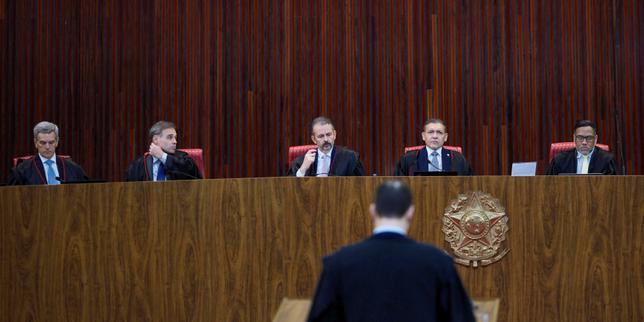
On November 10, 2026, Brazil’s Superior Electoral Court (TSE) unanimously hit Meta with a fine of 7.5 million reais—roughly $1.3 million, or €1.2 million—for failing to guarantee equal treatment on its platforms between President Luiz Inácio Lula da Silva and his right-wing challenger, Senator Flávio Bolsonaro, during the October presidential race. Surface-level headlines immediately framed the ruling as a slam-dunk verdict on algorithmic election rigging. That framing misses the actual scandal.
The seven-judge panel, led by reporting Justice Marco Aurélio Bellizze, explicitly rejected the accusation that Meta intentionally manipulated Facebook or Instagram algorithms to tilt the election toward Flávio Bolsonaro. Instead, Brazil’s top electoral authority penalized the Silicon Valley giant for something far more revealing about how Big Tech operates under sovereign legal pressure: stonewalling, missed judicial deadlines, and handing the court incomplete, generic explanations—some of which weren't even translated into Portuguese.
The Allegation Versus the Courtroom Reality
To understand why a $1.3 million fine is sending shockwaves through Brasília and Menlo Park, you have to look at the political pressure cooker of October 2026. Lula ultimately secured a historic fourth presidential term in the October 25 runoff with 51.79% of the vote against Flávio Bolsonaro’s 48.21%. Yet in the days leading up to that decisive second round, Lula’s campaign was convinced it was fighting an invisible thumb on the scale.
Lula’s legal team, represented before the TSE by lawyer Angelo Ferraro, accused Meta of operating as a partisan "political agent". Their core claim was straightforward. Organic reach and engagement for Lula’s official channels appeared throttled compared to those of Flávio Bolsonaro, a candidate openly backed by U.S. President Donald Trump. Protesters even gathered outside Meta’s São Paulo headquarters days before the runoff, accusing the company of foreign-aligned digital meddling.
Meta’s defense followed a familiar corporate script. Company lawyers denied any political interference, insisting that Meta applies identical rules to all candidates and parties globally. Any discrepancies in reach, Meta argued, stemmed from routine technical glitches that were neither isolated to Brazil nor designed to favor one campaign over another.
When the TSE examined the evidence, it split the difference in a way that satisfied neither partisan camp's talking points.
| Claim or Issue | Lula Campaign Position | Meta Defense | TSE Final Ruling |
|---|---|---|---|
| Algorithmic Bias | Deliberate suppression of Lula to help Flávio Bolsonaro | Neutral global policies; zero partisan intent | No proof of deliberate manipulation to skew the vote |
| Technical Discrepancies | "Serious irregularities" acting as political interference | Temporary technical bugs not limited to Brazil | Unexplained reach disparities violated equal-treatment orders |
| Judicial Compliance | Meta ignored court mandates during a live election | Legal obligations were "fully respected" | Guilty of missed deadlines, vague data, and non-Portuguese filings |
The distinction is critical. Had the TSE found evidence of intentional vote rigging, Meta would be facing criminal referrals and potential platform suspension across Latin America's largest economy. By ruling out deliberate bias while still levying a multi-million-real penalty, Justice Bellizze established a different precedent. In Brazil, black-box opacity is now a punishable offense on its own.
Why Opacity Became a Legal Liability
Anyone who has covered tech regulation over the past two decades recognizes Meta’s playbook here. When regulators demand granular data on how recommendation engines rank political content, platforms typically respond with high-level PR summaries, boilerplate engineering white papers, and defensive legalisms. In Washington or Brussels, that buys months—sometimes years—of procedural delay.
Brazil’s electoral judiciary does not operate on Brussels time.
The TSE possesses extraordinary constitutional authority during active election cycles, capable of issuing binding injunctions with hours-long compliance windows. During the October campaign, Justice Bellizze ordered Meta to guarantee parity in content distribution and summoned company representatives and campaign lawyers to Brasília to account for anomalies.
Meta’s failure was procedural arrogance. According to the court's findings, when pressed to explain why engagement metrics diverged so sharply between the two presidential contenders, Meta missed court-imposed deadlines. Worse, when the company did submit documentation, judges found the disclosures incomplete, overly generic, and in some instances written in English rather than Portuguese.
Think about what that looks like to a supreme electoral tribunal in the middle of a razor-thin runoff. A foreign corporation controlling the primary communication arteries for over 158 million eligible Brazilian voters is ordered to prove its systems aren't distorting democracy, and it responds late with untranslated boilerplate.
You cannot audit an algorithm with a press release.
The Structural Collision Between Recommendation Engines and Electoral Law
Even if we take Meta at its word—that zero engineers in California tweaked a line of code to boost Flávio Bolsonaro—the incident exposes a fundamental contradiction between modern social media architecture and traditional election law.
Brazilian electoral statutes demand strict equality of opportunity. Traditional broadcast television and radio time are divided mathematically among political coalitions down to the second. Algorithms, by design, do the exact opposite. Recommendation systems on Facebook and Instagram are built to maximize engagement, reward outrage, and amplify content that triggers rapid user interaction.
Suppose, as a hypothetical example, Candidate A posts a calm, ten-minute policy breakdown on infrastructure subsidies, while Candidate B posts a thirty-second clip attacking an opponent’s personal integrity. An engagement-driven ranking model does not need a partisan directive from executives to bury Candidate A and rocket Candidate B into millions of feeds. The algorithm's native commercial incentive—keeping eyeballs glued to screens—naturally favors polarization and high-arousal rhetoric.
When an electoral court orders a platform to ensure "equal treatment in content distribution," it is essentially asking an asymmetric attention machine to behave like a public utility. Meta cannot easily fulfill that mandate without manually overriding its own ranking models, which would paradoxically force the company to engage in the exact kind of direct editorial intervention it claims to avoid.
Yet Meta’s refusal to open the hood and show the TSE the exact telemetry behind those organic reach fluctuations left the court with no way to distinguish between a benign bug, organic virality, and covert suppression.
The Financial Arithmetic of a Slap on the Wrist
Let’s look at the numbers without romanticism. A fine of 7.5 million reais sounds substantial in local headlines. Converted to U.S. dollars at November 2026 exchange rates, it comes out to roughly $1.3 million.
For context, Meta generates tens of billions of dollars in quarterly revenue globally and has recently committed tens of billions more toward artificial intelligence infrastructure. To Meta’s balance sheet, $1.3 million is not a deterrent. It is a rounding error—less than the annual compensation package of a single senior engineering director.
If the story ended with a wire transfer from Meta’s Brazilian subsidiary to the national treasury, executives in Menlo Park would quietly pay the bill, close the file, and move on.
It won't end there, because the fine is merely ammunition for a much larger legislative war already underway in Brasília.
What Comes After the Verdict in Brasília
Brazil has rapidly become the world’s most aggressive testing ground for platform accountability. Under Lula’s administration, Brazil has already tightened its legal framework to hold technology companies directly liable for illegal content posted by users—a sharp departure from the liability shields that long protected American tech firms under laws like Section 230 in the United States. And the country’s judiciary has demonstrated a willingness to take drastic enforcement steps when tech giants defy court orders, as seen during previous standoffs with X over judicial compliance and local legal representation.
Following his runoff victory, Lula wasted zero time weaponizing the Meta dispute to push for sweeping new statutory controls. Speaking after the election, the president framed the campaign as a battle against "interference coming from the outside through digital platforms," declaring unequivocally that his government intends to regulate them further and treat digital offenses with the same severity as offline crimes.
The geopolitical subtext is impossible to ignore. With Donald Trump in the White House maintaining close ties to the Bolsonaro political dynasty—and Flávio Bolsonaro himself departing for the United States while refusing to concede defeat—Lula’s government views American Big Tech not merely as commercial vendors, but as potential vectors of foreign political influence.
Every time Meta misses a judicial deadline or hands a Brazilian judge an untranslated summary, it hands Lula’s coalition another talking point to justify strict algorithmic audits, mandatory local data transparency, and revenue-based penalties that actually hurt.
Meta beat the worst-case accusation in court; the judges cleared the company of deliberately rigging the 2026 vote. By treating sovereign electoral oversight like a nuisance ticket, however, the company just gave Brazil's government every excuse it needed to rewrite the rules of the internet on its own terms.
For further reporting on the court's decision and the reactions from both campaigns, watch the France 24 coverage of the Brazilian electoral court ruling, which breaks down the TSE's fine against Meta and its rejection of deliberate bias claims.