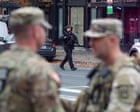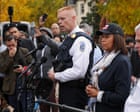
One person dead. Four injured. Suspect confirmed dead.
Read the standard breaking news coverage of a Washington DC shooting, and you already know the script before the page finishes loading. A rolling dispatch stacks timeline fragments on top of breathless police press conference quotes. Readers refresh for updates on the suspect's identity, the exact street corner, and the latest casualty count.
That habit feels urgent. It also leaves the public looking through a keyhole while the building shifts around them.
Standard breaking news coverage treats an acute shooting as a self-contained bulletin rather than a symptom of deeper institutional and urban friction. When coverage revolves almost entirely around the immediate casualty tally and the confirmed death of the suspect, it creates a dangerous illusion of closure. One body drops, a perimeter clears, and the story gets filed under resolved violence.
In reality, the end of an active threat rarely marks the end of the underlying dynamic. Anyone who has spent years analyzing urban public safety, municipal emergency coordination, and media reporting patterns sees the same cycle repeat across major capitals. Agencies spend millions on command post integration, sensor networks, and rapid response drills, yet public understanding still gets stuck on two narrow questions: who pulled the trigger, and how many people were hit.
The Lazy Consensus Behind Live-Update Journalism
The lazy consensus in breaking news reporting is simple. Speed equals value. Every minute brings a new unverified detail, a revised injury count, or a confirmation from a law enforcement briefing, and newsrooms treat each update as an earned step toward truth.
That model confuses motion with clarity. Early figures in fast-moving incidents are notoriously fluid. Witnesses overestimate gunfire. Crowds scatter in multiple directions, creating phantom reports of secondary shooters. Even official briefings evolve as investigators reconcile hospital intakes with scene sweeps.
When an outlet publishes rapid-fire updates without explaining how trauma triage, scene containment, and suspect confirmation actually unfold, the reader gets whiplash instead of insight. worse, framing the story around "one person killed and four injured, suspect confirmed dead" nudges audiences toward a neat narrative arc. Beginning: shots fired. Middle: chaos and response. End: suspect neutralized.
Violence in a dense city rarely works like a three-act play. A suspect confirmed dead closes the tactical search. It does not automatically explain the social conditions, neighborhood stressors, weapon access pathways, or jurisdictional seams between local police, federal agencies, and district authorities that shaped the event.
Why "Latest Updates" Often Mislead Readers
People searching for the latest updates on a Washington DC shooting usually want two things. First, immediate reassurance about safety and location. Second, a clear sense of what happened and why.
"People Also Ask" boxes around incidents like this tend to circle predictable questions. How many people were shot in Washington DC? Is the suspect still at large? Where did the shooting happen? What is the condition of the injured?
Those questions are understandable. Someone commuting across the city or checking on friends needs accurate, grounded facts right away. Yet treating those surface questions as the whole story misses the structural mechanics underneath.
A city like Washington DC has a uniquely layered public safety environment. Multiple policing bodies operate across overlapping jurisdictions. Federal buildings, transit corridors, commercial districts, and residential neighborhoods sit within short distances of one another. When gunfire breaks out, coordination across agencies matters just as much as siren speed.
Meanwhile, "four injured" is a single phrase covering vastly different medical realities. One person may have a grazing wound discharged within hours. Another may undergo emergency surgery for a vascular or thoracic injury with long-term rehabilitation ahead. Reducing four distinct trauma cases to a flat headcount flattens the human and clinical weight of the event.
A Thought Experiment in Information Timing
Imagine a scenario where a major newsroom pauses live casualty updates for forty-five minutes after a shooting in a dense urban corridor until hospital intake numbers and scene perimeters are cross-checked by two independent sources.
In that scenario, the audience gets fewer early alerts and slightly slower social media traction. Yet the facts published are far less likely to contradict one another an hour later, and rumor cascades have less official oxygen to feed on.
Information discipline costs clicks in the short term. Over time, it builds trust that breathless speculation destroys.
What Insider Experience Reveals About Crisis Response
Having watched crisis communications play out across high-pressure institutions, one pattern stands out above all others. Organizations routinely pour vast resources into visible hardware, press podiums, and rapid alerts while underinvesting in plainspoken explanation of how systems actually behave under stress.
I have seen institutions blow millions on crisis dashboards, alert workflows, and external PR retainers, only to confuse the public during the first two hours because nobody clearly explained what was confirmed versus what was still being verified. Technology cannot fix unclear communication.
In public safety and criminology, researchers who study urban violence and mass incidents—figures such as Philip J. Cook on gun markets and injury dynamics, or criminologists examining hot-spot policing and emergency response—consistently emphasize that single incidents sit inside broader patterns of exposure, response time, and post-event recovery. A single headline snapshot strips away that context.
Even when a suspect is confirmed dead at the scene, investigators still face hours or days of forensic reconstruction, ballistics analysis, digital review, and witness interviews. The public hears "suspect dead" and assumes the investigation is practically over. Investigators know the hard evidentiary work is just starting.
Dismantling Common Misconceptions Around DC Shootings
Let us strip away a few assumptions that routinely distort how readers interpret news of a shooting in the nation's capital.
- Misconception 1: A suspect confirmed dead means zero lingering risk. Neutralizing an immediate threat stops active harm at that moment. It does not erase potential trauma in nearby workplaces or residences, traffic disruptions, or secondary investigative leads.
- Misconception 2: Fast updates equal complete updates. Early dispatches reflect what officials know at a specific timestamp, often under incomplete information. Later corrections are a normal part of investigation, not proof of a cover-up.
- Misconception 3: All shootings in Washington DC share the same root cause. The District contains distinct neighborhoods, economic realities, and policing contexts. Lumping every incident into one generic narrative obscures local patterns.
- Misconception 4: Casualty counts tell you the full severity. Five total victims—one killed and four injured—can mean anything from a localized dispute to a chaotic public encounter with wide psychological fallout.
Where This Contrarian View Can Go Wrong
Pushing back against live-update sensationalism has real downsides, and pretending otherwise would be dishonest.
If coverage swings too far toward detached analysis too early, readers who simply need practical safety information—road closures, transit delays, shelter-in-place guidance, or whether a nearby area is secure—can feel ignored. Immediate factual clarity is essential during an active or fresh incident.
There is also a risk of sounding overly clinical or contrarian for its own sake when real people are grieving or lying in hospital beds. Analytical perspective should never minimize human loss or turn tragedy into an intellectual exercise.
The goal is balance. Deliver verified facts quickly. Resist fake certainty. Separate confirmed details from speculation.
How to Read Breaking Violence Coverage Like an Insider
If you want a clearer picture whenever a major incident breaks, change how you consume the coverage.
- Check the timestamp on every claim. Early casualty numbers and suspect details are provisional until corroborated across multiple official or hospital channels.
- Separate tactical status from investigative progress. A suspect being confirmed dead answers who is no longer an active threat. It does not answer motive, background, or full sequence of events.
- Watch the language around "injured." Look for distinctions between minor treatment, hospitalization, and critical condition rather than treating every injury as equal.
- Follow up days later, not just minutes later. The most accurate reporting on cause, response gaps, and community impact usually appears after the initial breaking-news rush subsides.
Stop treating a rolling update feed like the whole truth. Watch the mechanics behind the headline.