A fever begins with a shudder. It is a subtle shift at first, the kind of chill you dismiss as a passing draft or the consequence of staying out too late in the damp autumn air. You wrap your blankets tighter. You drink some tea. But beneath the skin, a microscopic siege has already begun.
For centuries, humans have looked at the wilderness as a place of healing, a sanctuary from the concrete and clamor of modern life. We hike its trails and breathe its crisp air. We rarely think about what breaths back. Recently making waves in this space: The Long Road to a Pharmacy in Nairobi.
In the quiet timberlands of Europe, beneath the fallen leaves and inside the hollows of ancient oaks, lives the bank vole. It is a tiny, unassuming creature with chestnut fur and bright, black eyes. To look at it is to feel a sense of pastoral innocence. Yet, this small rodent carries a biological ghost known as hantavirus. Specifically, in Europe, it is the Puumala strain. It does not make the vole sick. The vole is merely the vessel. It sheds the virus in its saliva, its urine, its droppings. The virus dries. It blends with the dust of the forest floor, the soil of a backyard garden, or the sweeping debris of an old woodside cabin.
Then, a human inhales. More details into this topic are detailed by World Health Organization.
Suddenly, the pastoral innocence evaporates. What follows is hemorrhagic fever with renal syndrome. It is a clinical phrase that fails completely to capture the terrifying reality of the disease. Your kidneys begin to fail. The tiny blood vessels in your body start to leak. Vision blurs. The pain in the lower back becomes an agonizing, throbbing ache as the organs swell against their confinement. There is no widely approved, specific cure. Doctors can only support the body, pumping in fluids, monitoring blood pressure, and hoping the patient’s immune system wins the war before the kidneys surrender entirely.
For decades, this was a localized tragedy, a sporadic roll of the dice for farmers, foresters, and campers. It was a rare, shadowy threat.
It is not so rare anymore.
The Disruption of the Quiet Places
The climate is shifting, and with it, the behavior of the forest. Warmer winters mean more trees survive the frost and produce massive quantities of seeds—a phenomenon known as a mast year. More food means a explosion in the rodent population. As human suburbs push deeper into what used to be wilderness, the boundaries between our living rooms and the vole’s territory have blurred into nonexistence.
Public health officials in Brussels have been watching the data trickle in for years. The charts do not show a steady line; they show spikes. Erratic, unpredictable jumps in infection rates across member states. The realization hit them with cold certainty: a severe outbreak could easily overwhelm regional intensive care units.
If a localized spike happened tomorrow in a remote valley of Germany or a rural district in Finland, hospitals would quickly run through their limited supplies of supportive therapies. The panic would spread faster than the fever.
http://googleusercontent.com/image_content/212
This is the hidden anxiety of modern governance. It is the knowledge that the next crisis is always mutating just out of sight, waiting for the right environmental trigger to breach our defenses. The European Union, often criticized for its slow-moving bureaucracy and endless committees, faced a choice between its historical tendency toward reactive policymaking or an unprecedented leap into proactive defense.
They chose to build a shield before the blow landed.
Inside the Health Emergency Preparedness and Response Authority
To understand how a continent prepares for an invisible enemy, you have to look at an agency born from the trauma of recent global history. The Health Emergency Preparedness and Response Authority, known as HERA, was established in the wake of the COVID-19 pandemic. Its mandate is simple yet staggering: ensure the EU can rapidly access and distribute medical countermeasures during a health crisis.
HERA operates on the principle that viruses do not recognize national borders. A pathogen does not halt at a checkpoint or wait for a customs declaration. Therefore, a fragmented response is a failed response.
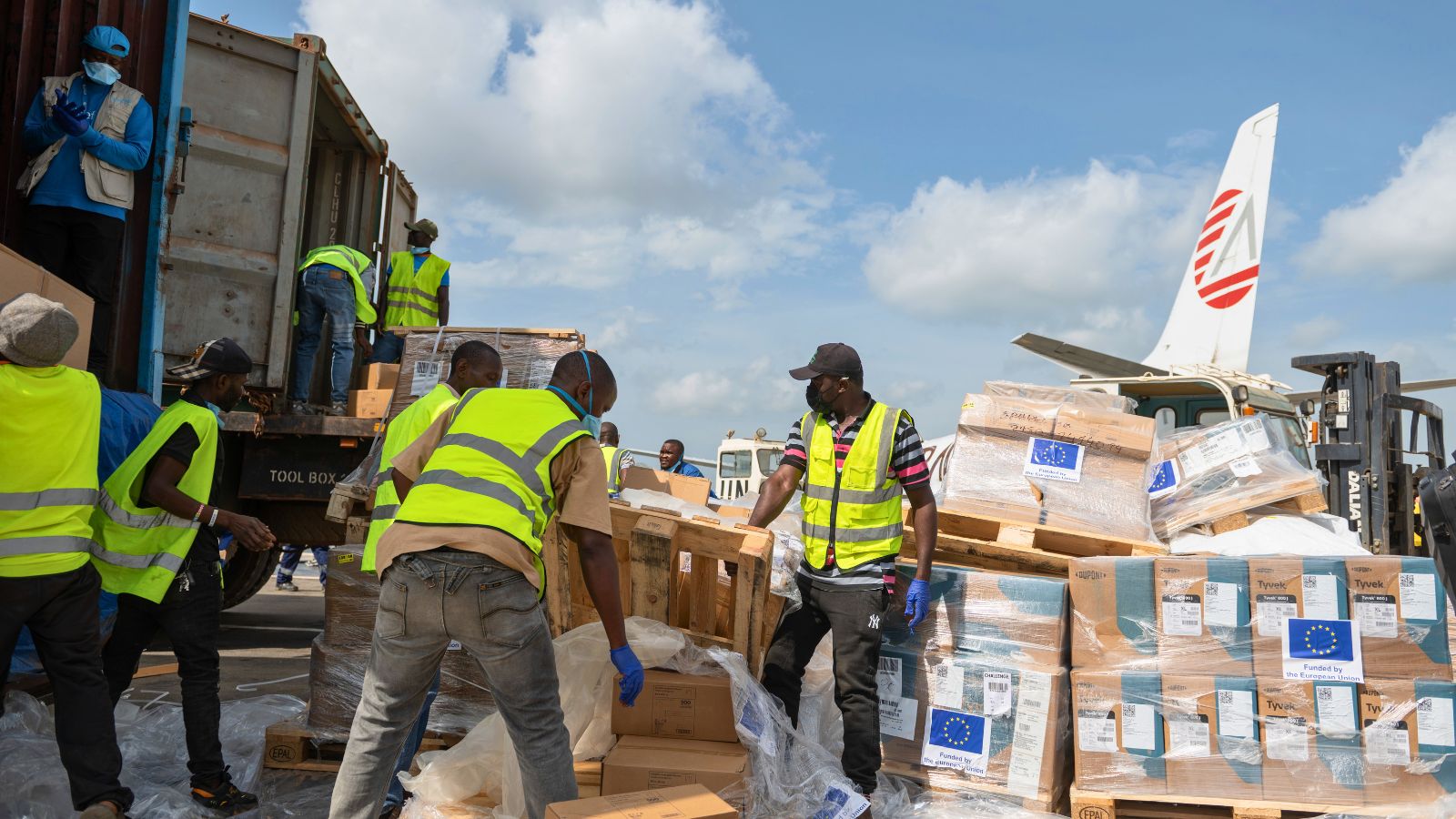
In a quiet series of negotiations, HERA finalized an emergency procurement framework. They secured immediate access to thousands of doses of a specific antiviral treatment capable of mitigating the worst effects of hantavirus. This was not a standard purchase order destined to sit in a warehouse until its expiration date. This was a strategic mobilization.
The agreement allows member states to instantly draw from a centralized reserve the moment an unusual cluster of hantavirus cases is detected. It functions like a continental fire brigade. If a fire breaks out in one room, you do not wait for that room’s occupant to buy a hose; you bring the collective water supply of the entire house to bear on the flames.
Consider a hypothetical scenario, a glimpse into how this mechanism operates when the theoretical becomes real.
Let us call him Lukas. He is a thirty-four-year-old landscape architect living in a small town near the Black Forest. He spends his days clearing brush, restoring old stone walls, and breathing in the dust of neglected properties. One Tuesday afternoon, Lukas feels a sudden, sharp ache behind his eyes. By Thursday, his fever is soaring, and his urine has turned the color of dark tea.
Under the old paradigm, Lukas would be admitted to a regional hospital. His doctors would recognize the signs of hantavirus, administer basic intravenous fluids, and monitor his deteriorating kidney function with a sense of helpless anticipation. If his condition worsened, he would face the grueling prospect of dialysis, praying his organs would eventually recover.
Under the new framework, the moment Lukas and three of his neighbors present with identical symptoms, an alert triggers within the national public health registry. The data flashes to Brussels. Within hours, a targeted shipment of the procured antiviral treatment is dispatched from a secure distribution hub.
The medication arrives at Lukas’s bedside before his kidneys reach the point of total failure. The drug works by throwing a wrench into the virus's replication machinery, slowing its march through his vascular system, and allowing his natural defenses to gain the upper hand.
He goes home to his family in days, not months. The outbreak is contained. The hospital infrastructure never buckles.
The Economics of Preemption
Securing these treatments is an exercise in complex logistics and high-stakes negotiation. Pharmaceutical companies rarely manufacture massive quantities of specialized antivirals for rare diseases out of altruism. The market forces are stacked against low-incidence pathogens. It is incredibly expensive to develop, test, and manufacture a drug that might only be needed by a few thousand people a year.
This is where the collective bargaining power of the European Union changes the mathematics of public health.
By negotiating as a single bloc representing hundreds of millions of citizens, HERA can guarantee a predictable demand that justifies the production lines. They provide the financial stability pharmaceutical developers need to maintain active stockpiles. It is a symbiotic relationship born of necessity: public funds secure societal resilience, while private enterprise provides the biochemical tools.
Yet, this system is not without its detractors. Critics often look at the millions spent on emergency reserves and see waste. They point to empty warehouses and expired vials as evidence of bureaucratic paranoia.
But this argument misunderstands the very nature of safety.
We do not judge the value of a fire extinguisher by how often we use it. We judge its value by its presence when the kitchen catches fire. The cost of storing a drug that expires unused is a rounding error compared to the economic and human devastation of an uncontrolled epidemic that shuts down industries, floods hospitals, and breaks the public trust.
The true metric of success for an agency like HERA is silence. If they do their job perfectly, nothing happens. The news cycles remain quiet. The public remains oblivious.
The Unseen Horizon
The acquisition of hantavirus treatments is only a single piece of a far larger puzzle. The world is warming, and the ecosystems are fracturing. Pathogens that were once confined to tropical regions are creeping northward. Tick-borne encephalitis, West Nile virus, and dengue are no longer exotic footnotes in medical textbooks; they are becoming permanent residents of the European countryside.
The deal struck in Brussels is a template for the future of public health. It signals a shift away from the panicked, chaotic scrambles that characterized the early 2020s toward a cold, calculated stance of perpetual readiness.
We cannot stop the voles from breeding. We cannot stop the trees from dropping their seeds, nor can we completely seal ourselves off from the natural world we belong to. The dust of the forest will always find a way into our lungs.
But we are no longer leaving the outcome to chance.
Tonight, in climate-controlled facilities across the continent, thousands of tiny vials sit in neat rows under the sterile glow of security lights. They are quiet, motionless, and utterly unremarkable to the untrained eye. Yet they represent something profound: a collective promise that when the fever comes, the antidote will already be waiting.