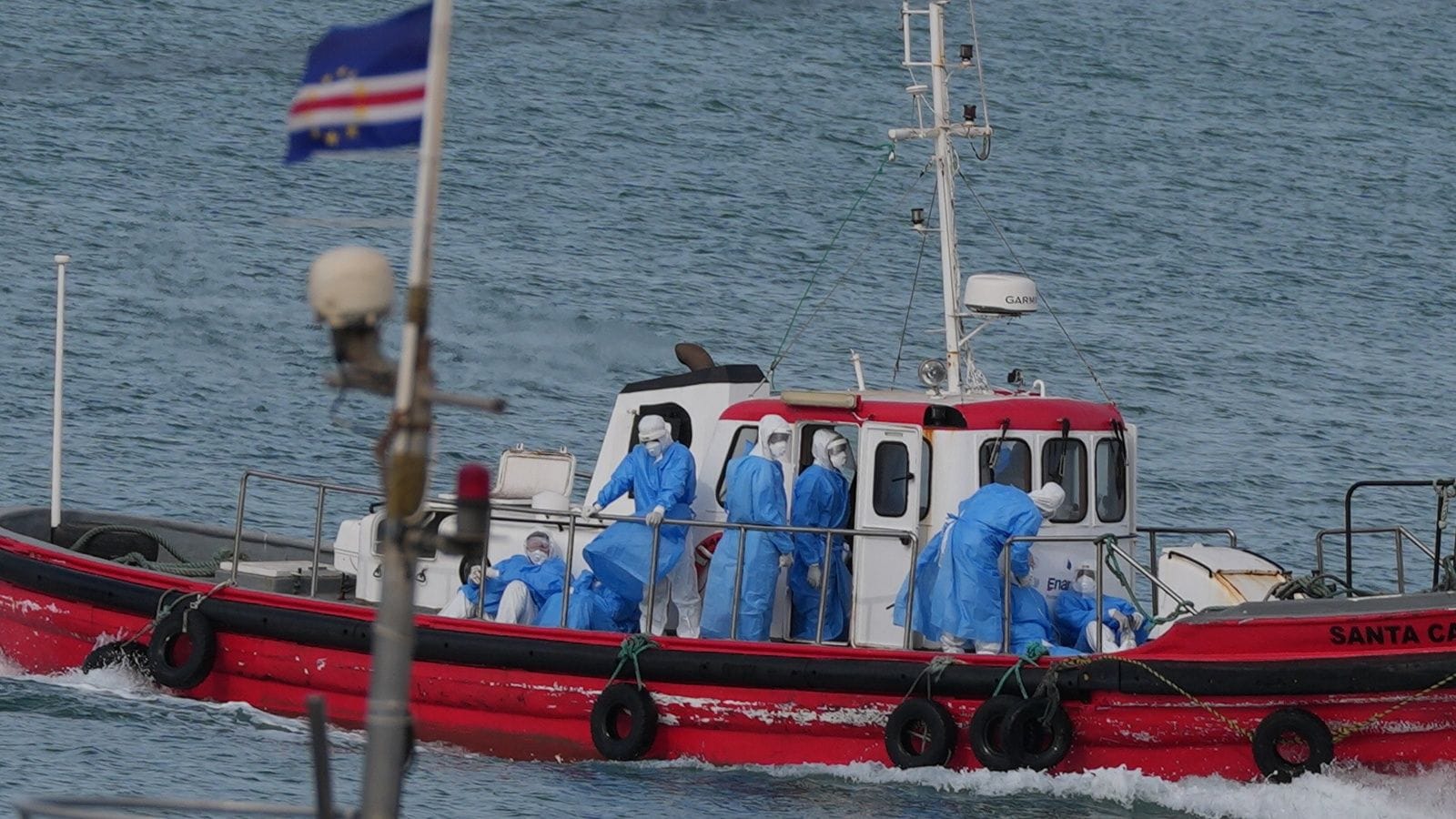
The air inside a luxury cruise cabin is supposed to smell like nothing at all. Or perhaps, if the staff is meticulous, it smells of faint ozone and expensive linen. It is an engineered environment, a climate-controlled sanctuary designed to keep the world out while you drift across the ocean. But for three passengers on a recent voyage, that sanctuary became a vault. They didn't feel the shift at first. Nobody does. It starts with the kind of fatigue you'd expect from a long day of travel, a slight ache in the joints that you might blame on the rhythmic swaying of the ship.
Then the breathing changes. If you liked this post, you should look at: this related article.
The news broke with the sterile precision of a medical chart: a Hantavirus strain, previously thought to be a rare hitchhiker from rodents to humans, had claimed three lives on a cruise ship. But the clinical report contained a sentence that sent a silent shiver through the global health community. This wasn't just another case of a person inhaling dust from a barn floor. This strain appeared capable of human-to-human transmission.
The boundary had moved. For another angle on this event, refer to the latest coverage from Medical News Today.
The Invisible Resident
For decades, we viewed Hantavirus as a tragedy of geography. If you stayed away from the rural outposts where deer mice and rats nested, you were safe. It was a virus of the soil and the shed. You breathed in the aerosolized waste of a creature you never saw, and days later, your lungs filled with fluid. It was devastating, but it was lonely. It ended with the individual.
Imagine a virus as a microscopic lock-picker. Most Hantaviruses are specialists; they have the tools to break into human cells, but they lack the keys to exit one person and survive the journey to the next. They are biological dead ends. But nature is a relentless tinkerer. Through a series of subtle mutations—errors in copying its own genetic code—this particular strain found a way to bridge the gap.
It turned our most basic social instinct into a liability. We breathe the same air. We talk. We laugh. In the tight corridors and shared dining halls of a cruise ship, we exist in a communal cloud of respiration. When a virus learns to hitch a ride on those invisible droplets, the math of safety changes overnight.
The Anatomy of a Shadow
To understand why this matters, you have to look at how Hantavirus operates compared to the respiratory viruses we’ve grown accustomed to. Most of us think of the flu or common colds as the standard. They are annoying, sometimes dangerous, but usually manageable. Hantavirus Pulmonary Syndrome (HPS) is a different beast entirely. It doesn't just irritate the lining of your throat; it wages war on the capillaries in your lungs.
The walls of those tiny blood vessels become porous. They begin to leak. Instead of exchanging oxygen, the lungs begin to fill with the body’s own plasma. It is, in the most literal and terrifying sense, a way of drowning on dry land.
During the initial phase, the symptoms are deceptive. Fever, chills, and muscle aches. It mimics the exhaustion of a vacationer who has spent too much time in the sun. But the "leakage" phase follows with brutal speed. Once the respiratory distress begins, the window for medical intervention narrows to a sliver. On a ship in the middle of the ocean, that window can slam shut before the next port of call appears on the horizon.
Breaking the Species Barrier
We often treat the jump from animal to human as a freak accident, but it is actually a reflection of our deepening footprint on the planet. As we push further into wild spaces, and as our climate shifts the migratory patterns of rodents, the "spillover" events become more frequent.
The Andes virus, a specific lineage of Hantavirus found in South America, provided the first haunting evidence that humans could pass the infection to one another. What happened on this ship suggests that the geographical walls we relied on are porous. The virus isn't staying in the woods anymore. It’s boarding the vessel. It’s checking into the suite.
This isn't about a sudden, cinematic apocalypse. It’s about the quiet calibration of risk. When a virus gains the ability to move between people, its "R-nought"—the number of people one infected person is likely to pass the virus to—climbs above zero. Even if that number is low, the sheer lethality of Hantavirus (which can have a mortality rate as high as 35% to 40%) makes it a far more formidable opponent than more contagious but less deadly pathogens.
The Cost of Proximity
Consider the logistics of a modern getaway. You are packed into a gleaming marvel of engineering with three thousand strangers. You share elevators, buffet tongs, and the recirculated air of the theater. We trade our privacy for the experience of the voyage.
The three people who died weren't just statistics in a "10 things to know" list. they were likely individuals who spent their final days looking out at the blue expanse, wondering why their chests felt so heavy. Their deaths have forced a massive, behind-the-scenes scramble among epidemiologists. Contact tracing on a ship is a nightmare of variables. Who sat at the table next to them? Who used the gym after they did? Who shared the air in the hallway?
Medical teams are now looking for "super-spreaders," individuals whose viral load or social behavior makes them particularly efficient at passing the pathogen along. In previous Hantavirus outbreaks, we only had to worry about the mouse in the cupboard. Now, we have to worry about the person in the seat next to us.
The Mechanics of Protection
Survival in this new landscape isn't about panic; it’s about a return to the fundamentals of vigilance. The facts are clear, even if they are uncomfortable:
- Early detection is the only shield. Because the transition from "flu-like symptoms" to "respiratory failure" is so fast, there is no room for the "wait and see" approach.
- Environmental control is paramount. Cruise lines and hotel chains are being forced to re-evaluate their pest integration strategies and air filtration standards. A single rodent in a cargo bay is no longer just a hygiene issue; it’s a potential catalyst for an outbreak.
- The "Andes Model" of quarantine. Health officials are looking at protocols used in South America, where family members of Hantavirus patients are monitored with extreme rigor, acknowledging that the breath of a loved one can be the primary vector.
The challenge is that Hantavirus doesn't look like a threat until it is a catastrophe. It doesn't have the visible sores of smallpox or the dramatic cough of a late-stage lung infection. It is a silent thief of breath.
The Weight of the Air
We live in an age where we feel we have conquered the elements. We have built cities in deserts and floating palaces on the sea. We have mapped the human genome and sent probes beyond the solar system. Yet, we are still fundamentally biological beings, tethered to the air around us.
The tragedy on the cruise ship is a reminder that the invisible world is constantly negotiating its terms with us. A virus doesn't "want" to kill its host; that’s a failure of its own survival strategy. It just wants to persist. By learning to move from human to human, the Hantavirus is trying to survive in a world where its traditional rodent hosts are being displaced.
We are left to wonder about the remaining passengers—the ones who walked off the ship, back into their normal lives, carrying the memory of the sirens and the sudden, unexplained absences at the dinner table. They are the witnesses to a shift in the wind.
The three who didn't make it home have left us with a grim inheritance: the knowledge that the distance between "us" and "them"—between the wild and the civilized—is thinner than a single exhale. We are connected by the very thing that keeps us alive. Every breath is a shared resource, a communal trust, and, as we have now seen, a potential path for something we thought we had left behind in the dirt.
The ship has docked. The cabins have been scrubbed. The air is ostensibly clean again. But the silence in those three empty rooms speaks louder than any headline ever could. It is the sound of a world that has grown just a little bit smaller, and a lot more intimate, in the most dangerous way possible.