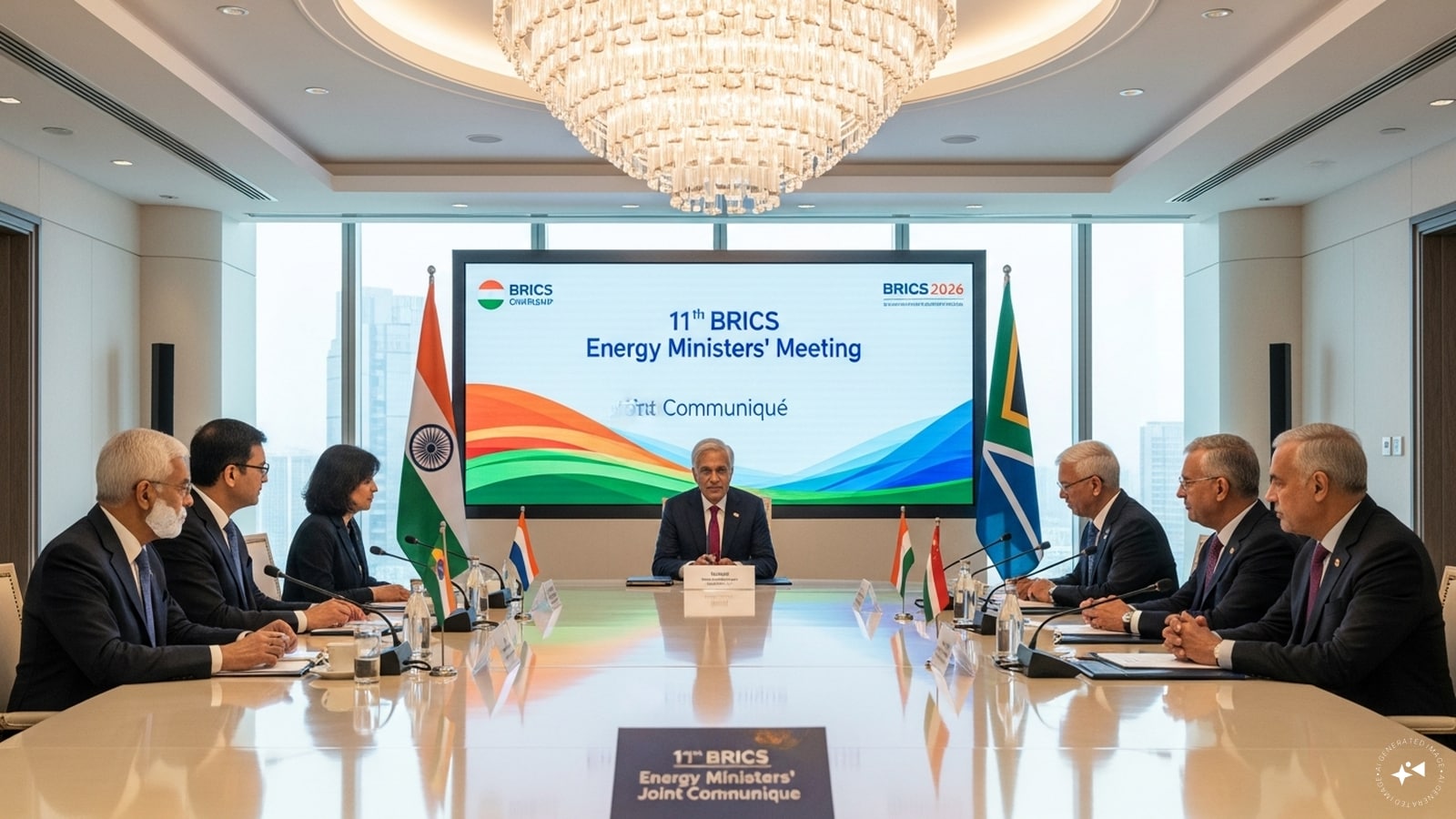
The global energy conversation is broken. Western commentators love to lecture the developing world about cutting emissions instantly, ignoring the harsh reality that millions still lack basic electricity. This week in Gurugram, India is rewriting that narrative. As host of the 11th BRICS Energy Ministers Meeting, New Delhi is steering a massive bloc that represents nearly half of the world's population and 40% of global economic output.
They aren't just talking about abstract climate targets. They are figuring out how to keep the lights on while building out cleaner power grids.
If you think this is just another dry diplomatic summit, you're missing the bigger picture. The expanded 11-member bloc now includes heavyweights like Saudi Arabia, Iran, the UAE, and Russia alongside consuming giants like China and India. This group now controls a massive chunk of the planet's oil, gas, and renewable potential. What they decide in these sessions will shape energy bills and manufacturing supply chains globally for decades.
The Burning Conflict of Energy Access and Equity
Western green strategies often feel elite. They focus on electric sports cars and expensive rooftop setups. India brought a different philosophy to the table this year with the theme Energy for All. It sounds simple. It isn't.
Think about the math. How do you lift hundreds of millions of people out of poverty without burning massive amounts of energy? You can't. The expanded alliance has to juggle the survival needs of industrializing nations with the long-term threat of climate change. Nations like Ethiopia and Egypt face entirely different infrastructure challenges than Brazil or China.
The strategy focuses on building local resilience instead of relying on volatile Western markets. During the preparatory sessions leading up to the ministerial meeting, senior officials hammered out agreements on basic grid equity. The goal is simple to state but brutal to execute. Every citizen in these nations deserves stable power. If the transition to clean technology breaks the economy, it fails.
That is why fossil fuels aren't vanishing from the discussion. Clean coal technologies and carbon capture took center stage during the side seminars. The bloc understands that coal and gas will remain the bedrock of grid stability for years. Pretending otherwise is dangerous. Instead of phasing them out overnight, the focus is on making them less dirty while scaling up alternatives.
India Is Not Just Hosting, It Is Leading by Example
New Delhi isn't just offering a conference room and nice dinners. It's using this summit to show off an incredible domestic energy overhaul. The numbers are staggering. Over the last ten years, India increased its solar power capacity by more than 50 times. That didn't happen by accident. It happened through aggressive state backing and massive private investment.
Walk through any major Indian city or rural district now, and you'll see the quiet pieces of this transformation. The government has already deployed over 60 million smart meters. These devices change everything. They cut down on power theft, help utilities track demand in real-time, and lay the groundwork for a truly modern grid.
The country has also set its sights on a massive energy storage target of 410 GWh by 2032. Renewable energy is notorious for its intermittency. The sun doesn't always shine, and the wind doesn't always blow. Without massive battery storage, a solar heavy grid collapses at night. India is building that buffer right now.
The biofuel story is equally aggressive. India recently hit its 20% ethanol blending target ahead of schedule. Now, the country is rolling out E85 fuel, which contains up to 85% ethanol. This reduces the massive oil import bill and supports local farmers. It is a practical, homegrown solution that other bloc members are looking at closely.
Balancing Big Oil with Green Grids
The expansion of the alliance changed the entire chessboard. Adding major petrostates to a group that includes the world's largest energy buyers creates a fascinating dynamic. Russia, Saudi Arabia, and the UAE are energy exporters. India and China are energy sponges.
Instead of treating this relationship as purely transactional, the group is trying to build a self-sustaining ecosystem. They are working on cross-border grid connections. India has been pushing its One Sun One World One Grid initiative for a while. The idea is to connect regional power grids across continents so that solar power generated in one part of the world can feed factories thousands of miles away where it's currently night.
This requires massive trust and serious engineering. The senior officials spent days discussing the integration of artificial intelligence into grid management to handle these massive, unpredictable flows of electricity. AI can predict weather patterns, anticipate grid failures, and route power with a level of precision that humans can't match.
Carbon Capture and the Reality of Heavy Industry
Let's be completely honest about manufacturing. You cannot make steel, cement, or fertilizer using just solar panels and wind turbines. These industries require intense, high-temperature heat that currently requires fossil fuels or massive amounts of hydrogen.
The bloc is focusing heavily on carbon capture, utilization, and storage technologies. If you can't stop burning carbon immediately, you have to trap it before it hits the atmosphere. The technology is expensive and complicated. Most developing nations can't afford to develop it alone.
By pooling research and development resources across eleven nations, the group hopes to drive down the cost of carbon capture. China has the manufacturing scale. India has the engineering talent. Russia and the Gulf states have the deep pockets and geological formations perfect for storing captured carbon. This collaboration makes perfect sense on paper. The challenge is cutting through the bureaucratic red tape to make it happen in the real world.
Simple Steps for Your Own Energy Tracking
While giant nations negotiate billions of dollars in infrastructure, you can apply the same logic of security and efficiency to your own operations or home. The theme of this summit is resilience through smarter tracking and diversification. You can replicate that on a smaller scale.
First, audit your baseline usage. Look at your monthly power bills and identify peak times. You can't optimize what you don't measure.
Second, consider small-scale storage options or smart devices if you run a business. Upgrading to smarter monitoring tools gives you immediate control over waste.
Third, diversify your reliance. If you depend entirely on one source of power or fuel, you're vulnerable. Look into backup options, whether that means small solar arrays or energy efficient appliance upgrades.
The ministers in Gurugram are finishing up their joint declarations. The real work happens when these delegates go home and try to build the physical lines, factories, and storage facilities they promised. Watch the policy shifts over the coming months. The momentum is shifting away from Western-centric climate frameworks toward a practical, growth-first approach managed by the Global South.