The pundits are calling it a "historic landslide." They are obsessed with the map turning red. They point at the seat counts and scream about a fundamental shift in the British soul. They are wrong. What we just witnessed wasn’t a surge of hope or a sudden embrace of a new ideology. It was a mathematical execution carried out by an indifferent electorate.
If you look at the raw numbers instead of the shiny infographics, the "mandate" begins to look like a clerical error. We are seeing the total collapse of the traditional Big Tent party model, replaced by a fractured, cynical voting base that is learning how to game a broken First Past the Post (FPTP) system.
The competitor headlines talk about a "brutal" rejection. That implies passion. The reality is much colder. This was a tactical eviction, not a housewarming party for the new tenants.
The 34 Percent Illusion
The most dangerous lie in British politics right now is that the government has the "will of the people" behind it. Let’s get technical. When a party wins a massive majority of seats with roughly a third of the popular vote, you haven't witnessed a democratic revolution. You’ve witnessed a system failure.
In past decades, a landslide meant winning 40% to 45% of the vote. That meant you convinced your neighbor. It meant you won the argument at the pub. Today, you can run the country with the same percentage of the vote that usually gets a mid-tier reality TV contestant evicted.
I’ve watched political consultants spend millions trying to "read the room" of the British public. The secret they won’t tell you is that the room is empty. Turnout is sagging because the electorate has realized that their vote is no longer a tool for expression—it’s a defensive weapon. People didn't vote for a vision; they voted against a decade of perceived incompetence.
When you win by default, you don't have a mandate to transform the country. You have a temporary permit to exist. The moment the new government mistakes this mathematical fluke for a cultural endorsement, they begin their own countdown to extinction.
The Death of the Heartland
The media loves the "Red Wall" narrative. They treat working-class voters like a monolithic block of clay that gets reshaped every five years. It’s patronizing and factually illiterate.
The "Heartland" is dead. In its place is a highly volatile, fragmented collection of special interest groups and regional skeptics. The rise of third parties and independent candidates isn't a "protest vote" anymore. It’s the new baseline.
Consider the efficiency of the vote. The Liberal Democrats and Reform UK represent two sides of the same coin: the total rejection of the binary choice. While the seat counts suggest a two-party dominance, the vote shares tell a story of a country that wants four or five different things at once.
We are moving toward a "European-style" fractured politics, but we are trying to squeeze it through a 19th-century British pipe. The result is high-pressure volatility.
The Competence Trap
Everyone is asking: "Can they deliver?"
This is the wrong question. In the current economic climate, "delivery" is a pipe dream. The fiscal constraints are so tight that any government, regardless of the color of their tie, is essentially acting as a glorified bankruptcy liquidator.
The real trap is the belief that "competence" is enough to maintain a majority. I’ve seen leadership teams in the private sector try this. They focus on the plumbing while the building is on fire. They think that if the trains run on time (they won't) and the wait times drop by 5% (they might not), the public will stay loyal.
Loyalty is gone. We are in the era of the "Subscription Electorate." Voters are now customers who will cancel their membership the second the service lags. There is no brand equity left in British politics.
Why the Landslide is Actually a Weakness
A huge majority looks like a position of strength. In reality, it’s a management nightmare.
When a party wins seats it never expected to win—in places where it has no deep roots—it inherits a caucus of "accidental" MPs. These are individuals who often don't share the core leadership's DNA. They are terrified of losing their seats in five years, which makes them prone to rebellion the moment a policy becomes unpopular locally.
The government isn't a solid block; it’s a loose confederation of people who are mostly surprised to be there. This leads to:
- Paralysis by Consultation: Fearing the "accidental" MPs will revolt, the center stops taking risks.
- The Middle-Ground Quagmire: Trying to please everyone in a massive coalition results in pleasing no one.
- Intellectual Rot: When you don't have a strong opposition in the chamber, you stop sharpening your own arguments. You get lazy. You get arrogant. You get ousted.
The Reform UK Ghost in the Machine
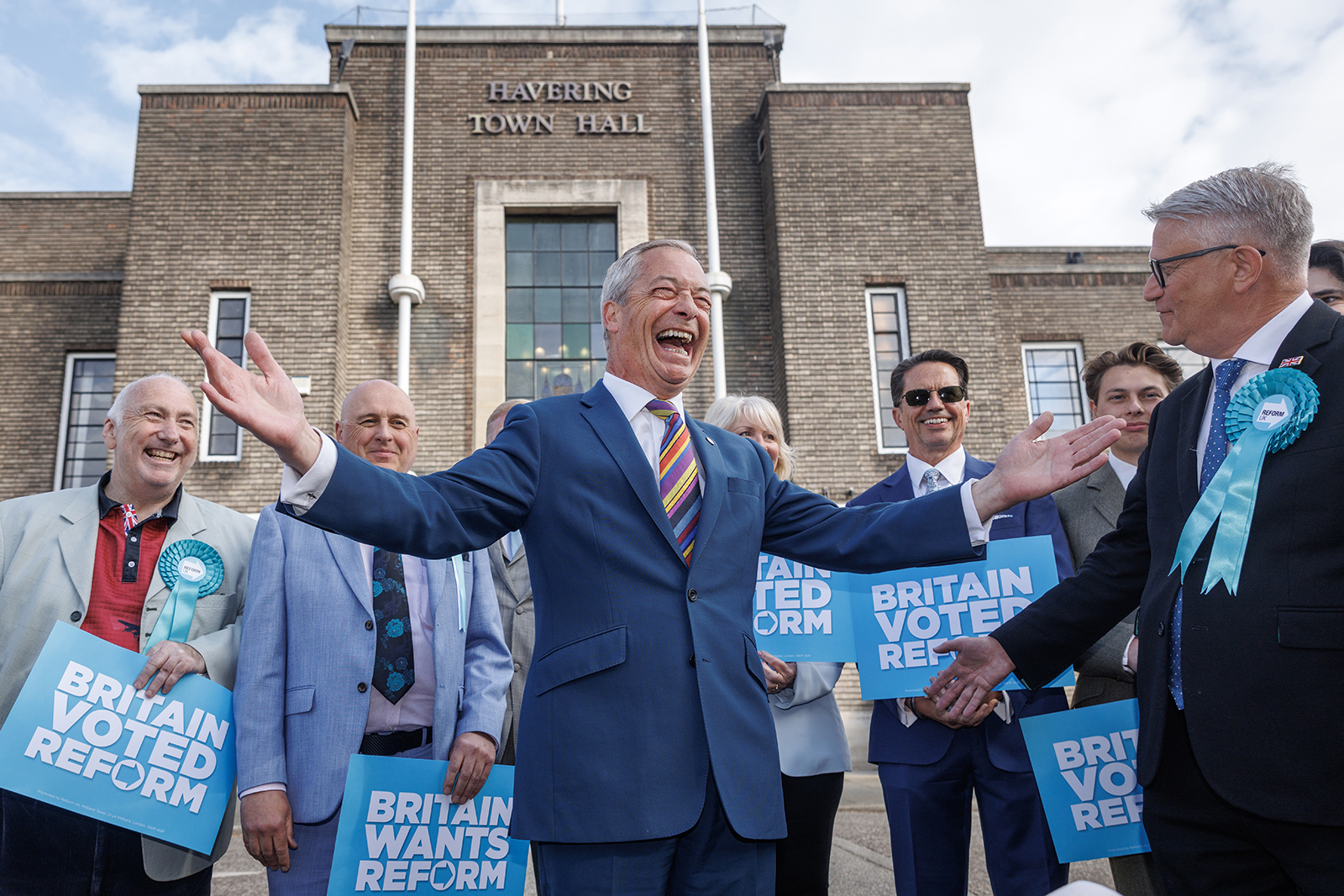
The "brutal" election results ignored the most significant shift: the mainstreaming of insurgency.
The competitor piece dismisses minor parties as "disruptors" or "spoilers." That’s a fundamental misunderstanding of how political energy works. You don't need to win 100 seats to control the national conversation. You just need to sit on the shoulder of the giant and whisper threats.
The 14% to 15% of the vote captured by the right-wing fringe isn't going away. It’s a permanent shadow cabinet. Every time the government moves toward the center to manage the economy, they bleed votes to the fringe. Every time they move toward the fringe to stop the bleeding, they lose the center.
This is the "Pincer Movement" of modern politics. The landslide didn't solve this; it just moved the target.
Stop Asking if the Country has Changed
The country hasn't changed its mind. It has changed its patience level.
The "People Also Ask" sections on search engines are full of queries like "What does the new government mean for my taxes?" or "Will the NHS improve?" These questions assume that the government has the levers to change things.
The uncomfortable truth? The levers aren't connected to anything. Global markets, aging demographics, and energy dependencies dictate 90% of a Prime Minister's schedule. The election was a change of management at a company that is currently underwater.
The "historic change" isn't the party in power. The historic change is the final realization that the British public no longer believes in the "Great Man" or "Great Party" theory of history. They are just hoping the next group is slightly less annoying than the last.
The Logic of the Void
The data shows that the majority was built on a "low-enthusiasm" model. In marketing, we call this "negative churn." You didn't win because your product is great; you won because the competitor’s product was literally exploding in the customers' hands.
If you are a business leader or an investor looking at these results, don't buy the "stability" narrative. This is the most unstable political environment in a generation because it is built on a foundation of apathy and tactical voting.
We are one scandal or one minor recession away from the "landslide" evaporating. The voters didn't give the government a mandate; they gave them a probationary period with zero benefits.
If you want to understand the future of British power, stop looking at the seat count. Look at the millions of people who stayed home, and the millions more who voted for someone they didn't even like just to spite the person they liked even less.
The landslide is a mirage. The desert is still there.
Stop celebrating the "new era." Start preparing for the realization that the map turning red was just the color of a warning light.