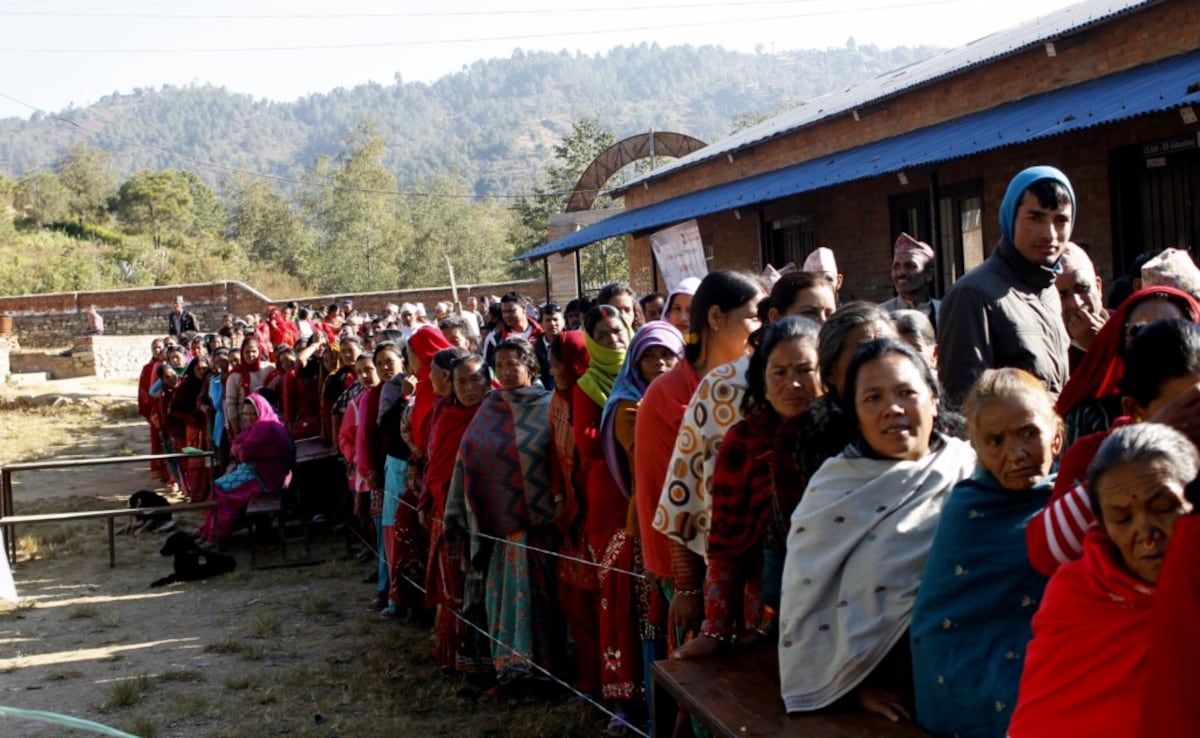
Nepal’s democratic transition was sold to the world as a radical blueprint for gender parity, yet the reality on the ground reveals a sophisticated machinery of exclusion. While the 2015 Constitution and subsequent election laws mandate that women occupy 33% of parliamentary seats, political parties have weaponized the Proportional Representation (PR) system to keep women out of actual power. By sequestering female candidates into PR lists rather than fielding them in Direct Election seats, the male-dominated party leadership has effectively created a glass ceiling disguised as a quota. Women are in the building, but they are rarely in the room where the decisions are made.
This isn't a case of "growing pains" for a young democracy. It is a deliberate structural bypass. In the most recent electoral cycles, major parties consistently failed to nominate women for First-Past-The-Post (FPTP) seats, arguing that women lack the "winnability" or the massive financial war chests required for head-to-head contests. This creates a self-fulfilling prophecy. Because women are not given the chance to run directly, they cannot build the independent constituencies needed to challenge the party patriarchs. You might also find this related coverage useful: The $2 Billion Pause and the High Stakes of Silence.
The Math of Marginalization
To understand why the 33% figure is a deceptive metric, one must look at the mechanics of the dual-ballot system. Nepal uses a mix where 165 members are elected through FPTP and 110 via PR.
The law requires that one-third of the total members elected from each party across both categories must be women. However, the internal logic of the parties is to "save" the direct seats for influential men. When a party fails to elect enough women through the direct vote—which they almost always do because they don't nominate them—they are forced to fill their PR quotas with women to meet the legal threshold. As reported in latest reports by Al Jazeera, the results are significant.
This turns the PR system into a "pink ghetto."
Female politicians who have spent decades in the trenches of the people's movements find themselves sidelined. They are told they are "safer" on the list, which is a polite way of saying they are being denied the authority that comes with a direct mandate. A woman elected via PR is often viewed by her male colleagues as a "quota filler" rather than a representative with her own political capital. This perception is not just an insult; it has legislative consequences. PR members often struggle to secure the same level of constituency development funds and committee influence as their FPTP counterparts.
The Financial Gatekeepers
Politics in Nepal has become an incredibly expensive venture. As the cost of campaigning skyrockets, the barrier for women rises disproportionately. In a society where property rights for women were only recently codified and are still frequently ignored in practice, most female candidates do not have the liquid assets to fund a competitive direct campaign.
The parties know this. They use the "cost of entry" as a convenient excuse to deny tickets. During the last local and federal elections, reports surfaced of party leaders demanding substantial "contributions" to the party fund in exchange for a direct nomination. When women cannot match the dark money provided by contractors and businessmen who back male candidates, they are moved to the bottom of the priority list.
It is a cycle of exclusion. Men get the funding because they are seen as winners; they win because they have the funding. Women are denied the funding because they are "risks," and their lack of a direct win reinforces the stigma.
The Deputy Trap
The local level offers an even more cynical look at how the spirit of the law is subverted. The Local Level Election Act stipulated that parties must nominate at least one woman for the positions of either Chief or Deputy Chief (Mayor or Deputy Mayor).
The result? Over 90% of Deputy positions were held by women, while nearly 98% of the top executive roles remained in male hands.
This was not a coincidence. It was a strategic maneuver by political alliances to satisfy the letter of the law while hoarding executive authority. In many municipalities, these female deputies found themselves stripped of meaningful duties. They were excluded from budget drafting sessions and relegated to ceremonial roles. When they attempted to assert their legal authority over judicial committees or monitoring projects, they were often met with bureaucratic "slow-walking" from male staffers loyal to the Mayor.
We see a pattern where legal progress is met with immediate tactical retreats by the establishment. The uprising promised a "New Nepal," but the political architecture remains stubbornly old.
The Myth of Lack of Merit
A common refrain from party chairs—mostly men in their late 60s and 70s who have rotated through power for three decades—is that there are "not enough qualified women" to take on leadership roles. This claim falls apart under the slightest scrutiny.
Nepal has a deep well of female leaders who rose through the student unions and the civil war era. These women managed logistics, led protests, and negotiated local disputes during the country's most volatile periods. They are more than qualified. The "merit" argument is simply a smokescreen used to protect the incumbency of a small circle of male elites.
Furthermore, the "winnability" argument is frequently debunked when women are actually allowed to run. In the rare instances where women are given FPTP tickets in competitive districts, their success rates often mirror or exceed those of their male colleagues. The issue isn't the voters; it's the gatekeepers.
The Constitutional Loophole
The 2015 Constitution was hailed as one of the most progressive in Asia, but it contains a critical flaw: it lacks a specific mechanism to enforce gender parity in the nomination process for direct seats. It only mandates the final outcome of 33%.
By the time the final tally is made, the damage is done. The parties treat the 33% as a ceiling rather than a floor. They do the bare minimum to avoid legal disqualification while ensuring that the 66% majority remains an ironclad male bloc.
If the goal is genuine representation, the law must be amended to require that 33% of nominations in each category—not just the final total—must be women. Without a mandate for direct nominations, women will remain second-class legislators, forever dependent on the whims of the party list.
Institutionalized Silence
The suppression of female voices has a direct impact on the legislative agenda. Issues such as citizenship rights (where Nepal still discriminates against mothers passing nationality to children), domestic violence enforcement, and equitable land distribution are frequently pushed to the bottom of the pile.
When women are confined to the PR list, they are under constant pressure to remain loyal to the party leaders who placed them there. A direct-seat representative has the leverage of their voters; a PR representative only has the leverage of her patron. This creates a culture of silence. Even the most fiery activists often find their wings clipped once they enter Parliament via the list, knowing that any significant dissent could lead to their removal from the list in the next cycle.
Breaking the Executive Monopoly
The true test of Nepali democracy will not be found in the total number of women in the assembly, but in the number of women holding executive portfolios. Currently, the Cabinet remains an almost exclusive club for the "Big Three" party leaders' inner circles.
True power in Nepal is concentrated in the Ministry of Finance, the Ministry of Home Affairs, and the Ministry of Physical Infrastructure. Women are almost never considered for these roles. Instead, if they are given a ministry at all, it is typically the Ministry of Women, Children, and Senior Citizens—a portfolio with a fraction of the budget and prestige of the "hard" ministries.
This segregation of duties reinforces the idea that women are only suited for "soft" social issues, while men handle the "serious" business of the state. It is a psychological partition that mirrors the electoral one.
The Path Forward
The fix is not complicated, but it requires an attack on the status quo. First, the Election Commission must exercise its oversight to reject candidate lists that do not show a good-faith effort to nominate women in direct seats. Second, internal party democracy must be democratized. Currently, the "syndicate" of top leaders decides tickets behind closed doors. Without primary elections or transparent nomination criteria, the old boy's network will continue to favor its own.
The international community, which spent billions supporting Nepal’s democratic transition, has been strangely quiet about this regression. There is a tendency to celebrate the "33% success" without looking at how that number is manufactured.
Nepal’s women did not fight in the streets and the mountains for the right to be a statistic. They fought for the right to lead. Until the electoral system is forced to stop hiding women in the PR lists and starts putting them on the main ballot, the promise of the 2015 uprising remains unfulfilled. The gatekeepers have had their turn; it is time to stop asking for a seat and start taking the gavel.
Demand a change in the nomination laws before the next cycle begins.