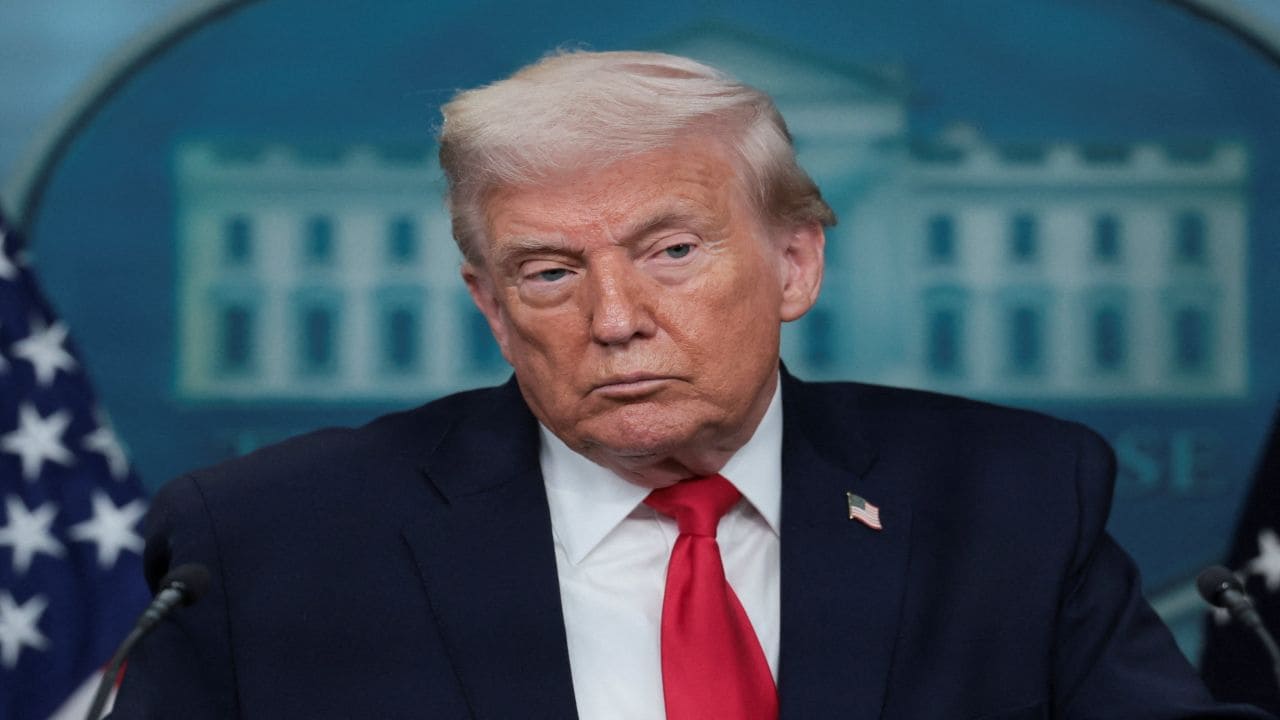
The ink on a peace treaty never smells as strong as the gunpowder it is meant to replace. In the diplomatic corridors of Washington and the wind-swept streets of Tehran, a fragile quiet had begun to settle, a silence bought with months of grueling back-room negotiations and the exhaustion of millions. But silence is not peace. It is merely a pause. When Donald Trump stood before the microphones to declare that the ceasefire had been shattered, he wasn't just citing a technical violation. He was describing the sound of a glass house splintering from the inside.
Politics at this level often feels like a game of chess played with human lives, but for the families living along the borders where these "violations" occur, the stakes are far more visceral than a headline. A ceasefire isn't an abstract policy. It is the ability to sleep without one ear pressed to the floor. It is the permission to send a child to school without calculating the nearest reinforced concrete wall. When that agreement falters, the first thing to return isn't the infantry; it’s the fear.
The accusations coming out of the White House point toward a specific betrayal. The administration claims Iran hasn't just bent the rules—they have snapped them. Trump’s rhetoric suggests a pattern of movement, a shift in hardware, and a refusal to adhere to the spatial boundaries defined in the latest round of de-escalation. To hear the President tell it, the Iranian leadership has mistaken restraint for weakness.
The world watched. The markets dipped. The oxygen in the room thinned.
But then came the pivot. Instead of the expected drumbeats of immediate retaliation, the compass needle swung toward an unlikely destination: Islamabad.
The choice of Pakistan as a neutral ground for potential talks isn't a random selection from a map. It is a calculated move into a space where the air is thick with history and complicated loyalties. Islamabad sits at the crossroads of influence, a city that knows how to speak the language of the West while maintaining the cultural and religious ties of the East. It is a city of shadows and sunlight, a place where the American eagle and the Iranian lion might find a way to stop clawing at one another, if only for a moment.
Think of a ceasefire like a high-tension wire. On one side, you have the Iranian government, grappling with internal pressures and a desperate need for economic relief. On the other, an American administration that views every concession as a potential trap. The wire is stretched to its limit. Every minor skirmish, every unauthorized drone flight, every misinterpreted radio transmission sends a vibration down that line. Eventually, the metal fatigues.
The "violation" Trump described acts as that point of fatigue. By signaling a willingness to talk in Islamabad, the administration is effectively trying to solder the wire back together before it snaps completely. It is a high-stakes gamble that requires a mediator who can handle the heat.
Pakistan finds itself in a familiar, albeit exhausting, position. For decades, the nation has played the role of the reluctant bridge. To the Americans, they are a necessary partner with a checkered past. To Iran, they are a neighbor that cannot be ignored. Bringing these two giants to a table in the shadow of the Margalla Hills is an act of diplomatic acrobatics. There is no guarantee the table won't be flipped before the first tea is served.
Critics argue that this is a cycle we have seen before. The pattern is predictable: a deal is struck, a violation is alleged, threats are leveled, and then a new venue is proposed to "save" the process. It feels like a loop. But for the people on the ground, the repetition doesn't make it any less terrifying. There is no such thing as a "routine" threat of war. Each time the rhetoric ramps up, the cost of living increases. The price of bread in a Tehran bazaar is tied directly to the tone of a press conference in the Rose Garden. The stability of a regional currency is held hostage by a tweet.
The human element of this geopolitical friction is often lost in the discussion of "strategic interests" and "compliance frameworks." We talk about Iran as a monolithic entity, a map shaded in a specific color. We forget that it is a collection of eighty million souls, most of whom are just trying to navigate a world that seems determined to keep them on the brink. When we talk about Trump’s "signals," we are talking about the pulse of a global nervous system.
Imagine a shopkeeper in Islamabad, watching the motorcades roll by. He doesn't care about the intricacies of uranium enrichment or the specific coordinates of a border crossing. He cares about whether his city is about to become the epicenter of a storm. He cares if the men in the armored Suburbans are bringing a solution or just another set of demands. To him, the "Talks in Islamabad" aren't a news item. They are a physical presence in his neighborhood.
The tension between Washington and Tehran is fueled by a profound lack of trust—a commodity that is currently rarer than any precious metal. Trump’s strategy has always been one of maximum pressure followed by the offer of a grand bargain. It is the "Art of the Deal" applied to a landscape where the consequences of a failed negotiation aren't a bankruptcy filing, but a regional conflagration.
By accusing Iran of a violation, Trump reclaims the moral high ground in his narrative. He positions himself as the wronged party who is still "gracious" enough to offer a seat at the table in Pakistan. It is a classic power play. It forces the Iranian leadership to choose between appearing defiant and risking a total collapse of the ceasefire, or appearing compliant and coming to a table where the terms have already been dictated.
The Iranians, for their part, operate on a different timeline. They have survived empires and outlasted dynasties. Their diplomacy is a long game, played with a patience that often baffles the short-term, election-cycle logic of American politics. To them, the Islamabad invitation is likely seen as another move in a centuries-old dance of shadows. They know that in the mountains of Pakistan, the echoes of their own influence run deep.
What happens if the talks fail? What if the Islamabad summit—should it even manifest—ends in the same stony silence that preceded it?
The alternative is a slow slide into the unthinkable. When ceasefires fail, they don't usually vanish in a single explosion. They erode. They are worn away by a thousand small betrayals until there is nothing left but the raw, exposed nerve of conflict. We are currently in the erosion phase. The accusations are the wind; the signals for talks are the desperate attempts to build a sea wall.
We have reached a point where the truth of the violation almost matters less than the reaction to it. In the post-truth era of international relations, perception is the only currency that clears. If the world perceives Iran as the aggressor, the sanctions tighten. If the world perceives Trump as the provocateur, the alliance fractures. The talks in Islamabad are less about finding a middle ground and more about deciding which version of the story will be told to the history books.
There is a specific kind of atmospheric pressure that builds before a massive storm. The air becomes heavy. The birds go quiet. You can feel it on your skin before you see the first flash of lightning. That is the current state of the Middle East. The accusations are the first heavy drops of rain. The move toward Islamabad is the frantic search for shelter.
The stakes are invisible until they aren't. They are invisible when they are just lines on a briefing paper in the Oval Office. They become visible when the first convoy moves. They become visible when a mother in Isfahan starts hoarding dry goods because she hears the tone of the television change. They become visible when a young soldier on the border looks across the line and realizes the man on the other side is no longer a neighbor, but a target.
We are watching a high-wire act performed over a canyon of fire. The performers are two men who couldn't be more different, yet are locked in a struggle that defines the era. One is a billionaire who views the world as a series of transactions; the other is the representative of a theocratic revolutionary state that views the world through the lens of endurance and resistance.
Islamabad waits. The city is used to being the host of heavy secrets. It has seen the rise and fall of leaders, the brokering of deals that saved the world, and the signing of documents that meant nothing. It is a city of high walls and deep gardens, a fitting place for a conversation that might determine the fate of the next decade.
The violation has been named. The gauntlet has been thrown. Now, the world waits to see if anyone is brave enough to pick it up without closing their fist.
Peace is not a natural state. It is an artificial construction, a garden that must be weeded every single day or the wilderness will reclaim it. The ceasefire was that garden. The accusations of violation are the weeds. The talks in Islamabad are the gardener’s last attempt to save the harvest before the winter sets in.
The silence has been broken. The only question left is what sound will fill the void next—the murmur of a diplomat, or the roar of a jet engine.