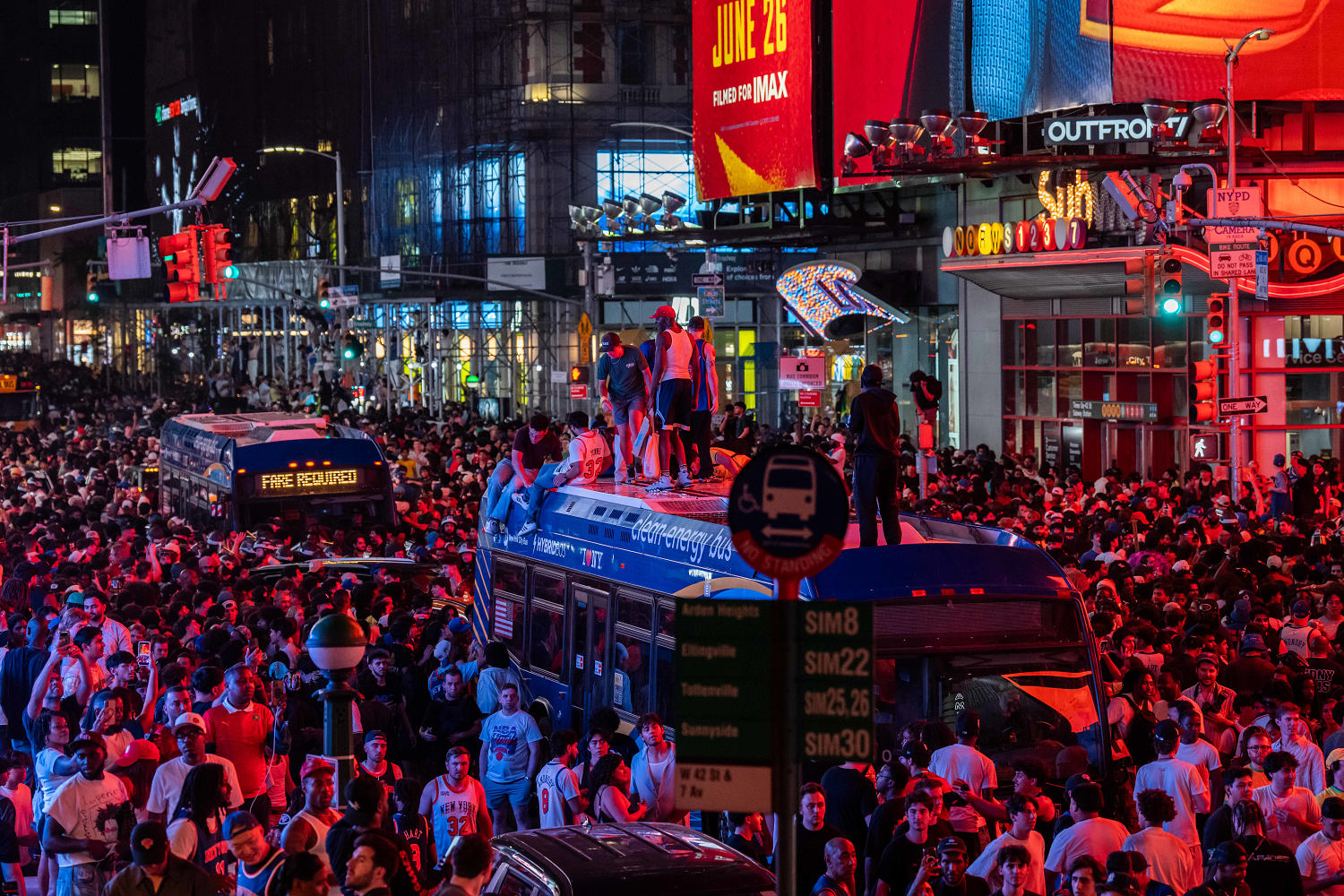
The New York Knicks finally won the NBA championship, ending a multi-generational drought and triggering an immediate, predictable wave of euphoria across the five boroughs. Within minutes of the final buzzer, hundreds of thousands of fans flooded the streets of Manhattan, transforming midtown into a sea of orange and blue. But beneath the surface of the historic victory lies a grimmer reality that municipal planners, city officials, and local businesses are now forced to confront. The celebration quickly devolved into a night of widespread infrastructure strain, property damage, and a logistical breakdown that exposed the city's vulnerability to sudden, mass public gatherings.
Decades of pent-up sporting frustration do not evaporate quietly. They explode.
While the sports media ecosystem focuses entirely on legacy, trophies, and parade routes, the operational aftermath tells a very different story. Managing a modern sports mega-celebration in a dense urban environment requires precise coordination, yet New York found itself reacting to the crowd rather than controlling it. The economic, social, and structural toll of that single night provides a stark blueprint of what happens when civic joy collides with a lack of crowd-management foresight.
The Mirage of the Economic Windfall
Civic leaders love to champion championship runs as massive economic engines for host cities. They point to packed bars, surging merchandise sales, and the immediate influx of tourism dollars as proof that a winning franchise lifts the entire local economy.
The numbers tell a more complicated story.
While bars and restaurants within a three-block radius of Madison Square Garden reported record-shattering single-night revenues, businesses just a few avenues away saw a sharp decline in activity. Regular patrons stayed home to avoid the gridlock. Commuters fled the city early, anticipating the impending madness. For every street-level vendor who sold out of unofficial championship shirts, a high-end retail storefront faced broken windows, graffiti, or a weekend of lost foot traffic due to cleanup efforts.
The immediate costs incurred by the city quickly eat away at the tax revenues generated by jersey sales. Emergency municipal spending skyrocketed over a twenty-four-hour period.
- Sanitation Overtime: Hundreds of additional workers were deployed on emergency shifts to clear literal tons of debris from major thoroughfares before the morning commute.
- Mass Transit Repair: Metropolitan Transportation Authority personnel spent the night replacing shattered glass panels, repairing damaged turnstiles, and scrubbing subway cars that had been vandalized during the post-game rush.
- Property Restoration: Private landlords and small business owners bore the immediate financial burden of boarding up shattered storefronts and replacing ruined awnings.
When the final tallies are calculated, the wealth generated by a sports championship is rarely distributed evenly. It is concentrated in the hands of the team owners, corporate sponsors, and a select group of hospitality venues, while the public sector and disconnected small businesses shoulder the cleanup bill.
A Logistical Breakdown in Midtown
The sheer velocity of the crowd assembly caught city transit authorities off guard. Madison Square Garden sits directly atop Penn Station, one of the busiest transportation hubs in North America. When the game ended, the intersection of Seventh Avenue and 32nd Street became an immediate choke point.
Subway stations were overwhelmed. Standard crowd-control barriers were instantly bypassed as fans climbed atop bus stops, traffic lights, and construction scaffolding. The New York Police Department shifted into a defensive posture, prioritizing the protection of life and major infrastructure over minor property infractions. This tactical retreat allowed smaller groups to disrupt traffic completely, trapping city buses, ambulances, and rideshare vehicles in a deadlocked gridlock for hours.
The problem stems from an outdated approach to civic celebration planning. City agencies typically plan for the scheduled event, like a ticker-tape parade, where routes are defined, barricades are pre-positioned, and staffing levels are predictable. They remain chronically underprepared for the organic, spontaneous flash-mobs that occur the moment a title is secured. The reliance on standard riot-control tactics fails when the crowd is not a hostile political protest but a hyper-energetic, intoxicated civilian population celebrating a victory.
The Anatomy of Public Euphoria and Destruction
Human psychology changes in a massive crowd. Under the cover of collective anonymity, individuals who would otherwise never commit acts of vandalism find themselves swept up in the momentum of the group.
This is not unique to New York, but the density of Manhattan amplifies the physical consequences of crowd behavior. A single person climbing a street lamp encourages five others to do the same. If the pole bends or breaks, the crowd views it as a spectacle rather than a dangerous structural failure. Throughout the night, the line between harmless celebration and criminal mischief blurred completely.
Emergency rooms across Manhattan saw a predictable spike in admissions. The injuries were not caused by coordinated violence, but by sheer recklessness. Falls from temporary structures, lacerations from broken glass bottles, and alcohol poisoning accounted for the vast majority of cases. Medical personnel, already working under the strain of a typical weekend night, found their resources stretched thin as ambulances struggled to navigate the blocked streets of midtown.
Reimagining the Championship Blueprint
The old model of managing sports celebrations is broken. Cities can no longer afford to wait for the morning after to assess the damage of a predictable public gathering.
Modern urban centers need a dynamic, data-driven approach to spontaneous crowd management. This means deploying temporary pedestrian zones the moment a championship game begins, effectively banning vehicular traffic from high-risk zones before the final whistle blows. It requires mass transit authorities to adjust service patterns in real-time, bypassing overcrowded hub stations to distribute the crowd across a wider geographic area.
Sports franchises themselves must be held financially accountable for the external costs of their success. The billions of dollars in revenue generated by a championship run should directly fund the municipal cleanup and security efforts required to keep the host city safe. Expecting taxpayers to foot the bill for the corporate-adjacent chaos of a private sports league's victory is an unsustainable economic model.
The party in New York will eventually wind down, the confetti will be swept into the gutters, and the broken glass will be replaced. The city will boast about its resilience, and sports commentators will move on to next season's predictions. But the structural vulnerabilities exposed during that night of chaos will remain completely unaddressed until the next trophy arrives to shatter the illusion of order once again.