In the middle of the 1961 Antarctic winter, 27-year-old Soviet surgeon Leonid Rogozov faced a binary choice that defines the absolute limit of human endurance. He could lay down and die from a ruptured appendix, or he could cut into his own abdomen and remove the organ himself. Surrounded by thousands of miles of shifting ice and cut off from the world by the polar night, Rogozov chose the latter. This was not a stunt. It was a cold, calculated response to a logistical nightmare that remains a cautionary tale for modern remote medicine.
While the story is often told as a triumph of the "iron will," the reality was a grisly, 105-minute struggle against gravity, shock, and the failing mechanics of the human body. Rogozov was the only medical professional stationed at Novolazarevskaya Station. When the classic signs of acute appendicitis appeared—nausea, localized pain in the right iliac region, and a rising fever—there was no plane coming to save him. The heavy snowstorms made flight impossible. He was effectively on a different planet.
The Mechanical Reality of Self Surgery
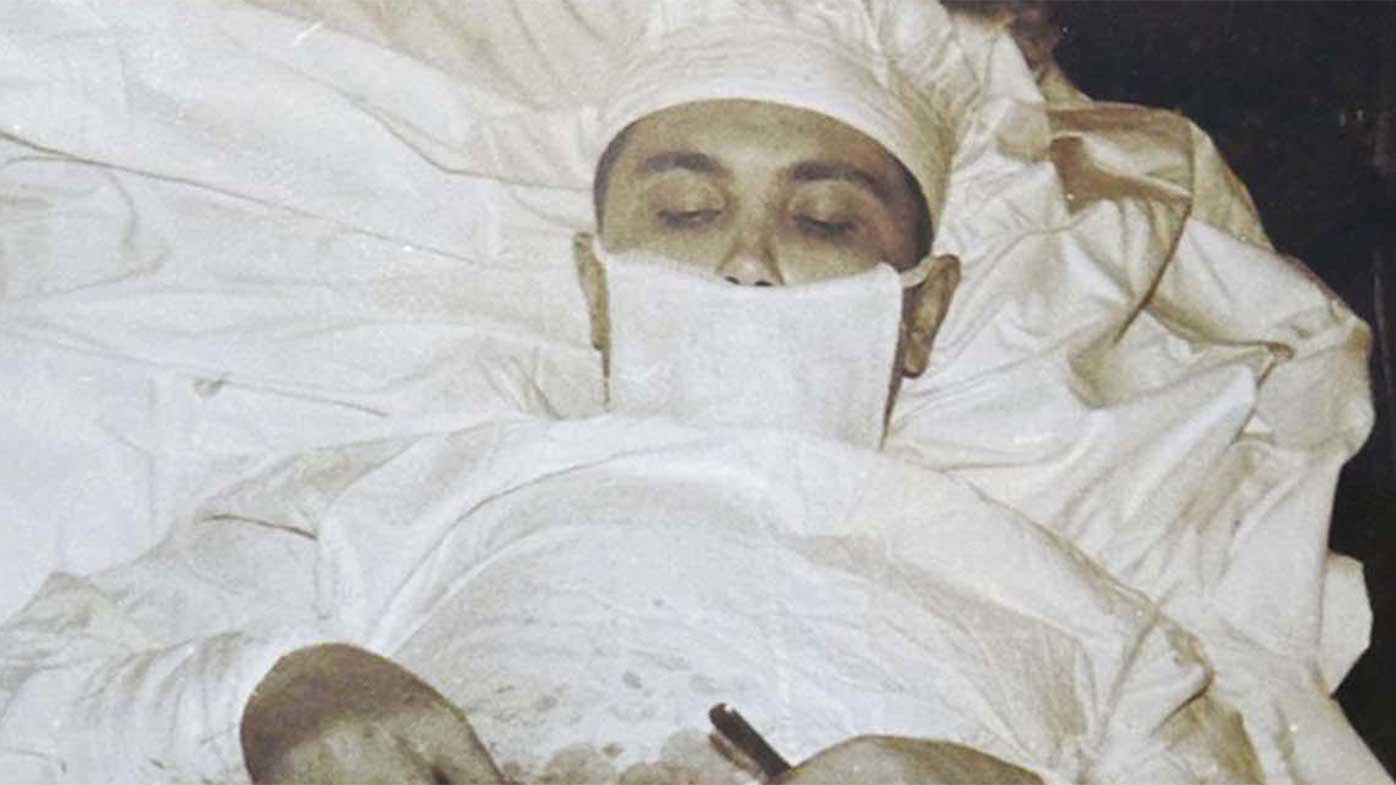
The sheer physical difficulty of an appendectomy on oneself cannot be overstated. An appendectomy is usually a straightforward procedure for a trained surgeon, but it relies entirely on the surgeon being able to see the site and maintain a stable posture. Rogozov had neither. He had to work in a semi-reclined position, propped up by pillows, while using a small mirror to navigate the internal landscape of his own body.
Because the mirror reversed his view, he had to operate by touch as much as by sight. He used a local anesthetic, procaine, but it only numbed the skin and the outer layers of the abdominal wall. It did nothing for the searing pain of handling his own internal organs. Every time he manipulated his intestines to find the appendix, he risked a vasovagal response—a sudden drop in heart rate and blood pressure that could have caused him to black out mid-procedure.
He had two non-medical assistants. One held the mirror and the other passed instruments, but both were reportedly on the verge of fainting. Rogozov had to remain the calmest person in the room while his own blood pooled on the bedsheets. At one point, he accidentally sliced his cecum and had to suture it before continuing. He worked in five-minute bursts, pausing as his hands grew weak and his vision blurred from the onset of shock.
Why Modern Medicine Still Fears the Appendix
You might think that sixty years of technological advancement would have rendered Rogozov’s ordeal a historical curiosity. It hasn't. The appendix remains the single greatest liability for deep-field researchers, astronauts, and solo sailors. It is a vestigial ticking time bomb.
In modern Antarctic programs, the protocol has shifted toward prevention, but the risk remains. For some specific missions, such as those run by the Australian Antarctic Division, doctors are often required to have their appendix removed prophylactically before they are allowed to winter over. This is not a universal rule—the United States and Russia generally do not mandate it—but the debate persists. Is it more ethical to subject a healthy person to surgery, or to risk a life-threatening emergency in a place where evacuation is physically impossible?
The Rogozov incident highlighted the "Point of No Return" in remote logistics. Once the winter ice closes in, the cost of a rescue mission isn't just measured in millions of dollars; it is measured in the lives of the pilots and crew who would have to fly into sub-zero darkness.
The Psychological Cost of Total Autonomy
There is a dark psychological dimension to being the only doctor in a high-stakes environment. Rogozov wrote in his diary that he felt a "black storm" in his soul as the symptoms worsened. He knew exactly what was happening to him, which is both a blessing and a curse.
A layperson might hold out hope for a miracle or a misdiagnosis. A surgeon knows the exact timeline of sepsis. He knew that if the appendix perforated, he would die an agonizing death over several days. The decision to operate was driven by the terrifying clarity of his own expertise. He wasn't being brave; he was being logical.
This level of self-reliance changes a person. After the surgery, Rogozov returned to his duties within two weeks, but the weight of that isolation stayed with him. It serves as a reminder that in extreme environments, the most sophisticated tool available isn't the scalpel—it is the ability to maintain cognitive function while the lizard brain is screaming in agony.
The Failed Logic of Remote Support
Current space agencies and polar programs often tout "telemedicine" as the solution to these crises. They envision a scenario where a remote surgeon guides a non-expert through a procedure via a high-definition video link. While this sounds comforting in a boardroom, it falls apart in the face of actual trauma.
Consider the latency of communications and the inevitable equipment failures. During Rogozov’s operation, the station’s lighting was flickering. Imagine trying to perform a delicate procedure while a satellite link buffers or the power fails. Furthermore, the physical act of surgery requires "haptic feedback"—the sense of how much tension a suture can take or how much pressure a blade requires. You cannot teach that over a Zoom call in the middle of a blizzard.
The medical community often overlooks the "Janus-faced" nature of remote medicine. On one hand, we have more data than ever. On the other, we are just as vulnerable to the physical limits of the human frame as we were in 1961. We have better antibiotics, certainly, but if a piece of your anatomy decides to rot, you still need someone with a blade and the guts to use it.
The Myth of the Generalist
Rogozov was a product of a specific type of Soviet medical training that emphasized extreme versatility. In the modern era of hyper-specialization, we have lost some of that "frontier" capability. Most surgeons today are masters of specific niches. The idea of a generalist who can handle everything from dental extractions to abdominal surgery is becoming a relic.
This creates a dangerous gap in our "off-grid" ambitions. As we look toward Mars, we are forced to reckon with the Rogozov scenario on a much longer timeline. On a multi-year mission to another planet, an appendicitis case wouldn't just be an emergency; it would be a mission-ending catastrophe. We cannot fly a doctor home from the Red Planet.
We are forced to ask if we should begin "engineering out" these liabilities. Should we remove the gallbladders and appendices of everyone we send into the deep unknown? It sounds like science fiction, but it is the logical conclusion of the lesson Rogozov taught us.
The Physicality of the Aftermath
Rogozov lived until 2000, passing away from lung cancer in Saint Petersburg. He didn't want to be a hero. He rarely gave interviews about the event and returned to a standard career in thoracic surgery. For him, the self-surgery was a professional failure—a failure of the system to provide him with a backup.
His story is often packaged as a motivational anecdote about "doing whatever it takes." That framing is a disservice to the brutal reality of what he endured. It wasn't about "mindset" or "grit" in the way those words are used by corporate speakers today. It was a violent, bloody, and desperate act of self-preservation performed by a man who had no other cards to play.
The scar on his abdomen was a permanent reminder of the 105 minutes where the entire world shrank down to the size of a mirror and a scalpel. We shouldn't look at Rogozov and see a superhero. We should look at him and see the terrifying price of isolation.
The next time you hear about a "seamless" mission to a remote outpost, remember the man who had to hold his own intestines aside to stay alive. The ice doesn't care about your technology, your training, or your plans. It only cares about the physics of survival. If you are going into the dark, you had better be prepared to be your own savior.